


Victims of Arab terror on edge as Israel releases terrorists
Kay Wilson has spent the past two and a half years with only one goal in mind — trying to find a moment’s respite from the constant barrage of thoughts, images and sounds that fill her mind. It’s been more than two and a half years since she was brutally stabbed while guiding Kristine Luken, an American tourist, through an archaeological site in the hills surrounding Jerusalem.
All her hard work with therapists, psychologists and counselors came to naught earlier this month by the surprising announcement that Prime Minister Binyomin Netanyahu, who was once outspoken against such actions, plans to release 104 Arab terrorists, many of whom are serving life terms in jails for murder. They were tried and convicted of heinous crimes, but are being released so that the “Palestinians” will agree to hold peace talks with us. This has not worked in the past, but following two visits by U.S. Secretary of State John Kerry, it seems as though our leaders have been convinced (or threatened?) to try it again. Following the prisoner release that resulted in Gilad Shalit’s freedom, the government promised no future deals where terrorists would be released.
While Kay’s story is still fresh in my own mind, I will recount the details for anyone unfamiliar with what happened.
It was a clear and beautiful Shabbat afternoon in December 2010, when Kay was working as a tour guide. She took her friend/client, Kristine Luken, on a tour that began with a local winery. The two then headed down into the valley to see some popular archaeological sites. As they were walking, two young Arab men appeared out of nowhere and asked them for water. Not trusting them or wanting to engage in a conversation, Kay answered in Hebrew that they didn’t have any and continued on. She immediately realized that they were being targeted and whispered to Kristine to be on guard. Kay wrapped her fingers around the penknife in her pocket, which was her only form of self defense.
Soon enough, the same two Arabs came out from behind them and grabbed them. The women struggled, at which time Kay stabbed one of them in the thigh, but the Arabs were strong and armed with a large knife. In what appeared to be a kidnapping attempt, they were tied up and blindfolded. As Arabs continued to phone their contact person for backup, the terrorized women waited under knife point for 30 minutes. When their backup did not arrive, they quickly made the decision to kill their victims and flee.
Bound, barefoot and gagged Kay watched and listened to Kristine’s final sounds of death from a few meters away. Knowing that she was next, she awaited the same fate. After being stabbed 13 times, she was still lucid enough to pretend like she was dead. Her eyes were open as they plunged the knife into her back over and over.
Thinking they had killed her, they started to leave. For some reason, they turned around to make sure she was dead. With her eyes open, she did not flinch when one of them ripped the Magen David off her neck and thrust his knife deep into her chest.
When the murderers left, she understood that if she stayed where she was, it would be difficult for the police to find her body so she made a superhuman effort to drag herself up to the main road. Bleeding from broken bones and a punctured diaphragm, she pulled herself up and began, step by step, going forward through sharp thorns and thicket with her bare feet that were tied together. When she fell, she got back up and continued.
She was racing against the end of daylight hours. With her injured dog following, she plunged ahead and arrived at the top near a parking lot and picnic tables. When she knew she was seen by children playing, she collapsed.
The police were called and a search crew worked through the night before finding Kristine’s body. Kay was taken to hospital, where she recovered while the police stood guard outside her room.
The first few days were spent being questioned by a special investigating unit. Due to Kay’s testimony and bravery, the police not only caught the Arab murderers, but the DNA on her penknife led them to a gang of 13 terrorists.
It’s been two and a half years, but for Kay Wilson, it seems like yesterday. The once vibrant and lively tour guide feels stuck in a bad dream. She cannot escape and the scenes and sounds of that day continue to play in her mind.
Kay saw her Arab attackers again face to face when she testified against them. When they appeared with a smirk on their faces, she stood up in the courtroom and shouted, “Am Y’israel Chai!”
They had confessed to the crimes and were sentenced to life, although one of them appealed his conviction. They, and their gang, were also convicted of other assaults and murders in the same area, including the murder of teacher Neta Blat Sorek the previous year.
The little relief and security Kay felt by helping “put them away” vanished this month when Prime Minister Netanyahu announced the release of 104 Arabs from prison. So what if they were given multiple life sentences in prison? So what that they had killed without remorse and would proudly do so again? The thought of Kristine’s murderers also being freed in the future sends chills up her spine.
According to a list released by The Times of Israel, here is a partial list of Arab terrorists who will be released in the coming months:
• Issa Abed Rabbo attacked Revital Serry and Nir Levi as they were hiking south of Jerusalem in 1984. He tied their hands, blindfolded them and shot them in the head.
• Muhammad Tus belonged to a terror group that planned five bus attacks, which killed Edna Harari, Motti Swisa, Zalman Abolnik, Meir Ben Yair and Michal Cohen.
• Fayez Hour murdered two people in the Gaza Strip and while in jail, planned an assassination attempt on Yitzhak Shamir.
• Mohammed Daoud killed Ofra and Tal Moses by throwing a Molotov cocktail at their car in 1987.
• Mahmoud Harbish and Iomaa Adam killed Rachel Weiss and her three children by attacking their bus north of Jericho in 1988. When David Delarossa, a soldier, tried to help them, they killed him as well.
• Nihad Jundiyeh killed Zalman Shlein, an Israeli contractor, in 1989.
In the past, Arab terrorists who have been released from prison often continue with their murderous plans until they are captured again. In the meantime, many innocent Israelis will suffer while the government officials are caught up in their wonderful euphoria mistakenly called, “the peace process.”
Gayla Goodman made aliyah from Kansas City 26 years ago. She lives in in Mevasseret Zion, just outside of Jerusalem.
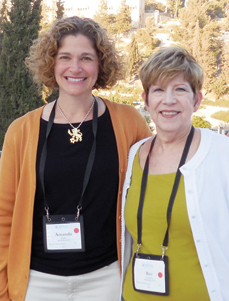 For a week in July, Bev Jacobson and I had the amazing privilege to go on the Jewish Federations of North America (JFNA) Campaign Chairs mission to Belarus and Israel. This was not your regular mission to tourist sites and famous landmarks. Instead we learned the history of Jewish communities in the former Soviet Union, met Holocaust survivors, delivered care packages to elderly Jews in need and danced with Jewish kids of all ages at the JDC community center in Minsk, Jewish summer camps in Belarus, and then Birthright Israel participants and IDF soldiers in Israel.
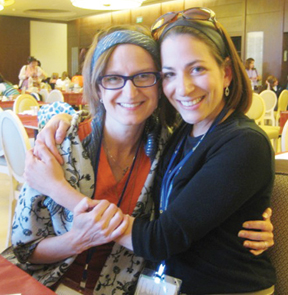 What do you get when you take 14 women from diverse Jewish backgrounds, many of whom do not know each other, and send them on a 10-day trip to Israel together? An entirely new perspective and an amazing sisterhood!
 Leslie and I were recently reviewing our personal legal documents — wills, powers of attorney, health care directives, etc. A friend asked us a question, “Do your children have their own ‘durable power of attorney for health care decisions’ documents?