


The Thai that binds
Say this for one of Leawood’s trendiest new eateries, Fo Thai, 4331 W. 119th Street (913-322-3636). Its approach, in notably conservative, suburban Johnson County, is bold. Profoundly bold. Walking from a strip mall parking lot, through the restaurant’s dramatic dungeon-like doors, diners surely sense that they are in for something big. After a few moments beyond those doors, it becomes difficult to even conjure the suburban world left behind. But no matter the decor, in these parts it will always be about the food. And in that regard, Fo Thai’s approach has the potential to alter the area’s culinary landscape.
To some, it will seem like Fo Thai is trying just a little too hard. Its decor is more suited for a Vegas resort or a trendy New York eatery than a Midwestern destination spot. A gigantic Buddha the size of Godzilla — sitting atop water with a wry smirk on his face — overlooks the high-ceilinged dining room. Bathrooms are oddly shaped and memorably elegant. A stream of water flows under spacious booths (and under the ornate bathrooms). A spectacular bar is partitioned from the dining room, turning the place into a trendy, after hours drinking spot. It was for that reason, presumably, that the music one night gradually transitioned from soft holiday music to pounding, industrial dance music. Our waiter, pouring a glass of wine at our table one night with the help of a strange apparatus, could not help but share that Fo Thai is only one of two restaurants in the entire country that uses this quirky decanter for its wine. And why even bother, after all, if as many as three or more other places use it?
In some restaurants, decor and facade are employed in an almost sinister manner to draw attention away from the food. A cynic might be quick to point an accusing finger at Fo Thai, in this sense. But at Fo Thai, the scenery is merely a prelude to the real show. Fo Thai’s food is actually commensurate to the restaurant’s lofty decor. Chef Chee Meng So has, among other impressive credentials, served a notable stint at the Four Seasons Regent Hotel in Malaysia.
Everything is served “family-style” — from appetizers through entrees —-though the limited size of some offerings creates an odd sharing dynamic. What’s more, Fo Thai seems to sport some control issues. Our waiter made it clear, at the outset, that the food would come out of the kitchen in staggered (unpredictable) fashion as the kitchen saw fit. We were left without the feeling that we could, in any manner, dictate the order of the food’s arrival. On the other hand, did we really need to interfere with the process? Maybe we had control issues. As it turned out, the flow of food worked quite well. And control issues aside, we were otherwise the beneficiaries of rather informed and congenial service.
This is “fusion” cuisine — rooted in Thai (and other Asian) food, but spinning off into a number of erratic but interesting directions. We started with the fairly whimsical Lazy Crepes ($8) — a large, crispy swath of flatbread folded like a napkin on a plate, resting alongside a dish of perfect, robust curry chicken sauce loaded with new potatoes. The flatbread was a bit thin to hold up for dipping into the sauce, but that was a minor point. The stellar curry sauce could easily have been eaten with a spoon right out of the bowl, like soup. Chicken Lettuce Wraps ($15) were an example of Fo Thai taking a Chinese restaurant mainstay to the next level. Small, butter lettuce cups were used for wrapping the crunchy, superior blend of water chestnuts, chicken and other vegetables drenched in a well-balanced Hoisin-lime sauce. Herb Crusted Beef Skewers ($12) were made with tender, garlic-flavored beef and served with a nice, complementary, sweet pickled salad with cabbage and vegetables. The amazing peanut sauce served alongside elevated the dish. We even tried some soup, Oven Roasted Butternut Squash Soup ($7), and found it was of nearly perfect quality and texture, with its infused coconut curry. The soup was perfectly smooth, not unpleasantly grainy, like some versions. Only the Edamame ($3), which was surely adequate, failed to inspire.
The entrees truly demonstrated the chef’s uncanny skill, particularly through two rather simple offerings. The Broiled Saikyo Miso Chilean Sea Bass ($32) was a generous portion of the saltwater fish, with a sublime orange miso glaze. Chilean sea bass, highly oily and decadent, is actually Patagonian toothfish, but is never called that on American menus. Who would order it? Fo Thai’s sea bass had a soft buttery texture and nearly melted in our mouths. It was served atop a delicious and slightly sweet black, sticky rice that married well with the fish.
The USDA Prime Angus Beef Tenderloin ($32) was perfectly cooked to the requested medium rare, and underscored the profound difference between great (deeply marbled) prime meat and its inferior brethren. The texture and taste were superb, with a brushing of soy glaze that in no way detracted from the quality beef.
Thai Tom Yum Fried Rice (with vegetables) ($10) was beautifully presented in a picturesque mound, with perfectly cooked rice and an interesting array of crunchy (not overcooked) vegetables. Wok Thai Basil Soy Glaze Chicken ($20), included mushrooms, red peppers, green beans, a slow burn, and the intriguing flavor of anise (licorice). That is where Chef Chee Meng So excels: putting flavors that would seem to be oddities in unusual places, and making them somehow work perfectly.
Fo Thai will undoubtedly push willing Kansas Citians outside of their culinary comfort zones. And maybe it’s about time.
Food: *** 1/2
Service: *** 1/2
Atmosphere: ****
Out of Four Stars
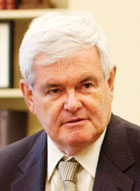
 By the time you read this, the Iowa caucus and its Republican winner will be old news. On the national scene, the record shows that both leading Republican presidential candidates, Mitt Romney and Newt Gingrich, appreciate Israel as an ally and both will be better for Israel than Barack Obama.
 As a result, Al Qaeda and other Jihadists have strengthened their hold in chaotic Sinai and they and Hamas have been able to import advanced anti-tank and anti-aircraft rockets and missiles that were looted from civil war ravaged countries such as Libya and Yemen. Consequently, Hamas has amassed more than 10,000 rockets in its arsenal including some that can reach the outskirts of Tel Aviv and portable, shoulder fired, anti- aircraft missiles called Manpads which can shoot down a civilian passenger plane.
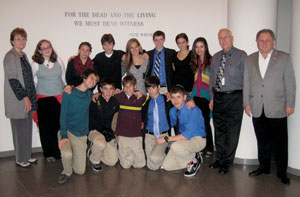 What are monsters? In storybooks they frequently emerge as strong, wicked, mysterious beings whose purpose is to do harm. In movies, they sometimes look like huge, frightening creatures dripping with venom. In real life, monsters appear as … Oh, wait. They don’t. When we’re young, we’re taught that monsters exist only in stories and fairytales. And, of course, it’s not logical to fear something that isn’t real. I grew up believing that monsters live only where they belong, in books and myths. My experiences as a participant in the Together We Remember program, turned that notion upside down. What I learned is that monsters can in fact become a very real threat to humanity.