


Letters to the Editor
Keep comments
constructive and civil
I am glad to have the opinions of our Jewish community printed in The Chronicle. I think it provides us with different opinions and hopefully thoughtful and constructive views. I am, however, distressed to read hateful letters that are not constructive. This is not helpful.
In the Kansas City area we have a small Jewish community and we are united just by that alone. As we express ourselves in our local community publication, keep in mind our community is lucky to have the KC Jewish Chronicle. When letters expressing complaints are made, let us keep it constructive and helpful to our community. Does it unite us or divide us?
We are about to exercise our right to vote in this country as another major election is coming up. The presidential race is highly contested and people feel passionately about their choices. When we make our choices we do not make them on one issue (my hope) but on many.
As far as what is printed in this newspaper, there is someone on the paper’s staff called an editor who makes choices based on space and a variety of other things. It is called freedom of speech/press. We are lucky to have this publication.
Debbie Dubinsky
Overland Park, Kan.
Apology necessary
I was disappointed to hear the story, “Cemetery For Hezbollah Martyrs Continues To Grow,” on “All Things Considered,” National Public Radio, Oct. 12. The host, Audie Cornish, said, “In a cemetery in Beirut, Lebanon, new graves are appearing more frequently than usual. This isn’t just any cemetery. It’s where the martyrs of Hezbollah are buried. ... Hezbollah, created in 1982 to resist the Israeli invasion of Lebanon, is not at war now, at least not openly.”
The Israeli invasion of Lebanon was a response to repeated attacks from the PLO.
Hezbollah is an enemy of the United States. The acting director of the Central Intelligence Agency, John McLaughlin, said in an interview, July 18, 2004, “Iran is the place where Hezbollah, an organization that killed more Americans that Al Qaida before 9/11, draws its inspiration and its finances.” The State Department has Hezbollah on its list of terrorist groups. Among the group’s many attacks against the United States is the bombing of our barracks in Beruit in 1983, murdering 241 marines.
In addition to hating the United States and Israel, Hezbollah is anti-Semitic. Its founder, Hassan Nasrallah, said, “If we searched the whole world for a person more cowardly and despicable, weak, and feeble in psyche, mind, ideology, and religion, we would not find anyone like the Jew,” (quoted by Jeffrey Goldblum, “A Reporter at Large: In the Party of God,” New Yorker, Oct. 14, 2002).
If Hezbollah has martyrs, who else gets such glory? Our local martyrs/serial killers, Robert Berdella and John Robinson? Al-Queda and Nazi SS? NPR owes an apology to Americans and Jews.
Elizabeth Appelbaum, Ph.D.
Overland Park, Kan.
Luea is the right choice
for Kansas House
Those of us who live in the Kansas House of Representative’s 19th District (which borders 83rd between Lamar and State Line to the north and I-435 and 99th St. to the south) have the opportunity to elect an outstanding candidate for state representative on Nov. 6: Zachary Luea.
It is essential that we elect Zach because he is the candidate who will strongly support the funding we need for our public schools, the separation of church and state, women’s health, and the merit selection of judges in our state in fearless opposition to Gov. Brownback’s destructive agenda. Zach is an attorney focusing on business law and an educator/administrator for an area university. He is a former public school teacher and a passionate advocate for strong public schools. Zach and his wife, Emily, are active members of our Jewish community. Emily’s family were long-time members of K.I. Zach is endorsed by the MAINstream Coalition PAC, KNEA, Kansas Families for Education, Citizens for Higher Education, former Congressman Dennis Moore and former State Rep. Lisa Benlon. As a former member of the Kansas House of Representatives from our area, I join them all in urging you to vote for Zach Luea as our state representative for the 19th District. The preservation of all that we value in Kansas depends upon it.
For more information on Zach, please visit his website at www.zachluea.com.
Carol H. Sader
Former Kansas State Representative
Prairie Village, Kan.
Making menschen
Regarding the article “HBHA senior enjoys helping kids become menches” on page six of the Oct. 18 edition, there is no such word as “mensches.” The singular for a person is “mensch” and the plural is “menschen.”
Andrew Reiz
Leawood, Kan.
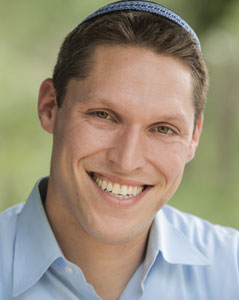 As we are reflecting during this domestic abuse awareness month, we can think about all types of victims and invisible people in our society today.
 QUESTION: I am a member of a local Orthodox congregation here in Kansas City. My son is marrying a modern Orthodox girl in a large East Coast city. The wedding will take place in a Spanish Portuguese synagogue of which her family has been a member for generations. My son has been told by the rabbi that it is not their tradition for the bride to walk around the groom. Furthermore, my son was told he cannot wear a kittel or the white gown that many Orthodox grooms wear when they are married. Are not these laws in Judaism or are they just tradition?
 It isn’t often that one gets to see the manuscript of a well-known political figure before it is published, so I was flattered when a good acquaintance asked in June if I would look over an edited manuscript of a Member of Knesset, who needed it in two days. I readily agreed.
 Barbara Bayer recently wrote about a newly released book called “Am I a Jew?” by Theodore Ross. (Oct. 4)
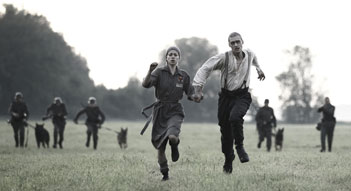 A Jewish Holocaust survivor is haunted by memories of the Polish lover that risked his life to save her. The romantic war drama “Remembrance” directed by Anna Justice is the opening night film of the 14th Annual Kansas City Jewish Film Festival.
 The community is buzzing about a newly published book, “Am I a Jew?” written by Theodore Ross, an author from New York. It’s been out a month or so already. I wasn’t terribly interested in it, and it just sat on my desk waiting to be given to one of our book reviewers. However out of the blue, just before Yom Kippur, I got some phone calls about it. Then I was intrigued.