


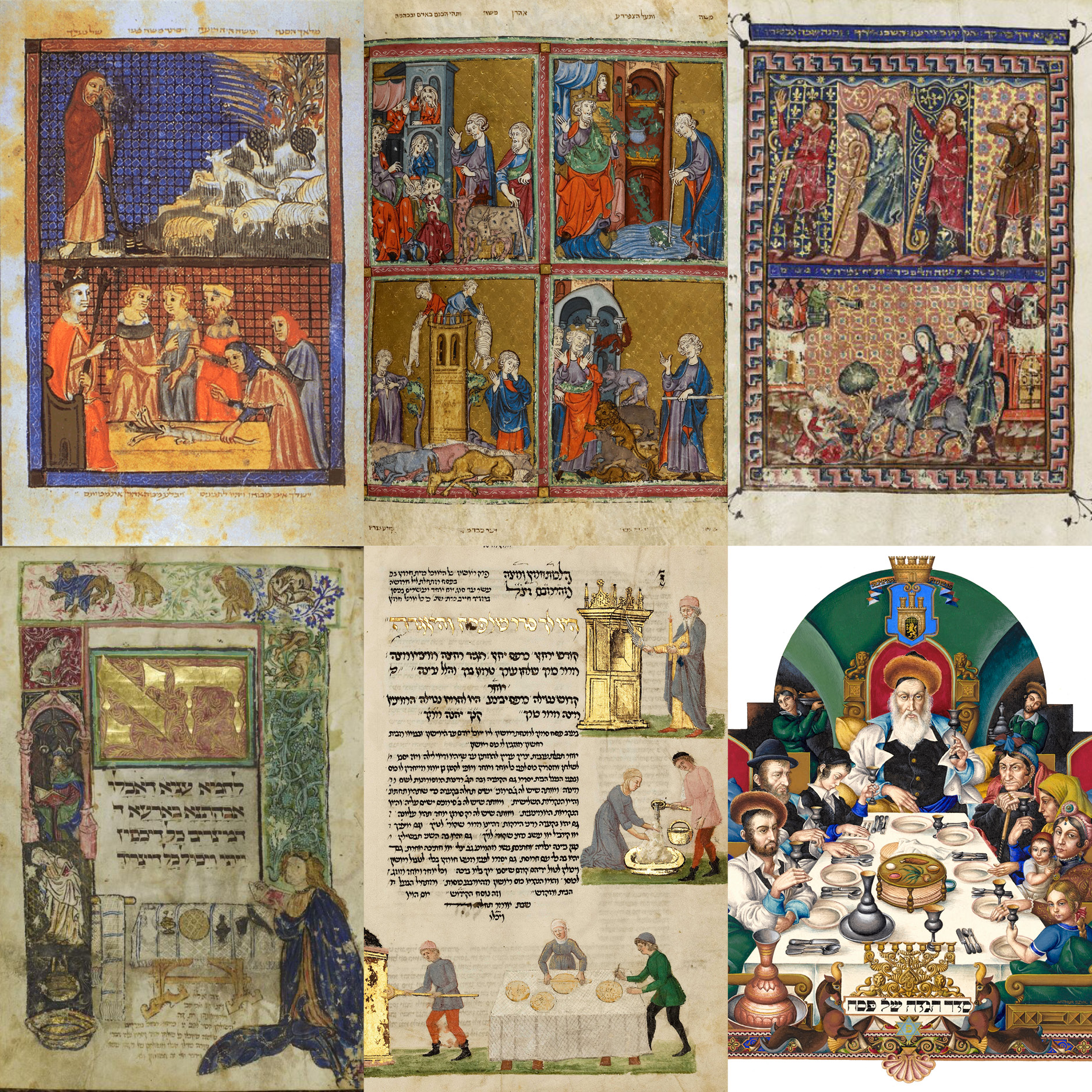
With the exception of the Chumash (the Five Book of Moses with haftarah and often commentary), the Haggadah is likely the most opened book in the pantheon of Jewish literature.
For more than 2,000 years, Jews have written sacred texts, centralizing reading and study as the beating heart of Jewish life. Textual study, performing myriad mitzvot and reciting prayers replaced the sacrificial system that lasted 1,000 years.
Among Jewish books, for many people the Haggadah ranks as the most opened, most illustrated and most beloved. Children recite sections by heart; all Jews know the four questions and can sing Dayenu. No story is more central to Jewish life than the Exodus from Egypt, and Seder presents the principle ritual which focuses on explanations to children. Prayer and study sustain our souls. Seder transmits our heritage to the next generation.
For seven centuries, Jews have commissioned illustrated Haggadahs to add another dimension to Passover celebration. Early Sefardi Haggadahs preceded the prayers and text with Biblical scene illustrations, most notably in famously illuminated volumes like the Sarajevo, Golden or Rylands Haggadahs. Early Ashkenazi Haggadahs, like the so-called Ashkenazi Haggadah or the Rothschild Miscellany, utilized illustrations to visualize procedures found on the page, like cleaning the house before Passover or making matzah. But other illustrations also explain the Exodus story or messianically predict the coming of a future Redemption for the Jewish people. Just as we were once redeemed from Egypt, so God will provide a permanent future peace for the world.
Modern Haggadahs by genius artists like Lodz’s Arthur Szyk in the 1930s or Israel’s contemporary artist David Moss capture the haggadah’s history by including all 15 traditional parts of the Seder alongside modern illustrative interpretations. Szyk’s Haggadah clearly portrays Israeli pioneers (halutzim) as heroes and Nazi persecutors as ancient Egyptians. Moss’ paper cuts, micrography and extensive research reflect contemporary adaptations of traditional Jewish art in modern forms. The Haggadah is an ever developing literary and artistic creation.
Just before the meal, the Haggadah informs us of the central lesson, “In every generation, each person is obligated to see him/herself as though s/he had come out of Egypt.” Here is expressed the great genius of the Seder ritual: to inculcate, particularly by appealing directly to children, that just as God saved us from Egyptian bondage so will God redeem the Jewish people in the future. Each of us has been saved from Egypt: historically, perpetually, in our own lives, even today.
Passover and the Seder express not only the glorious past of the Jewish people and the core of Jewish belief, but the future restoration of a paradisal vision in which all of humanity lives at peace.