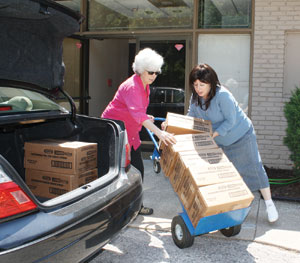
REACHING OUT — Goldie’s Gift, a program offering cheer and holiday items to area seniors in nursing homes and retirement centers, is expanding. This year, in honor of the upcoming High Holidays, it hopes to expand its services to include seniors living in their own homes. If you know of anyone — he or she could be a loved one, friend or neighbor — who is home bound and would enjoy a friendly visit and pre-holiday gift bag, Goldie’s Gift wants to know. To add someone to the list, or to make sure someone living in a nursing home or retirement center is on the list, contact Denise Ellenberg at 913-491-1619 or Blumah Wineberg at 913-940-1113.


BUILDING CHARACTER WITH ‘UNCLE DAN’ — Rainy Day Books’ Founder and President Vivien Jennings will join “Uncle Dan’s Report Card” co-authors Barbara and Bob Unell lead what they are calling a “Kitchen Table Conversation” about teaching toddlers to teens lessons of personal responsibility, positive relationships and self-discipline. The discussion will take place at 7 p.m. Wednesday, Sept. 21, at Unity Temple on the Plaza and includes five other local experts. The book describes the motivation of the parents and teachers in 1914 to raise children by its values and healthy habits. The book gives practical, easy to use, proven tips to practice and reinforce this report card checklist. For more information about admission or purchasing a book, visit rainydaybooks.com, UncleDansReportCard.org or call 913-384-3126.


PLAZA ART FAIR — This year there will be at least one Jewish artist at the Plaza Art Fair scheduled to take place Sept. 23 through Sept. 25. Philadelphian Bruce Reinfeld will showcase a compilation of whimsical photography. For more information on Reinfeld, visit www.hifidisco.com. To learn more about the Plaza Art Fair, celebrating its 80th year with 240 artists from across the country, check out www.countryclubplaza.com.


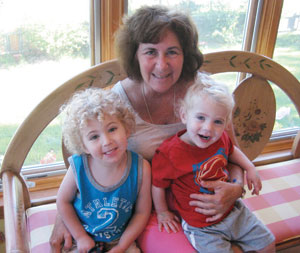
THE POWER OF READING — Deborah Shouse and her partner Ron Zoglin are supporters of The Writers Place, which is organizing a Power of Reading: A Celebration of the Written Word, Thursday, Sept. 22, at the Kansas City Plaza Library. The event is open to the public and free of charge. The night before the Power of Reading Patron Party will support Literacy Kansas City’s free, one-to-one tutoring services as well as The Writers Place readings, workshops, panel discussions, book signings, performance art, and public and educational programs. Both organizations are dedicated to promoting literacy in our community. For more information about Power of Reading sponsorship, contact Midori Carpenter at or Carol Kariotis at .


MMMMM GOOD — Last spring I moaned and groaned that the KC Kollel had run out of Passover chocolate cakes before I had a chance to order one. I happen to know that those cakes were absolutely fabulous. In time for the holidays, and following the tradition of apples and honey to help ring in a sweet New Year, this fall the Kollel is selling Apple Cakes for Rosh Hashanah as its fundraiser. Hand-made by Le Cordon Bleu-trained chef Marsha Pener Johnston, the cakes are 8-inch round and serve 12-15. The pareve desserts are supervised by the Vaad Hakashruth, and are a great way to enhance a Rosh Hashanah table. One cake sells for $25; two for $40. To purchase a cake/s, email . For more information, call 913-481-5842.

Corrections

A story in the Sept. 8 issue about Village Shalom’s first wedding, the wedding of Roberta Pollack and Sam Goller,  incorrectly identified Goller’s son. His name is Garett Conreux.

A sentence in the Sept. 1 Federation Next Gen profile about Dayna Gershon should read: “As soon as I got connected with the JCC, I was 100 percent back into Jewish education and knew that was where I belonged.”

Suicide takes the life of almost 30,000 people in the United States each year, but a local organization wants to make sure those lives are not forgotten.

Bonnie and Mickey Swade are co-founders of Suicide Awareness Survivor Support of Missouri and Kansas. The group, referred to as SASS-MoKan, will host its annual Remembrance Walk at 9 a.m. Sunday, Sept. 11, at Loose Park in Kansas City, Mo. Registration for the event starts at 8 a.m. SASS-MoKan uses the $25 participation fee from the event to provide support for those who have lost loved ones to suicide.

These suicide survivors connect through SASS-MoKan’s support group.

The Swades, who attend Congregation Beth Torah, started the organization after their son Brett Swade committed suicide in 2003. Brett died at age 31.

“When Brett died there were no suicide support groups in the city,” Mickey said. “We ended up at Solace House.”

Solace House provides support for families and children going through grief. But the group does not focus on those who have lost loved ones to suicide. The Swades said they noticed a void in the Kansas City area when it came to support for suicide survivors and they wanted to help fill that void.

“When Brett died Bonnie wanted to make something positive out of his death,” Mickey said.

Within a year the couple started SASS-MoKan. The support group meets from 6:30 to 8:15 p.m. on the second and fourth Tuesday of the month at the Shawnee Mission Medical Center’s Life Dynamics Building, 9120 W. 75th St., Merriam, Kan.

Mickey said the first year the group met about two to three people regularly came to meetings. Today the group averages 17 people per meeting and has had as many as 35 people in one meeting.

The group has events to support survivors throughout the year. SASS-MoKan has a Suicide Remembrance Day the Saturday before Thanksgiving. It also scheduled a Healing Day for survivors in February. The Healing Day will include yoga, massages and opportunities to connect with other suicide survivors.

Bonnie and Mickey describe the grieving process for suicide as different than that of other deaths.

“With suicide there are so many unanswered questions and the only one who can answer the questions is gone,” Mickey said. “You are never going to be the way you used to be. We refer to it as the new normal.”

Bonnie said the support group provides a safe place for suicide survivors to connect with others who understand what they are going through.

“Sometimes after a suicide friends are uncomfortable. They don’t know what to say to you anymore,” Bonnie said.

Bonnie offers advice to those who want to show support to friends who have lost loved ones to suicide.

“You don’t tell someone to get over it,” Bonnie said. “One of the things is to just be there. Don’t say call me when you need me, because I don’t think survivors will ever call.”

Bonnie said it’s important to let suicide survivors talk about their loved ones. Even after nearly eight years, Bonnie said she still thinks of Brett every day.

But in the midst of this tragedy Bonnie said she has found peace. Bonnie said she wants to provide hope to other survivors.

“You can find joy in your life again after a traumatic death of suicide,” Bonnie said. “You do find that life has a lot of richness to offer.”

Bonnie and Mickey anticipate that up to 450 people will participate in the Remembrance Walk this year. Last year 350 people attended the event.

“It goes up every year,” Mickey said.

Tara Spiller, a board member for SASS-MoKan, plans to attend the walk.

Spiller’s 17-year-old daughter Samantha died to suicide three-and-a-half years ago. She said the SASS-MoKan support group helped her get through the first year after her daughter’s death.

“You are able to talk to people who understood the same situation that you are going through,” Spiller said. “It’s nice to have those people to be connected to.”

Spiller no longer attends SASS-MoKan regularly. She said the annual walk provides an opportunity to reconnect with other survivors.

“It’s just that overwhelming sense of family,” Spiller said. “You just have that bond that doesn’t go away.”

Spiller said the event also helps raise awareness about suicide and mental illness.

“It’s an illness like any other illness,” Bonnie said.

Bonnie and Mickey said it is important to celebrate the lives of suicide victims. The act of suicide can take only moments, but it’s the years that the loved one spent on earth that should always be cherished, Mickey said.

“We need to remember a tragedy so we can appreciate life more,” Bonnie said.

For more information, contact Bonnie at 913-681-3050 or by email at .

Most people don’t think of Village Shalom when they are considering wedding venues. But that’s exactly where Roberta Pollack and Sam Goller chose to marry this past Sunday, Sept. 4. It is believed they are the first couple to be married in the Appleman Synagogue. The reception was held there also, in the adjoining social hall.

Neither Roberta nor Sam reside at Village Shalom, but they both thought it was a beautiful place to cement their relationship that began almost five years ago. Both have connections to the senior living community, but have different reasons why they felt it was a good place to marry.

Roberta liked the idea of making it accessible for Sam’s grandmother Rose Stolowy, a resident of Village Shalom who just recently celebrated her 100th birthday with a party on the premises.

“Grandma lives here and even though she’s mobile, if it’s pouring rain or 100 degrees, it becomes inconvenient for her to attend,” Roberta said prior to the wedding. “And no matter where you go, you still have to walk in a parking lot and through hallways … and I thought it would be good to make it convenient for Grandma.”

Besides Grandma Rose, Roberta has volunteered at Village Shalom for many years in a variety of ways — among those through the Jewish Community Center’s Ma’asim Tovim program and Hadassah, of which she is a board member — and thus feels close to many residents.

“When I walk in and the piano is playing in the lobby it just feels warm and festive. I also wanted to be inclusive to a generation that doesn’t usually get to participate in something like this,” Roberta continued.

Sam said he liked the idea of getting married at Village Shalom simply because “it’s a nice, community Jewish space.”

The couple also scheduled their aufruf to take place at Village Shalom.

A communal space

Eileen Miller, Village Shalom’s director of resident services, point out that the retirement community would be pleased to host more life-cycle events.

“We’ve celebrated the Bat Mitzvah of a resident here as well as a number of Brit Milah ceremonies for babies of staff, residents’ families and community members,” she said. “We have also hosted a number of shiva and memorial services for our residents who have passed away.”

Miller said Village Shalom will make the community spaces available to residents, their families and to community agencies “that fall within our mission of enhancing life for older adults.”

“There is no charge for the space itself for those agencies that are within our mission,” Miller said.

Depending on what services may be needed for the event, users can expect to be charged for such things as security, special room set ups, catering and rentals.

Miller said Village Shalom was excited that the Goller-Pollack wedding was held there. Anyone considering holding a life-cycle event at Village Shalom should contact Miller to learn more about how to make a room reservation. She can be reached at 913-266-8431 or .

The big day

Roberta and Sam expected 24 family members to come from Arizona, Texas, Florida, Chicago, Maryland and Connecticut. Between the two they have four children, three in collage — Garet Goller, Jordan Pollack and Stephanie Pollack. Imrie Goller is a student at Shawnee Mission East High School. A Kansas City native, Sam is the son of the late Albert and Shirley Goller.

Approximately 100 people were invited to attend the ceremony. They were particularly excited that Rabbi Amy Wallk Katz was coming to perform the ceremony. She served as an assistant rabbi at Congregation Beth Shalom before becoming the rabbi of Temple Beth El in Springfield, Mass., in 2008.

Their friendship with Rabbi Katz first developed when Roberta was taking Melton classes that Rabbi Katz taught. The relationship was cemented after Roberta began serving as the Katz family nanny.

“She was in between child care and I was in between jobs so I lived in their house practically,” Roberta said.

“We went to Massachusetts when she was installed and we’ll go there for Gabriel’s Bar Mitzvah. She’s more than a rabbi. We have a personal relationship,” Roberta said.

Sam got to know Rabbi Katz through Roberta.

“We had Passover and Shabbat dinners there,” Roberta continued.

Giving back

Roberta and Sam chose to invite all the Village Shalom residents to join them for cake during the reception. The kipahs they used for the wedding are being donated to Village Shalom for continued use. They also purchased five new music disks for the player piano located in the main building’s lobby.

Grandma Rose, who has lived in Village Shalom for about four years, thinks the Jewish space at Village Shalom is very beautiful. But she said she would be thrilled no matter where the ceremony actually took place.

“My Sam is happy. That’s what I’m excited about,” Rose said.

These days, Justin Spiegal is a happily employed man. Spiegal works for a Kansas City-based information and technology company as a business products services specialist. He’s responsible for managing 12 accounts and all projects associated with those accounts. Spiegal said Jewish Employment Services was helpful in landing his new position. JES is a joint program of Jewish Family Services and Jewish Vocational Service that connects members of the Jewish community with jobs.

“I would highly recommend JES,” Spiegel said. “The staff is wonderful and provides an environment that encourages success and honest feedback.”

Started in 2001 with support from The Jewish Federation of Greater Kansas City, the program expanded in 2010 and is now funded by Federation, the Lowenstein Brothers Foundation and the Jewish Heritage Foundation. JES offers a twice-monthly Job Club as well as the services of two career coaches — Joyce Hill and Cheryl Intrater — to help members of the community land employment. Gayl Reinsch leads the JES team and helps participants make connections in the job market and search for existing employment opportunities.

Spiegal learned about JES when he was searching for volunteer opportunities with Jewish Family Services. When his wife lost her job she started to coming to Job Club meetings; Spiegal would tag along to show his support.

“Even though I was happily employed, I found the advice useful for everyday life and client interaction,” Spiegal said. “I also enjoyed listening to other people’s stories, best practices and obstacles.”

Shortly thereafter, things started changing at Spiegal’s place of employment. He knew staff cuts were coming, so he decided to meet with Hill to discuss his situation and sharpen his interview skills before the axe fell at work.

“She was an excellent sounding board, great listener and very empathetic,” said Spiegal of Hill. “She also provided candid feedback and constructively challenged my thought process and approach.”

As he moved through this job-search journey, Spiegal called upon things he learned through the Job Club sessions. One exercise — the 30-second self commercial — was a challenge.

“I never liked giving my 30-second commercial — I’d rather let my actions speak for themselves,” he said. “While giving the 30-second commercial was uncomfortable I saw the point in it.”

Within a few months, Spiegal landed the IT position he holds today. He is the first to credit JES, especially the Job Club sessions, with making a difference in his search.

“The information presented in Job Club was invaluable,” Spiegal said. “I believe that practicing the skills taught at Job Club and modifying them to my communication style helped me become employed quicker.”

“Justin was a model student of JES. He worked hard and smart to gain the critical skills that impress employers,” Reinsch said. “He always went above and beyond in his approach to networking, job fairs and interviews. We knew it would pay off for him.”
Spiegal recommends others utilize JES.

“The JES staff is wonderful,” Spiegal said. “They provided a forum and positive environment to practice the new skills learned .... The environment and genuine interest they took in helping me is what I liked the most. They all went above and beyond to help their clients.”

Job seekers wishing to connect directly with JES should email Reinsch at , attaching a resume, if they have one. Reinsch may also be reached at 913-327-8278. The dates of the next two Job Clubs begin at 4:30 p.m. Sept. 12 and 26 in the MAC room at the Jewish Community Campus.

ANNIVERSARY OF 9/11 — I’ve taken part in some Facebook discussions recently regarding the 10th anniversary of 9/11. I will never forget that was the first day we had a child who would be attending Hebrew school and there was some discussion about whether or not I should take my child there that day. It was an experience I will never forget, and I bet other parents that were there that afternoon feel the same way I do. The Jewish community is commemorating the 10th anniversary of 9/11 with a communitywide remembrance service at 7 p.m. Sunday, Sept. 11, at Congregation Beth Shalom, 14200 Lamar. Several rabbis and cantors from the community will be participating as well as Ike Skelton, a former U.S. Congressman from Missouri. For more information contact the Jewish Community Relations Bureau|American Jewish Committee at 913-327-8126 or email .

VOCALISTS SOUGHT FOR SELICHOT — A community choir is being assembled for this year’s Selichot service, which will take place on Saturday, Sept. 24, at Congregation Beth Torah. The Selichot service begins at 10 p.m. Members of the Jewish community who have an interest in being a part of the community choir should contact Linda Sweenie, music director at Congregation Beth Torah, or 913-498-2212. Vocalists should have choir experience and be available for two rehearsals on Sept. 12 and Sept. 19 from 7:30–8:15 p.m. at Beth Torah.

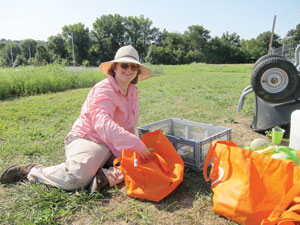
THE MOBILE MITZVAH GARDEN MARKET — Fresh produce fans can find produce from the Mitzvah Garden on sale beginning at 9 a.m. Sunday, Sept. 11, in the lobby of Kehilath Israel Synagogue. All funds raised from the mobile market will be used to buy seeds and supplies for next year. As we hope you know by now, Mitzvah Garden KC is a Jewish community garden project dedicated to providing accessible fresh produce to families in need. It also strives to educate the Jewish community on the connections between Judaism, the environment and social justice. The Mobile Mitzvah Garden Market can visit your synagogue or organization in the coming weeks. If you are interested, contact for more information.


THE GRANDPARENT GENERATION — Loyal reader Rochelle Kanter wants to get together with other bubbies, zadies, grandmas, grandpas or …. She thinks it would be fun and helpful for Jewish grandparents to get together to share ideas and have their Jewish grandchildren meet other Jewish grandchildren. “The idea is to connect to one another and who knows where this could lead. The one thing we do know is that being a grandparent is unique and a title you never want to lose,” Kanter said. Anyone interested in connecting with the Grandparent Generation should email or call Kanter at 913-681-8224.


UNICORN OPENS 38TH SEASON — Producing Artistic Director Cynthia Levin will direct the Unicorn Theatre’s 38th season opener, the 2010 Tony Award Winner for Best Play, “RED” by John Logan. A startling snapshot of an angry and brilliant artist at the height of his fame, “RED” takes you into the mind of master abstract expressionist Mark Rothko, for whom paintings are pulsating life forces and intended to “rip out your guts and expose your soul.” “RED” previews Sep. 14-18 and runs Sept. 20-Oct. 2. For more information, call 816-531-7529 or visit www.UnicornTheatre.org.

It’s not easily sugarcoated. Shari Stimetz, associate executive director of the Jewish Federation, knows that the economy is still having a serious impact on many members of the Jewish community. Don Goldman, executive director of Jewish Family Service and Sherrill Parkhurst, the volunteer director of Yachad-The Kosher Food Pantry, also know that statement is true.

“We are seeing a rise in one-time emergency funding requests which are addressed through our Gesher Emergency Assistance Fund. In addition, high summer utility bills have created a situation of short-term increased need. That seasonal uptick, in combination with the overall increased number of requests, has depleted our Gesher Fund,” Stimetz said.

The Gesher Fund is the short-term, emergency assistance fund. Monies for Gesher are raised by the Federation, outside the annual giving campaign, and distributed through JFS.

“Without our generous Gesher donors, this program could not exist,” Stimetz said.

The amount of money distributed through Gesher more than quadrupled from 2008 to 2009. The figures are as follows:

• 2008 — 32 clients, disbursed $20,316.56

• 2009 — 98 clients, disbursed $93,157.08

• 2010 — 104 clients, disbursed $99,522.43

JFS’ Goldman said the good news is the crisis isn’t getting worse. “We’re not seeing as many people newly in crisis. The bad news is people are having a hard time recovering from the crisis,” he said.

Stabilizing a bit

Goldman has noticed over the past year that things may be slowing down just a bit in terms of the number of people needing emergency assistance.

“Before the meltdown, it was typical for us to get 30 or 40 calls a months for various things like assistance. During the height of the recession we got over 200 a month,” Goldman explained.

He said what JFS is seeing this year is a little less stark and clear.

“We are generally not getting more than 200 calls a month now, but we are not nearly back to the level of 40 a month. I don’t know when we’ll ever get back to that,” he continued.

“The last few months we’ve been getting around 150 calls a month. There’s definitely a dip, but it’s still way above the level we considered normal back in 2008. I anticipate that we reached our peak in 2010, but we are starting to level off at much higher numbers than ever before.”

In addition to the Gesher Fund Stimetz referred to, there are two more funds, also provided by monies raised by Federation, that JFS is able to help people with. Those funds are Gesher XL and Chesed. Chesed is intended to help people with chronic financial problems, where Gesher is generally a one-time emergency grant. Gesher XL is intended to help with large, one-time emergencies.
Goldman believes the people who are receiving Chesed funds are the ones who still face the most challenges.

“Chesed is our chronic need funds, which means its recipients had a crisis one year but need multiple years to recover from that crisis. A typical Chesed recipient may have had a severe medical situation, or may have lost their job and remain unemployed or, more likely, underemployed. Chesed is there for someone who is physically recovering, or getting training to move into a new field,” Goldman said.

Yachad’s Parkhurst concurred that people finding new jobs after a layoff are often taking dramatic cuts in pay.

“They are having to readjust as the price of food and gas is soaring. Credit card debt is another issue. We have several families who resorted to credit cards for utilities, gas and food when they were unemployed. Now the monthly payback is more than they can handle. It’s a vicious cycle,” she said.

Giving more foodstuffs
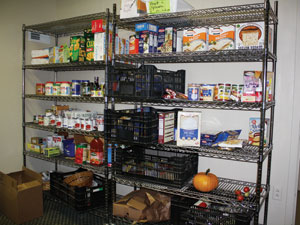
Parkhurst reiterated that while people may be working now, they may not be making as much money or they don’t have benefits anymore. They need a little extra help making ends meet, which is where Yachad can help. It is a supplemental food pantry, meaning it does not provide fresh food. Most often it has canned and shelf-stable food items available for those in need. The pantry itself generally services 12 to 15 families regularly each month. Families do not have to be Jewish to receive help from Yachad, a program of Chabad House Center.

Parkhurst said the pantry saw an increase of families with children needing help during the summer months.

“This is because during the school year the children receive breakfast and lunch at school, often free. Having them home during summer break creates a lot of food insecurity. When school starts back up, their visits taper off,” Parkhurst said.

Parkhurst stresses that Yachad never asks clients for personal information.

“Generally, by the time someone makes it to us they are so emotionally exhausted that they just want to pour their heart out. Or, they feel so guilty for taking our help that they feel they must share their circumstances even when I emphasize that we’re glad they found their way to Chabad House, and everything else is none of our business,” Parkhurst said.

The Simcha Box program, a joint program of JFS and Yachad, has also seen a large increase in users. About a year ago, 85 Jewish households were receiving monthly Simcha Boxes. In September, Parkhurst said 98 Simcha Boxes will be delivered.

JFS’s Goldman noted that Simcha Box is funded by the Jewish Heritage and Menorah Legacy foundations and is for people who are in financial crisis or just living at a really low standard of living.

“Gesher and Chesed will help pay rent or help pay utilities, but neither fund helps buy food or household goods,” Goldman said.

Simcha Box recipients are all JFS clients.

“The case manager looks at the Simcha Box as another tool in their tool kit to help families,” Goldman said.

Those in need may also get a little extra help from JFS’ holiday projects. The agency is currently making arrangements to send holiday boxes to clients for the High Holidays. JFS also arranges for holiday boxes to be delivered before Chanukah and Passover.
Goldman explained that holiday boxes for Rosh Hashanah and Passover differ from Simcha Boxes in that they provide ingredients — often including fresh chicken and fruits and vegetables — for the client to be able to celebrate the holiday with a traditional meal.

“For instance on Passover we provide the basic things for people to have a seder, which is an expensive thing to put on if you’re barely making it,” Goldman said.

In addition to some foods for Chanukah — often potatoes, onions and oil to make latkes and Chanukah candles — most families get presents as well.

“Some of these people get Simcha Box and some don’t, but they qualify for the holiday project because they don’t need the items every month but they still are struggling to put on a holiday celebration or they aren’t really able to afford to buy presents during the holidays,” Goldman said.

Getting help

It stills surprises Goldman that people don’t know they can reach out to JFS for help.

“Rabbis send us referrals, individuals send us referrals but a lot of people just don’t know what type of help is available from us,” Goldman said.

More importantly, Goldman said people don’t have to know whether or not JFS can help them before they call.

“People can call us and we look at their situation and see what kind of assistance they need. A case manager will figure that out. A client doesn’t need to understand all the programs we offer,” Goldman said.

“We can’t fix every situation but we at least can help and help you figure out what you can do and give you advice on how you can deal with it if we can’t help,” he continued.

JFS, in conjunction with Jewish Vocational Service, also offers Jewish Employment Services to help people who are still struggling to find a job.

To learn about any assistance programs offered by JFS or one of its partner agencies, call 913-327-8250

Gesher needs funds

The Jewish Federation Greater Kansas City is seeking additional funds for the Gesher Fund, the short-term, emergency assistance fund.

Checks can be made payable to the Jewish Federation, 5801 W. 115th Street, Suite 201, Overland Park, KS 66211. Note on the check funds are for the Gesher Fund. For more information, contact Shari Stimetz at 913-327-8102.

JFS collecting food for holiday project

JFS is asking community members to donate the following food items for the Rosh Hashanah holiday food project:

• sugar and sugar substitutes

• wide egg noodles

• honey

• Shabbat candles

• Cash to purchase chickens and other foods for the holiday

Food donations should be dropped off to JFS by Sept. 19. Volunteers are also needed to prepare the food bags or deliver them. Monetary contributions will be accepted as well. To volunteer, make a donation or for more information, contact Sondra Levy Atherly at 913-327-8265. Contributions can be delivered to JFS’ offices, 5801 W. 115th St. Suite 103, Overland Park, KS 66211. Make checks payable to JFS’ High Holiday Food Drive.


Dayna Gershon can’t quite put into words when or why she came to love Judaism so much.
Her family wasn’t especially observant, although her mom, Judy Parelman, was the youth director at Congregation Beth Shalom when Gershon was in high school, and Patti Kroll, director of the Polsky Religious School, lived across the street.

One of her earliest memories –— the first time she had to stand up for who she was –— was at Katherine Carpenter Elementary when a little boy asked if she was a Hebrew. “I thought it was funny, but it was also a defining moment,” she says.

“Regular school was the worst torture you could subject me to as a child, but I loved going to Hebrew School and Sunday School. It was something I was good at.”

Where she belongs

Gershon was active in USY in high school and during college served as Beth Shalom’s Shabbaton director and Kadima/USY adviser. As Beth Shalom’s youth director During her senior year at KU and the year following graduatior, she created opportunities for students to explore and develop their Jewish identities through Shabbat and other religious, educational and social experiences. After the following summer as a Herzl Camp program director, she spent three years in Minneapolis as a USY regional youth director.
At that point, the urge to be closer to family took over along with feeling the need to explore career options beyond USY. In 1998, Gershon moved back to Kansas City and was working for ASE Group, which specializes in corporate meetings and events, when she met Danny Gershon,

The couple moved to Louisville, Ky., for Danny’s residency, where they married, and Gershon became the Jewish life and learning director for the JCC. “As soon as I got connected with the JCC, I was 100 percent back into Jewish education and knew that was where I belonged,” she says.

Active Judaism for Grownups

Shortly after she and Danny came back to Kansas City in 2004, in addition to joining the Religious School staff at Beth Shalom, Gershon participated in the Women’s Division B’not Kehillah young leadership program. “It was a rite of passage,” she says. “Everybody I knew had done it and gotten more involved.” She did too, joining the board of Women’s Division, as well as the Village Shalom Associate Board.

She currently has no volunteer projects, but it’s easy to understand why. In addition to preparing lessons and teaching at Beth Shalom, she’s the mother of Max, 7, and Sadie, 4, and she works part-time as an administrative assistant for Rabbi Jonathan Rudnick, the community chaplain.

But she also knows it probably won’t be long before the Federation beckons her back. “Women’s Division is a very inspiring place to be and such an active way to be Jewish,” she says. “You’re constantly learning where the needs are, how you can make a difference in the world, and have a great time doing it.”

You could almost say that Women’s Division is the place for grownups that Gershon tries to create for her students. “I want them to understand that Judaism is part of who they are,” she says, “and not just for someone we hope they will grow up to be.”

Educator of the Year

This year at Beth Shalom, Gershon is teaching fifthhgrade Hebrew School and is an assistant teacher in the pre-K classroom. She was also one of 10 teachers chosen from local congregational schools to participate in CAJE’s Teacher Education Initiative, and spent the past year volunteering to assist in the transition of Hebrew High from CAJE to Beth Shalom.

As a Jewish educator, what worries Gershon most is the number of people who are disconnected from the spiritual and religious aspects of Judaism. At the same time, what gives her hope is how many people relate strongly to Jewish values and tzedakah. Ultimately, she would like to earn her master’s degree in Jewish education so she can “be a better teacher teaching more Jewish things to more people.”

Her talent and dedication will be recognized when she receives the Grinspoon-Steinhardt Religious Educator of the Year Award at the Jewish Federation of Greater Kansas City’s Annual Meeting on Sept. 7 at Oakwood Country Club.

PAREVE CARDS — Ozzie Nogg, author of “Joseph’s Bones,” a prize-winning collection of personal stories, recently introduced her line of unique Judaic greeting cards — PAREVE CARDS: Permissible for All Occasions. The designs include Jewish New Year, Thank You, Bar and Bat Mitzvah, Happy Birthday, Weddings, New Baby, Anniversary and other life cycle events. Nogg uses text from Midrash, Talmud and the Tanach, turns the original language on its head, and offers greetings that are, in her words, “both meaningful and slightly wacky.” The black and white wood block-style art work on the cards features “lessons” from The Little Rebbe. “The character was inspired by my late poppa, an old-world Lithuanian-trained rabbi, whose tales of his shetl cheder still inform my work,” Nogg said. Cards are available at or call 402-342-7870.



NEW CD — Israeli songstress Rosi Golan’s highly anticipated full length record, “Lead Ballon,” became available Aug. 30. The honey-voiced Jewish singer has already garnered acclaim for her songs that have earned her comparisons to the likes of Jenny Lewis and Ray LaMontagne. While Golan may have been born in Israel, she’s called many different countries home including France, Germany and now the United States. She speaks five languages fluently and has taken inspiration from all of her favorite places worldwide and integrated them into this new release. Golan’s debut album, “The Drifter & The Gypsy,” generated several songs that were prominently featured on numerous television shows (including “One Tree Hill” and “Private Practice”) and in film (“Dear John”) and a large majority of her new record has already been licensed out. For more info, visit www.rosigolan.com.

10TH ANNUAL HELEN GOLD RUN/WALK —The Helen Gold Run/Walk, the largest contributor to Parkinson’s Disease research in Kansas City, is back for its 10th year. The race will take place on Saturday, Sept. 10, at The Fountains Shopping Center in Overland Park. Those looking for a chance to help support ending this debilitating neurological disorder can register now at www.helengold5k.com. “This year, more so than ever, we need people’s support and efforts to end this disease,” said Ron Gold, Fountains Shopping Center co-owner and president of G-K Development Company. “The economy is down, but we’re hopeful that this cause is close to the hearts of many, and we’ll have another successful event.” The race is named for Gold’s mother who fought the disease for 25 years. He was approached to sponsor the race in 2002 shortly after Helen Gold passed away. Gross proceeds from funds raised at the Helen Gold Run/Walk have always been donated to the Parkinson’s Disease Research Center at KU Medical Center. To date, the Helen Gold Run/Walk has raised more than $350,000. Besides the website, registration forms are available at www.enter2run.com and at the New Balance store located at The Fountains Shopping Center.


Correction

The Ohev Sholom Sisterhood Honey Cake Day program is scheduled for Sunday, Sept. 25, not Aug. 25 as listed in previous calendar entries. For more information, call Mary Birnbaum at 913-894-0588 or 816-896-4414.

Every year students at the Hyman Brand Hebrew Academy are greeted on the first day of school by faculty and staff. This year they were also greeted with some structural changes aimed at helping the school balance its budget.
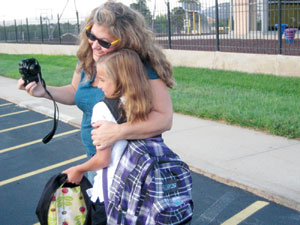
“Along with our new programs and new staff, I am extraordinarily pleased with physical changes made to our facility,” Head of School Howard Haas said. “We added rooms and we are utilizing our space better than ever before. Our library is in a newly remodeled space by the kindergarten room and, for the first time, we have a computer lab in the upper school. These positive moves facilitate a considerable reduction in rent, which is a significant step toward balancing our budget.”

Now beginning his fifth year at the school, Haas said he continues “to feel extremely positive toward our role in educating our students and community.”

The school’s library was previously located in the lobby of the Jewish Community Campus. The art room and the computer lab are no longer in the building’s basement. The art room is now on the first floor and the computer lab is on the second floor.

Numbers are growing

Haas is also excited that all indications are the community day school’s enrollment will be bigger than last year. Last week Tamara Lawson Schuster, director of admission, said she can’t say yet exactly what those figures are as they change every day. However last year’s enrollment stood at 232 students.

“This is wonderfully positive news,” Haas said. “Our kindergarten class is strong with 28. So in this time of economic catastrophe, our numbers are growing.”

Schuster said HBHA is happy with its current retention rate.

“In the past, HBHA would have significant attrition going from the different school divisions — going from lower school to middle school and from middle school to upper school. This year all of our students in fifth grade stayed and moved on to sixth grade (middle school), except for one who is moving out of the country,” Schuster said. Two students, however, have chosen not to advance from eighth grade to high school.

The school is also appealing to families who had started their children in public school.

“This year we have five new fifth graders, as well as two new eighth-graders and seventh-graders,” Schuster said.

Expanded programs

Principal Gayle Gray said the staff is very excited about changes made to the music program. Before this year, the lower school music program was simply choral music based in the teaching of Jewish songs.

“We wanted to expand that to cover more general music,” Gray said.

A new music teacher was hired just before school started to teach general music. Lower school students will meet with that teacher once a week. They will continue learning Jewish music from Devra Lerner once a week as well.

“We are going to be giving more opportunities for students in the area of performing, creating and listening to music with understanding,” Gray said. “We will be creating a comprehensive and sequential music education program that aligns with state and national standards and benchmarks.”

A few weeks ago the Facebook community was all abuzz that a big official state event celebrating Kansas’ 150th birthday was taking place in Wichita on Oct. 8, which is Yom Kippur. Kansas Gov. Sam Brownback is expected to attend the Kansas 150 Festival as are many other elected officials from across the state.
The event was planned to coincide with the annual Kansas League of Municipalities meeting, which always takes place the second weekend in October. That weekend this year is Oct. 8-10. Jewish officials in Wichita believe the event was scheduled because no one on the planning committee really looked at a calendar or understood the significance of the date.

After meeting with Wichita Mayor Carl Brewer last week, officials of the Mid-Kansas Jewish Federation in Wichita believe that scheduling the event that day was simply a coincidence and not a slight at the Jewish community.

The event

The Kansas 150 Festival is not a state-sponsored event. It is sponsored by the Kansas Association of Counties and the League of Kansas Municipalities. According to the website ks150.com, Wichita Mayor Carl Brewer, who is also president of the League of Kansas Municipalities, is serving as chair of the event. He is being assisted by Gov. Brownback, Overland Park Mayor Carl Gerlach, immediate past president of the League, and Dodge City Councilman Jim Sherer, the League’s president-elect, along with other business and civic leaders from across Kansas. The day’s event includes a parade followed by a fair with vendors and a concert.

The Jewish population in Wichita is estimated to be between 800 and 1,000 people. The city’s population is about 400,000. Last week four people from the Mid-Kansas Jewish Federation — Sandy Diel, Federation director; Rabbi Michael Davis of Congregation Emanuel; Rabbi Nissim Wearnick of Ahavath Achim Hebrew Congregation; and Paul Wolff, president of the Mid-Kansas Federation — met with Wichita’s mayor to discuss the situation. Diel said they learned that the date for the festival was chosen to coincide with the meeting.

“They wanted to have an event for all of the city and county officials and their families that would be in Wichita for that meeting. They thought it seemed like a good idea to celebrate Kansas’ 150th birthday,” Diel continued. “They didn’t just pick the date out of thin air.”

Diel pointed out that other events have coincided with the High Holidays in Wichita. For instance the annual Susan G. Komen race is in Wichita the last weekend in September. In Kansas City, the Plaza Art Fair often coincides with the High Holidays as well.
Diel said she learned the governor always speaks at the League of Kansas Municipalities meeting.

“That’s how he got involved with this program, without realizing it is Yom Kippur,” she said.

A teachable moment

Besides learning why the date had been chosen, Diel said the group also hoped to educate the mayor about the importance of the High Holy Day.

“Nobody planning this event was familiar enough with the Jewish calendar to know it was a holy day. So we talked to him about why it was a holy day and we gave him a calendar for the future of Jewish holidays provided by the JCRB in Kansas City. We hope in the future when planning events he will be more aware of these days,” Diel said.

Diel said they told the mayor that Jewish people have a strong history in the state of championing civil rights and endorsing freedom.

“We are disappointed that we will not get to share in the celebration,” Diel said, also informing the mayor that the first congregation in Kansas was established in Leavenworth two years before the territory even became a state.

“Jews have always been a part of Kansas history. The fourth mayor of Wichita was Jewish,” she explained.

Extending the festival?

Diel said the date for the Kansas 150 Festival cannot be changed. The festival will still be going on after sundown, making it possible for members of the Jewish community to attend a small portion of it if they choose. There is also the possibility of adding an event on Sunday.

“That option is being explored now, but there is no commitment that will happen for sure,” Diel said.
Diel said she and her colleagues were happy with the result of their meeting with the mayor.

“We all walked away feeling that we understood each other better. We were educated on the event and believe it wasn’t a slight to the Jewish community. It was an oversight that just required more education. If they attempt to extend some things and that really comes to fruition, that would be a really good show of good faith and we believe that the mayor is going to try to do that,” she said.