


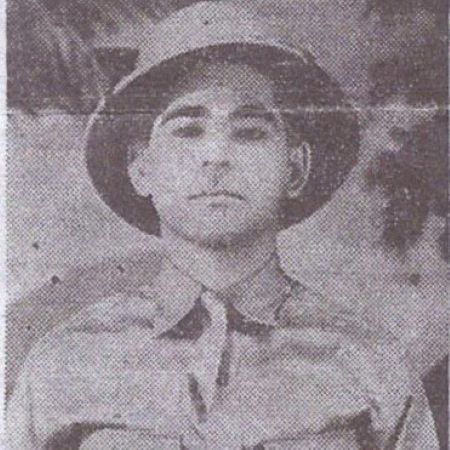
More than 80 years after his death, Sgt. Simon Garelich (z”l) has been returned to the United States. A casualty of World War II, his remains were identified and reinterred last month on American soil, and after generations, his family finally has closure.
Simon Garelich, born on Sept. 10, 1920, was the youngest of four sons and six daughters of Mary and Michael Garelich (z”l) in St. Joseph, Missouri. He attended the Kansas City College of Pharmacy before entering the U.S. Army in March 1941 and rising to the rank of sergeant. While serving in the Philippines and defending the Bataan Peninsula, Garelich was captured and held as a prisoner of war by the Japanese beginning in April 1942.
The soldiers captured on the Bataan Peninsula were forced on the brutal six-day, 65-mile Bataan Death March, during which Japanese guards beat, abused and tortured American and Filipino POWs. At the end of the march, they were forced onto boxcars, transported to the city of Capas, and then marched seven more miles to the O’Donnell POW Camp, according to the National Museum of the U.S Air Force. Many Americans who did not die at O’Donnell, including Garelich, were relocated in June to the Cabanatuan POW Camp.
According to the United States Defense POW/MIA Accounting Agency (DPAA), Garelich died at age 22 at Cabanatuan on Nov. 4, 1942, from infection and “complications of captivity.” His body was buried with other fallen soldiers in what was designated as Common Grave 707. His family was informed that he had died as a POW and his remains were unidentified. For his mother and siblings, that was all they’d ever know about their beloved son and brother.
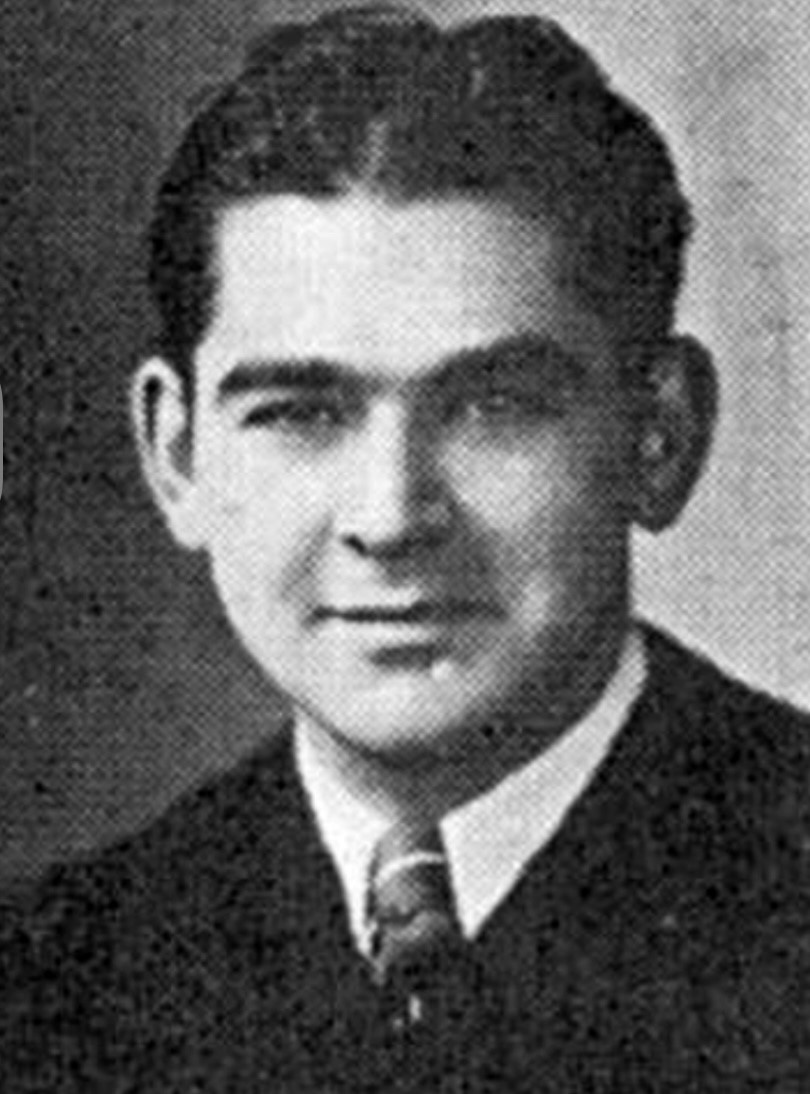
Simon Garelich
“They were heartbroken because he died in the war, and he died at a young age,” said Dr. Richard Gilman, son of Garelich’s sister Helen Gilman (z”l). “He was his mother’s favorite, and all of the family admired him… [My mother] talked about him fondly, and it saddened her and all of his sisters.”
“He was my favorite uncle,” said Carol Brooks, the 91-year-old daughter of Garelich’s sister Alice Weinstein (z”l) and the only living relative with memories of him. “He was handsome beyond belief, funny and very nice to children… He just had a special way about him.”
By the time Cabanatuan was liberated in January 1945, more than 2,700 POWs had been buried there. After the war, the American Graves Registration Service (AGRS) recovered remains from the camp and reinterred them in Manila, Philippines. In 1947, the AGRS tried to identify the remains, but many were unidentifiable and subsequently buried in Manila as “unknowns.” In 1951, efforts to identify the remains were suspended.
“It was always a painful question mark,” Dr. Gilman said. “When somebody dies during a war and there’s no body recovered, it leaves an empty feeling.”
More than six decades later, in 2014, the DPAA started the Cabanatuan Project to identify the unknown remains that had been reinterred from Cabanatuan to Manila. The Department of Defense collected DNA samples from family members of missing soldiers, including Brooks, her sister and her niece, to help verify identities of the deceased.
In January 2019, the DPAA exhumed, inspected and began attempting to identify remains associated with Common Grave 707 at Cabanatuan. One set of remains, though incomplete, was for a “male individual of European ancestry” who matched the height, age and dental profiles of Garelich. To confidently determine if the remains were Garelich’s, the DPAA compared DNA from the teeth and bones to DNA collected from family members of missing soldiers from the Cabanatuan Project.
On Oct. 7, 2024, after multiple tests from anthropologists, odontologists and DNA analysts, the DPAA shared the news that they had found the remains of Sgt. Simon Garelich.
Garelich’s family members — nieces, nephews, cousins and their children — were informed last year. Brooks became the main point of contact for the U.S. Army and organized the arrangements for the reinterment. An Army major from Fort Leavenworth came to Brooks’ home and met with her and her cousins to discuss the process of returning Garelich’s remains and organizing a ceremony and reinterment.
Garelich was entitled to burial at a military cemetery like Fort Leavenworth National Cemetery, but Brooks was adamant that he be buried in the Jewish cemetery where many of his family members are buried — Sheffield Cemetery.
“He was 22 when he died. He hardly had lived with the family, so I wanted him buried where the family was,” Brooks said.
The military arranged for Garelich’s remains to be flown to Kansas City in a casket draped in an American flag. Family members, policemen and airport staff gathered on the tarmac at the Kansas City International Airport to honor Garelich as the casket was unloaded and carried by Army soldiers to a nearby hearse.
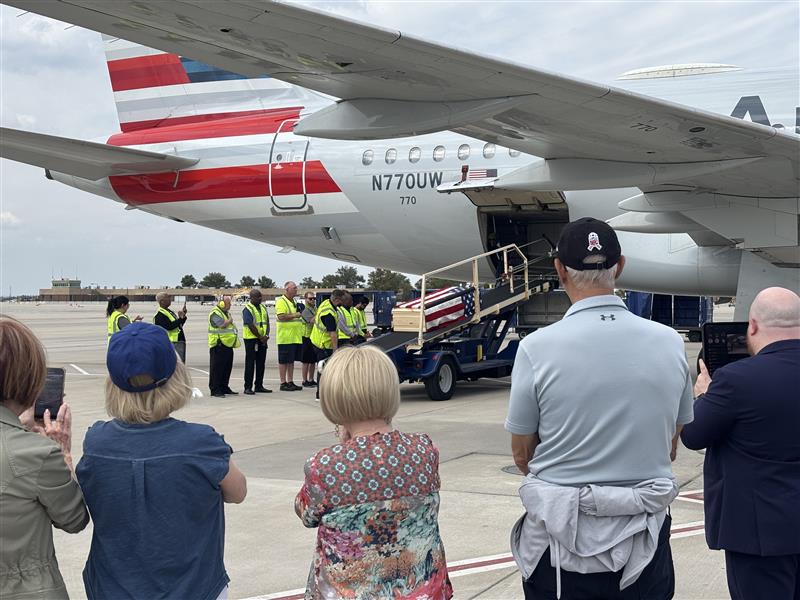
A casket containing the remains of Sgt. Simon Garelich is unloaded from an airplane at the Kansas City International Airport on Tuesday, Sept. 30. (MCI Deputy Director of Aviation Justin Meyer)
As the airplane taxied down the runway, two Kansas City International Airport fire trucks shot arcs of water over the plane “to commemorate [Garelich’s] return,” according to airport Deputy Director of Aviation Justin Meyer.
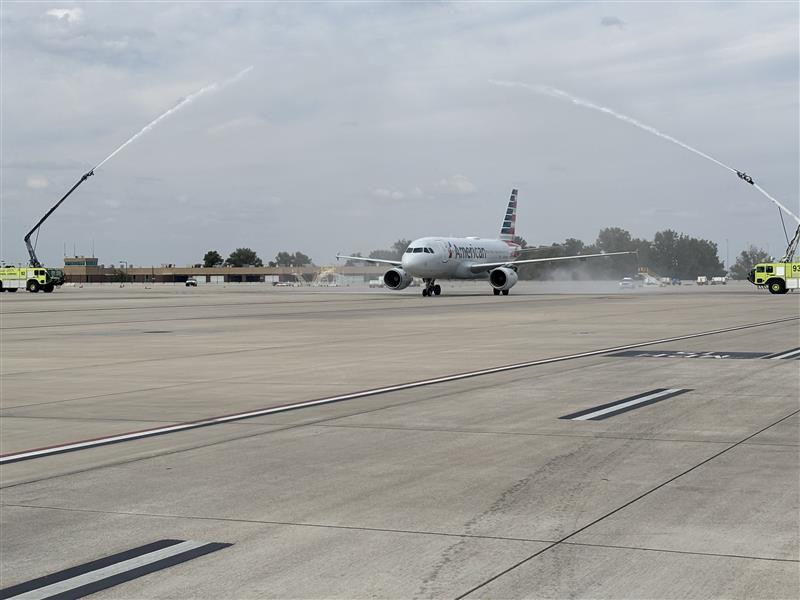
Kansas City International Airport fire trucks shot arcs of water to commemorate Sgt. Simon Garelich’s return to the United States. (MCI Deputy Director of Aviation Justin Meyer)
A ceremony sponsored by the U.S. Army and Department of Defense was held at Sheffield Cemetery on Oct. 5. Louis Memorial Chapel handled the reinterment, and Rabbi Talia Kaplan of Congregation Beth Shalom led the religious portion of the service.
“It was a very special ritual, and I was humbled to be a part of it,” Rabbi Kaplan said. “Because it is a reinterment and not a funeral, we still bury the remains by placing earth on the casket, but we do not recite the full funeral liturgy.”
In addition to words from family members and a eulogy, the service included a prayer written by a Jewish member of the Armed Forces shortly after World War II and read by Rabbi Kaplan. Soldiers presented the flag to Brooks, and Jewish War Veterans Post 605 provided a display case for it.
“There was a seriousness and a caringness on [the soldiers’] faces,” Brooks said. “They didn’t know [Garelich], but he was a soulmate because he was a soldier.”
Both Brooks and Dr. Gilman expressed gratitude for the efforts of the Armed Forces and government in identifying and returning the remains and facilitating the burial.
“They are to be commended for the efforts and the time they’ve invested in this,” Dr. Gilman said. “It’s amazing.”
“It went so smoothly, like it had been planned for years,” Brooks said. “I would say that the whole procedure, starting with the government and the military contacting us to the way it was booked [and the funeral itself], was an absolutely perfect and unbelievable process. You couldn’t have done any better.
“I’m very family oriented and was close to all 10 of my grandmother’s children,” Brooks continued. “...Since I’m the oldest one left and I knew [my uncle] the longest, it just meant so, so much to me.”
Brooks also expressed gratitude to Alana Schneider at Louis Memorial Chapel and Rabbi Kaplan, who both helped ensure the Jewish burial was facilitated properly.
With Garelich finally at rest, his family has received the closure they never thought they’d get.
“We are considering this a good thing,” Brooks said. “He came home, and he’s with family.”