


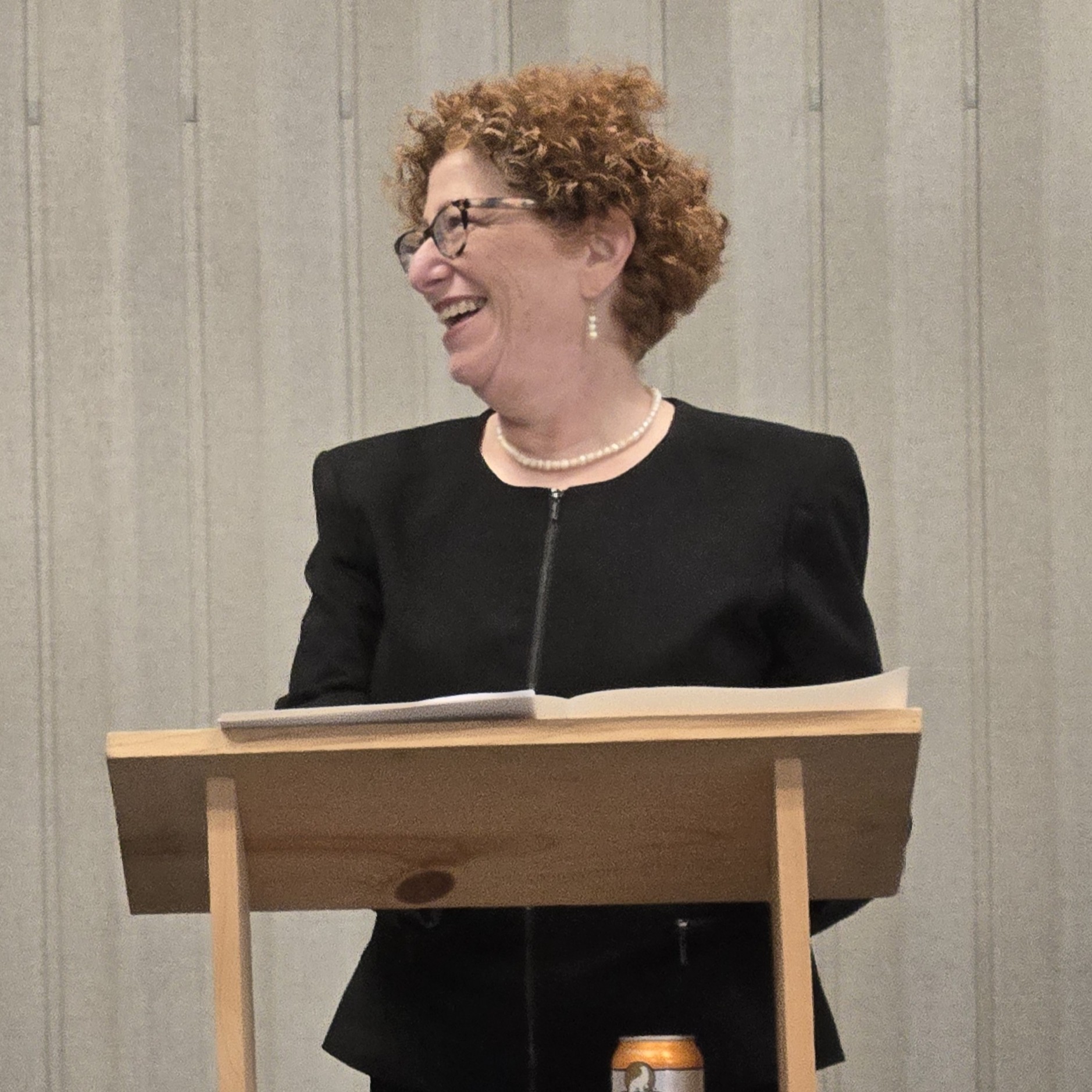
On April 12, the Greater Kansas City Section of the National Council of Jewish Women (NCJW) hosted Kansas Supreme Court Justice Melissa Standridge for a discussion and presentation, “How the Kansas Supreme Court Works — and Why It Matters.”
Justice Standridge reminded attendees that there are three branches of government — the legislative branch makes the laws, the executive branch enforces the laws and the judicial branch interprets the laws. Those in the judicial branch pledge to not be swayed by politics, news, special interests or their own opinions.
Justice Standridge also discussed how the selection process works for Kansas Supreme Court judges. Each of the four congressional districts has one lawyer and one non-lawyer. The lawyers are elected by their peers, and non-lawyers are appointed by the governor. There is an additional lawyer that chairs the commission who is elected by the lawyers statewide. This group reviews all the nominations, and they select three candidates. The governor then selects the judge.
Kansans also have a retention vote. Kansas Supreme Court Justices must stand for retention every six years.
“The program was informative, engaging and thought-provoking,” said Carla Oppenheimer, president of NCJW.