 Sitting in a hospital in Holon has been a most eye-opening experience. The hospital sits on the border of Holon, Tel Aviv and Yafo serving an area mixed with Jewish and Muslim and Christian citizens. And it illustrates what I love about Israel.
I came to Israel because my daughter needed surgery. The day of her scheduled surgery we arrived at 6:25 a.m. After all the intake she was shown to her room where she would wait for surgery. Her roommate was a Muslim woman, ‘K’ who had acute appendicitis and also needed surgery.
We were now linked together. They went down to surgery about the same time and returned to their room around the same time: five hours after we first went down. While we waited we sat in an area with many others: Jewish, Christian and Muslim parents, children, spouses and friends waiting for their loved ones to emerge.
I do speak some Hebrew, but in my mother anxiety, my Hebrew left me and I mainly spoke English. Of course my daughter’s husband speaks Hebrew. But it really did not matter. Most of the nurses and aides could quickly move from Hebrew to Arabic to English and at times Russian and Yiddish.
As patients were wheeled into the surgery area a barrage of languages wished them luck. And as families were reunited after surgery, those remaining behind sent prayers for speedy recovery to all no matter the religion; we were united in our need to comfort each other in our time of stress and anxiety.
When a 13-year-old boy was left to wait alone as his father had surgery, we banded together to speak to him and keep him calm until his much-older brother arrived. It was K’s husband who told him what to tell his brother after the doctor came out, because the boy’s happy tears rendered him unable to speak. When his phone’s battery died, my son-in-law gave him our charger so he could call his brother again.
We became a team. When the nurse came in and started to speak to me in Hebrew, I responded in Hebrew, “more slowly please.” K’s husband told the nurse to speak to me in English. When he left to walk his two young children out along with his sister, I held his wife’s head and cleaned her face after she vomited. She was young enough to be my daughter too.
At first, before the surgery, K’s husband put her hijab over her hair when we were in the room. But after the surgery he did not bother. We were in this together. Only when visitors came did she put her hijab on.
Later that evening, when my daughter started to vomit, I grabbed the garbage pail for her, while my son-in-law brought in another trash can. Then K’s mother began to laugh, the idea of the two of them vomiting simultaneously was just too much. I started to laugh as well. My son-in-law was a bit confused as to why we were laughing. But it was fine. We were in close quarters as the hospital was full, and we were put together in a single room.
When the nurse came to check my daughter, we two mothers were asked to leave for a few minutes. We stood outside together and spoke about our daughters. We were together in wishing both a speedy recovery. It did not matter our language or religion, we were just moms whose daughters just had surgery.
Actually I really enjoyed listening to all the conversations, not to the words, but to the switching in one sentence from Arabic to Hebrew to English. The cadence of the melody changes with each language like a symphony of sound. At times I would be confused as to what language I was hearing, as the speakers would switch so fluently from one to another.
My daughter told me that Arabic spoken in Yafo is filled with Hebrew expressions.
Late that evening, after I had spent over 15 hours at the hospital, my son-in-law and I went back home. K’s husband spent the night. In the morning we found out that my daughter had been sick and he helped her after she threw up.
I felt terrible that I was not there, that she had not told us to return. Her answer when we asked was the room was way too small for us all to be there. Also in the morning before we came, it was K who told the nurse who came to check on her that my daughter had been sick during the night; that she needed to be checked as well.
That morning I purchased tulips for both of them because they were going to have to spend another night in the hospital. Yes being sick at night landed both of them another night in the hospital.
My daughter and K are now home. Their room is empty and ready for the next patient.
In all I spent parts of four days at Wolfson Medical Center. While at the hospital I felt a sense of companionship. People working together to help everyone else. I get so sick of hearing about hatred and bigotry and stereotypes. At Wolfson we are one people. That is the Israel I love.
I am aware of what is happening elsewhere in Israel. At the borders and in the West Bank. But when you are at the hospital you know that the everyday people can live together and wish each other well.
Doctors, nurses, aides; patients and families; Jewish, Muslim, Christian; all together in one purpose: To help everyone feel better. At least that is the impression I had at Wolfson. That feeling is what gives me hope for Israel.
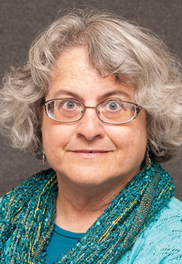
Ellen R. Portnoy is a freelance writer, blogger, fundraiser and volunteer. This article originally appeared on her blog, zicharonot.com.



 The deadly intrusion into the Tree of Life - Or L’Simcha Congregation during Sabbath prayers has shaken all Jews. In the aftermath, the Kansas City community, led by clergy of different faiths, gathered for a memorial service in a local synagogue. An outpouring of support and good will by the non-Jewish community was heartening. People attended the service to stand together against discrimination and violence, and to stand together with Jews as a united faith community.
 The Holocaust is the systematic mass murder of European Jewry and others by the Nazis.