David Ben-Gurion had a vision for the Negev to be the future for the Jewish state’s growth and prosperity. A pioneer, he trusted in the Jewish people to transform a seemingly uninhabitable desert into a hub of creativity and innovation.
The Negev region covers more than 60 percent of Israel. Its heart, the critical organ that pumps life into the Negev’s acres of arid land, is Ben-Gurion University of the Negev (BGU). Through BGU, Ben-Gurion’s dream is being realized.
On March 7, I returned from a week-long mission to BGU, selected to join a handful of science and health writers to report firsthand on the newsworthy research, innovation and collaborations occurring at the university. The BGU research in areas of neurological science, the environment and high-technology has provided me with many stories, expert sources and insight into how Israel is exporting its technology from the desert to the world.
We met with BGU President Prof. Rivka Carmi, the first woman president of an Israeli university. Before taking on her role, Carmi’s research included the identification of 12 new genes and the delineation of three new syndromes, one of which is known as the Carmi Syndrome.
“We are stationed in a unique way in Israel in that we have both academic and clinical staff working together intimately,” Carmi explained, noting that the BGU model of research for the sake of community improvement is one that has been recognized and adopted by leading universities around the world. She said she sees the school’s role not only as pivotal in the development of southern Israel, but in the progression and continued vitality of the entire State.
We met with Prof. Alon Friedman, who has made a dramatic discovery about the blood-brain barrier and its connection to the onset of epilepsy following brain trauma. We watched a demonstration by representatives of a BGU spin-off, ElMindA. The company’s Brain Network Activation takes cognitive-electrophysiology to a new frontier, unparalleled by any other test.
Two billion people suffer from brain-related disorders, including developmental problems (autism and ADHD, for example), neurological disorders (brain injuries, epilepsy), mental problems, and neurodegenerative disorders. ElMindA can assist in therapeutic interventions for nearly all of these problems.
We talked with two researchers who believe they have reliably identified new ways to improve diagnosis of autistic children based on biological and neurological testing and markers.
Dr. Ilan Dinstein, a member of the Zlotowski Center for Neuroscience, said his latest research indicates that even 20 or 30 percent of autistic patients can be identified based on MRI scans and/or EEG exams at the age of one, which he believes will revolutionize the field. Idan Menashe, a senior lecturer at BGU’s Department of Public Health, has collected data from more than 200 studies purporting 5,000 copy number variations that might be associated with the disease and managed to reduce that number to seven. A copy number variation is the number of copies of a particular gene in the genome of an individual. Evidence shows that such copy number variations can lead to patients with autism.
“Our study helped prioritize these regions, so doctors know where to look for these CNVs that might be associated with autism. … Now, we can use genetic diagnostic tools in addition to the typical psychiatric diagnosis, which increases the reliability of the diagnosis,” Menashe said.
I am very fortunate to have visited Israel nine times, and to have lived there for almost six years. But in all those experiences, I rarely took notice of the Negev or BGU — until now.
The area has biblical relevance: Both Yitzchak and Yaakov lived in the Negev (Genesis 24:62; 37:1), it was to the Negev to which the 12 spies were sent to scout out the land of Israel (Numbers 13:22), among other references.
And BGU is Israel’s most dynamic university, a catalyst for growth and an engine of innovation to propel Israel further to the scientific forefront.
David Ben-Gurion believed that “those who searched for wisdom should go south.” Next time you are in Israel, head down to the Negev.
Maayan Jaffe is director of philanthropy at the Jewish Community Center and a regular freelance writer for Jewish News Service. Her work related to the BGU media mission can be read on JNS.org, in Autism Parenting and B’nai B’rith magazines, among other places.


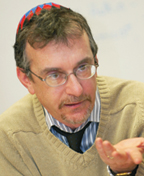 Recently the issues of free speech and academic freedom have been prominent in the news and in our conversations. In response to a heartfelt but intemperate tweet from a KU journalism professor, the Kansas Regents came up with a social media code which seems to many to be unduly restrictive and, frankly, ill-thought-out.
  In December I sat with 5,000 other Reform Jews and joined in an erev Shabbat service that was uplifting and heartfelt, musical and deeply engaging. It was a blast! … but for me the most poignant part of the service was one that was anything but joyful. I sat with eyes welling up with tears as I listened to Mindy Finkelstein tell her story.
 Boker tov, Kansas City!
 As a citizen of Israel, resident of Jerusalem, I thank you for your voluntary service in the Israel Defense Forces (IDF). You have earned the right to criticize Israel’s prime minister, Benjamin Netanyahu, even from a distance, now that you are back on Morningside Heights.