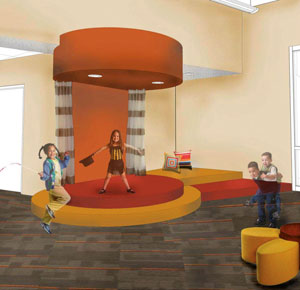
 “We are about building strong families.”
That’s the motto Jacob Schreiber lives with as executive director of the Jewish Community Center of Greater Kansas City. Schreiber came to Kansas City in August 2009 when the JCC, and other Jewish agencies, were facing very difficult economic times. Since that time he has discovered that if the JCC is going to survive and thrive, it needs to strengthen its commitment to engaging more young families — and to building a vibrant Jewish future. So the JCC is doing just that.
In December the JCC announced that it was expanding its Child Development Center preschool and taking over the library space in the Jewish Community Campus previously occupied by the Hyman Brand Hebrew Academy.
“Expanding the CDC to meet demand underscores the JCC’s ongoing efforts to create a lifelong destination spot for families and individuals. It’s commitment to quality care, learning and the environment will be integrated into the new Pre-K suite and updates to the current space,” explained JCC Vice President Robin Sterneck, who has been spearheading the efforts to upgrade family programming.
Construction on the new Pre-K suite is expected to begin in March and will be complete by Aug. 1, just in time for the 2012-13 school year to begin. This phase of the expansion is expected to cost $505,000. The expansion was designed by RDG, an international architecture and design firm, whose projects are funded by the Bill Gates and Warren Buffet foundations.
When the funds are available, another $182,000 will be spent on enhancing the current CDC space. Plans include refurbishing and refreshing all existing CDC classrooms; redesigning and “greening” the playground — including new landscaping and equipment to be in line with current industry trends and parent expectations; and updating existing CDC teacher and office spaces to be more functional and teacher- and parent-friendly.
Schreiber believes the renovation is necessary to keep the facility competitive with other child care and preschool facilities in the area.
“The CDC facility has not been adequately updated in 20 years, and this lack of delayed maintenance may soon catch,” Schreiber said. “While our program is second-to-none, newly built and renovated facilities with updated designs and decor pose a competitive challenge to our program. Today’s parents expect something new and better each year, and we need to begin delivering or face the inevitable consequences.”
 Fundraising efforts for the expansion have begun. Schreiber said the JCC will ensure that expansion and renovation of the current CDC “public square” will be completed on schedule even if the fundraising campaign is not totally complete. But as stated above, renovation on current CDC classrooms and the playground will not begin until funds have been raised to cover the cost of these elements.
As reported previously, the CDC expansion will make it possible for the CDC to expand its enrollment from about 176 students to 226 students. That should increase the agency’s bottom line by more than $100,000 per year. But the expansion has a much bigger effect than just enhancing the budget.
“The JCC’s lifeline is young families, and the CDC is our best pipeline,” said Schreiber.
“Each new child and family added through the CDC creates a multiplier effect in participation and income via other JCC services, such as memberships, day camp, child enrichment programs, Jewish family programs, fitness classes, theatre patrons and much more,” he continued.
The JCC is currently in the process of contacting all families on the CDC waiting list to inform them of next year’s opening. The official CDC enrollment process will begin soon.
“This is a rare opportunity for families to join this premiere Jewish preschool that has had a waiting list for 20 years,” Schreiber said.
Besides the JCC, Schreiber believes HBHA could also benefit from the CDC growth.
“Currently 25 to 33 percent of HBHA’s kindergarten classes are comprised of CDC graduates,” he said, noting that if there are more CDC Pre-K students, more Pre-K students could enroll at HBHA.
While the JCC is investing in families, that doesn’t mean it’s abandoning its programming or commitments in other areas.
“The JCC is very committed to families and to supporting each member, young and older, through the cycle of life. There are few places in our society that offer care, guidance, holistic nurturing and community from your toddler years through your golden years, but the JCC is one of them,” Sterneck pointed out.
Investing on other levels
The CDC expansion may be the most visible change the JCC is making to show its focus on families. But it’s not the first. It began more than a year ago when it revamped its Chanukah celebration and renamed it Maccabee Town. The new celebration was deemed a huge success, and attracted several hundred families in both 2010 and 2011.
Older children are also benefitting from expansion in the JCC camp programs. Sterneck explained that the JCC, and its “valued donors,” have been proactively investing in its long-standing day camps for the past 18 months or so.
“Both the preschool and the day camps work with children and families to offer values-based learning, fun and care during critical developmental years. Thanks to the combination of time-honored traditions and caring and qualified staff, with new activities and updated facilities, the CDC and our Jewish day camps remain vibrant and important aspects of the JCC and its family focus,” she said.
 Prior to last year’s camp season and continuing through the upcoming summer, Schreiber said the JCC has invested more than $90,000 in improving its camps. Last year Bridey Stangler was named interim camp director and was retained as its permanent director for this year. Schreiber said it is the first time the JCC has employed a person whose sole responsibility is camp.
“We’ve added more specialists. We’ve added different camps. We’ve added half-day options. As a result, camp grew 12 percent last year,” Schreiber said.
Camp enrollment officially begins Feb. 12, with early enrollment beginning Feb. 10 for families with children enrolled in CDC, Kids Konnection or who are Grand Members. As was the case last year, non-members may enroll in some part-time camps. For the very first time, parents can complete camp enrollment online.
Those who frequent the Jewish Community Campus will notice a new construction project on the outside as well beginning in March. A new outdoor camp program pavilion, named after Phillip A. and Dorothy Byer, and made possible by Michael Kahn, the Byer Foundation’s trustee, is being added to the camp landscape to enhance outdoor activities. Construction begins in March and the pavilion is scheduled to be dedicated June 15, the first Shabbat of the summer camp season.
More enrichment, sports programs
Schreiber believes the JCC has also lagged behind a bit in what it offers in the way of enrichment programs for children. A new suite in the expanded CDC will result in more enrichment programming for that age group. Research is ongoing to expand enrichment programs for elementary-age school children as well.
The JCC’s youth sports department, under the direction of Bob Hennecke, has already taken steps to change the focus of its programming.
Now, Schreiber said, it is concentrating on skill building programs for young athletes.
“This is more convenient for parents than leagues,” he said. “In one year, thanks to Bob, we’ve nearly doubled our participation.”



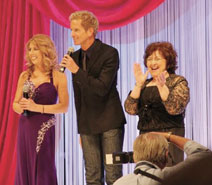 FASHION FUNDRAISERS — Last month Natalie M. held its annual benefit fashion shows at the Overland Park Convention Center. This year three shows raised approximately $70,000 for the 35 organizations that participated, including Kehilath Israel Synagogue of which Natalie M’s Natalie Nearenberg and Myra Nearenberg are members. The shows have been sponsored by Natalie M. for the past seven years. An estimated 5,100 people attended the show that featured 700 student volunteers, modeling prom, party and special occasion dresses. The Natalie M. store, which has been in business since 1973, specializes in women’s fashions including bridal, prom, special occasions, pageant wear, foundation, sportswear and accessories in all sizes.
 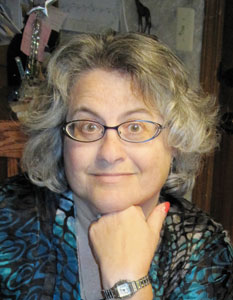 LANDMARK BLOGS — The National Council of Jewish Women commemorated the 39th anniversary of the landmark Roe v. Wade decision last month by launching a blog contest to hear first-hand from its advocates why Roe is important to them. Ellen Portnoy, an active member of Greater Kansas City Section who currently serves as co-president along with Meg Adler and Berenice Haberman (and a contributing writer to The Chronicle), submitted an entry. She did not win, but her entry was chosen as a finalist and published in NCJW’s online journal. Here’s a portion of her entry:
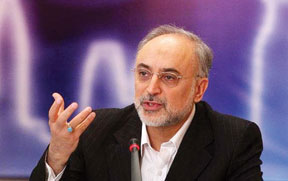 WASHINGTON — Israel, the United States and Iran have all gone deep into mixed-signals territory.
 As Bob Dylan said, and Rabbi Arthur Nemitoff reminded the congregants of The Temple, Congregation B’nai Jehudah on Rosh Hashanah, “the times, they are a’changin.”
 As the son of a Reform cantor, Noah Aronson grew up around the synagogue and listening to his father sing. He loved music, but he never thought he would make Jewish music a career. That happened quite by accident.
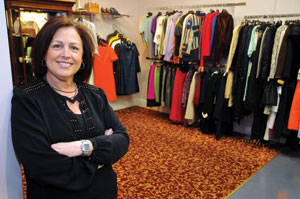 When it’s fashion week in New York, it’s also fashion week at Her Majesty’s Closet, a couture consignment shop for women owned and operated by Barb Bloch.
 The Jewish Federation of Greater Kansas City’s Israel shlichah (emissary) has returned to Israel. Lilach Nissim, who arrived here in October of 2010, is experiencing health problems that prompted her decision to return to Israel. There she will continue to seek further medical treatment while having the support of her family nearby. A Jewish Federation emissary typically stays in the community for two years.
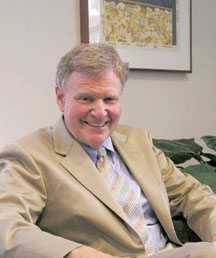 More than 20 years ago, Barry Shrage, president of Boston’s CJP (Combined Jewish Philanthropies — its Jewish federation) was one of the first to recognize the benefits of sending high school graduates and young adults to Israel. Today that program — Taglit-Birthright — has sent more than 10,000 young Boston area Jews on first-time free visits to the Jewish homeland. Upon their return, CJP’s Campus and Post-Campus Initiatives have become national models that teach students to become lifelong advocates for Israel.
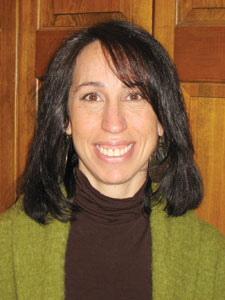 After spending the past 17 years of her career as an advocate for people living with serious health issues, Amy Goldstein recently was selected as a Sunflower Foundation Advocacy Fellow. She is one of 15 health care professionals chosen from across the state of Kansas to participate in the 2012 Fellowship program.
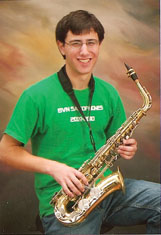 JEWS AT THE SUPER BOWL — I don’t know for sure if any of the New York Giants or the New England Patriots are Jewish, but I do know one Jewish Kansas Citian will be a starter in Super Bowl XLVI. Avi Sonnenschein, who is in his first year of studies at Indiana University, will be playing alto saxophone with the IU marching band, “The Marching Hundred” to open Super Bowl XLVI. The band was selected from among several Indiana colleges and universities for this opportunity. Avi will be just left of the 45 yard line in the opening musical set, “Rock in the USA.” Following his graduation from Blue Valley North High School in 2010, Avi spent a gap year in Israel. He is the son of Sheila and Ken Sonnenschein and a former Chronicle Salute to Youth honoree.
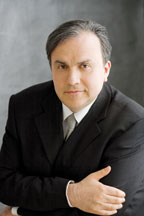 JEWS PERFORMING WITH THE SYMPHONY — Several Jewish musicians will come to Kansas City to perform with Kansas City Symphony over the next year. The first is pianist Yefim Bronfman, the son of Holocaust survivors who was born in Tashkent in the former Soviet Union and immigrated to Israel when he was 14. He will be here Friday and Saturday, March 30 and 31, and Sunday, April 1. At that time the Symphony, under the direction of Michael Stern, will present the second of its world premieres this season with Daniel Kellogg’s new work celebrating our City of Fountains, and Mozart’s glorious final symphony. Bronfman returns for a work that has won him great acclaim, Bartók’s Piano Concerto No. 2. Critics have described Bronfman’s playing as “exquisite” and described “a finely spun whir of notes that verged on the unbelievable” (Los Angeles Times). Sponsors include the Sosland Foundation. For ticket information call 816-471-0400 or visit www.kcsymphony.org.