


Losing weight is always one of the most popular New Year’s resolutions on everyone’s list. The Jewish Community Center is beginning a program next week that can help people who made that resolution — and those who didn’t but should have — take some positive action toward fulfilling it.

“It’s a weight-loss program designed to really help people get a hold of healthy, mindful eating,” said Heidi Campain, the JCC’s St. Luke’s wellness coordinator.

The Smartest Loser eight-week program is the JCC’s version of NBC’s hit TV show, “The Biggest Loser.” As does the show, the individual with the greatest percent of weight loss will be crowned JCC’s Smartest Loser and win an assortment of prizes.

Campain said the JCC staff came up with this program because they know a number of their members are interested in losing weight but need support to do it successfully.

“Sometimes when people try to lose weight on their own they just don’t have the same accountability as when they are doing it with a group of people,” she said. “We’ve seen the success of the Biggest Loser program, and when you start putting a little competitive fire under people they tend to have a little bit more motivation.”

Partnering with professionals from Harvard University, the University of Kansas and Iowa University, Campain notes that the class will stress healthy weight loss and maintaining a healthy lifestyle.

“We’re not going to have these people losing 10 or 15 pounds in one week,” she said.

The class will be offered at two different times, and each session can accommodate 30 people. Wednesday night sessions will be held from 6 to 7:30 p.m. from Feb. 9 through April 6. Thursday morning sessions, which begin Feb. 17 and continue through April 14, will be held from 9 to 10:15 a.m. The cost is $75 for members of $115 for non-members.

Registered dietician Paige Gerson will teach the class. She earned a bachelor’s degree in dietetics from Kansas State University in 1993, graduating cum laude. She counsels adults, adolescents, children and seniors to reach their weight-loss goals through personalized nutrition plans. Her expertise allows her to work with people who have a variety of health issues including diabetes, high blood pressure, food allergies and elevated cholesterol.

Gerson notes she has personal experience in the area of weight loss, having successfully kept off 70 pounds for more than 20 years.

During the eight-week class, participants will set weight-loss and activity goals, learn mindful eating habits and make long-term lifestyle changes, including engaging in physical activity.

On Sunday, Jan. 16, Hyman Brand Hebrew Academy students, parents and faculty volunteered at Harvesters. The volunteers made snack packs for underprivileged kids in the Kansas City area. At least 20,000 snack packs go out each week. The HBHA volunteers made approximately 2,375 snack packs in the three hours they volunteered at Harvesters. The snack packs included containers of corn and green beans, cartons of milk, juice boxes and microwaveable Kraft macaroni and cheese, as well as pudding and Nature Valley bars.

“We had a good turn out,” said president of the board and parent Eric Kaseff. “I was very pleased with the amount of people that came to help. Everyone worked really hard and we had a lot of fun.”

“I thought it was really fun to help these kids,” said sixth-grader Alexis Davis. “I didn’t really know what to expect but I’m glad we made an impact.”

“I had been there before so I expected to be doing the same thing as in past years, which was sorting food,” said director of student services Netta Krashin. “It was a fun and a nice surprise to realize that we were making the snack packs. I liked the idea that we were making a difference in kids’ lives. I feel what we did was very beneficial.”

Thousands of people receive emergency food assistance through Harvesters’ network each week. Harvesters food pantry is a national non-profit organization that feeds the hungry. It was founded in 1979 and now has 620 agencies nationwide. Thirty-seven percent of people receiving emergency food assistance are children.

When his son Shalom Dovid was born seven years ago this month in Miami, it spurred the desire within Rabbi Elchanan Schulgasser to learn a very specialized Jewish skill. Just last summer, he completed his training, joining Rabbi Jeffrey Shron and Michael Blum, M.D. as the Kansas City area’s newest mohel (a ritual circumciser).

“This is My Covenant which you shall keep … at the age of eight days every male among you shall be circumcised throughout the generations…” states the Torah in Beresheet (Genesis), 17:10-13. The Jewish people have faithfully carried out this ceremony, known as a Brit Milah, since G-d instructed Avraham to circumcise himself at the age of 99. The patriarch of the Jewish people then circumcised all the males in his household and later, when his son Yitzchak was born, circumcised him on the eighth day as commanded.

Not every father chooses to participate in the actual surgical procedure, but Rabbi Schulgasser, a member of the Kansas City Community Kollel, says he was “moved by the happiness and significance of the occasion” to perform the brit under the supervision of a close family friend in Miami. In addition to Shalom Dovid, he and his wife Bracha are the parents of Aliza, almost 5, Benayahu, 3, and Yehuda Zev, 18 months.

“Traditionally, a student who wanted to learn milah would apprentice to an experienced mohel,” he explained. “After a long period of study and supervised practice, the measure of a mohel’s expertise was whether he had performed a bris for his own son.” In Israel, there are many programs and courses that teach milah. “It’s easier to find training in Israel as there is a large Jewish community and many, many brisses,” he added.

He studied extensively with Rabbi Michael Rovinsky of St. Louis, one of only a handful of Orthodox mohelim who take on students for this specialized training. “Rabbi Rovinsky is very selective,” Rabbi Schulgasser added, taking only the top candidates in character, diligence and religiosity. “He then trains them in the technique he has developed, known for its speed, aesthetic appearance and minimization of pain to the baby.”

Mohelim regularly consult with Rabbi Rovinsky, who has performed thousands of Brit Milah, some under unusual circumstances. He once performed a Brit Milah in an airport so he could quickly return to St. Louis before the start of a Jewish holiday!

Though Rabbi Schulgasser is a relative newcomer to the field, he, too, already has some interesting stories. The parents at a recent brit he performed are both surgeons, and the grandfather, who held the baby during the ceremony, was a pediatrician. He wondered in advance if it would be difficult to deal with so many physicians in the family, but “they’re a wonderful family,” Rabbi Schulgasser said. “It was fun!” The rabbi also performed the Brit Milah on the son of his Kollel colleague Rabbi Yehuda Sokoloff a few months ago, describing it as “very special.”

Grateful to mohelim from other cities that were kind enough to share their experience and wisdom, Rabbi Schulgasser said, “I have also benefited from many discussions with pediatricians and from observing circumcisions in hospitals.”

One of those physicians is Dr. Blum, who has studied with the Reform movement’s Berit Milah program; he is chairman of both the Berit Milah board of directors and the National Association of American Mohalim. He is a board certified pediatrician with Pediatric Partners in Overland Park and can be reached at (913) 888-4567 or at .

Rabbi Shron, who serves as chazzan (cantor) at Kehilath Israel Synagogue, received his training from Rabbi David Suraksy. He also had extensive additional medical training from local pediatrician Dr. Alan Organ. Rabbi Shron is available at (913) 642.1880, ext. 211, (913) 649-6296 or or at his website, http://rabbijs.com.

“Rabbi Schulgasser has talked with me on several occasions about his participation in the community,” Dr. Blum said. “I am excited to have him join both Rabbi Shron and me in offering this service to the greater Kansas City area.”

The first eight days of a baby’s life can be very stressful — especially for new parents. But Rabbi Schulgasser said, “It’s an honor to spend time with parents at such a joyous time. I love sharing the occasion with them, helping parents select an appropriate Hebrew name, working with them on their speeches, dispensing any new-parent advice I can — every part of it.”

The area’s newest mohel can be reached at (913) 735-6728 or via e-mail at: . By the way, the Schulgassers have another child due in a few months, so if it’s a boy, will he perform the brit?

“The expression goes: ‘Mohelim have girls!’” he laughed. “But if we do ... for sure! It would be nice not to have a nervous father hovering over me!”

Emma Clair Furey made her entrance into the world at 6:46 p.m. Sunday, Jan. 9, weighing 4 pounds, 4 ounces and measuring 16 ½-inches long. She has a lot of dark brown hair and blue eyes.

This year’s first Jewish baby, the daughter of Amy Ravis Furey and Brian Furey, was born at Shawnee Mission Medical Center. But the Fureys never thought she could be 2011’s first Jewish baby of the year because she arrived almost six weeks earlier than planned. Ravis Furey’s “due date” with Emma was originally estimated at Feb. 19.

Needless to say the hours leading up to Emma’s birth were more than a little stressful for the Furey family. Emma’s older brother, Michael, who is 2 ½, was also premature, so the Fureys and their doctors thought there could be another early arrival.

“My water broke with my first pregnancy at 34 weeks,” Furey said. “We hoped it wouldn’t again, but in the back of my mind I always knew it was possible again with this pregnancy too,” she said.

The shared vision/individualized Jewish path coordinator at The Temple, Congregation B’nai Jehudah, who also serves as the youth group adviser, Ravis Furey actually attended worship services and “a really great youth group program” just hours before her water broke. When that happened at 2:30 a.m., they proceeded to the hospital.

Once there, the medical team decided to inject Ravis Furey with two steroid shots. The steroids are expected to provide benefits for the lung development in premature infants as well as reduce the risk of respiratory distress syndrome and other potential complications.

After Ravis Furey received the steroid shots, the medical team began inducing labor. Just a couple of hours later little Emma was born.

“It was crazy, it all happened so fast,” Ravis-Furey said.

Mom was feeling so well after Emma was born that she left a message at The Chronicle just 30 minutes later to report the birth, hoping her baby was the first Jewish baby of the year.

“Once we knew Emma was healthy and well, it was just too cool to pass up trying,” Ravis Furey said.

As her older brother was named after his late grandfather Michael Ravis, Emma received a family name as well. Her middle name, Clair, is the maiden name of her paternal grandmother, the late Glynis Clair Furey.

At press time little Emma remained at SMMC’s Neonatal Intensive Care unit. Mom reports Emma’s health continues to improve, but they don’t know yet when she’ll get to go home.

“Emma is wonderful. We feel very blessed knowing that, since there are many other babies in the NICU who aren’t doing as well. She is nursing well and she is really alert. We are just taking it day by day, waiting for her to get bigger and stronger, but she is for sure taking steps in the right direction,” Ravis Furey said.

Coincidentally, last year’s First Jewish Baby Leo Covitz was also born on Jan. 9.

“We’re really good friends with the Covitz family,” Ravis Furey said. “We were actually supposed to be at his birthday party the day that Emma was born.”


Family receives gifts

As 2011’s First Jewish Baby, Emma Clair Furey and her family received the following gifts from Chronicle advertisers:

• $25 gift card from BRGR Kitchen + Bar
• $25 gift card from Cosentino’s Price Chopper
• One free night stay at the InterContinental Kansas City at the Plaza
• A Shalom Baby gift basket from the Jewish Federation of Greater Kansas City
• Two tickets to the Feb. 26 performance of the Vienna Boys Choir at Johnson County Community College
• ‘It’s a Girl’ cigars from Cigar & Tabac, Ltd.

Kansas City’s Brenda and Howard Rosenthal will be presented with the Enid and Harold Boxer Memorial Award by NCSY, the international youth movement of the Orthodox Union, at its Ben Zakkai Honor Society Annual Scholarship Reception Sunday, Jan. 30, in New York.

The award is named after Enid and Howard Boxer, who created NCSY as a continent-wide youth movement.

BZHS is an alumni “Hall of Fame” whose new members are nominated by, and voted on, by its current members based on the nominees’ service to NCSY and the Jewish community. The society’s main function is to raise funds for scholarships for high school NCSYers for summer programs in North America and Israel and for teens to continue their Jewish education after high school. The society has helped pay tribute for more than 40 years to esteemed NCSY alumni and community leaders who have demonstrated their dedication to Torah and their service to the Jewish people.

Over the years, NCSY has played an important role in the lives of both Brenda and Howard.

“NCSY has been an integral part of my life for as long as I can remember. It has been a guiding force which has grounded me and now our children on a path of leadership, kindness and Jewish values. I can’t imagine who I would be were it not for NCSY,” Brenda said.

Howard said he is proud to see “how our children have become role models due to their involvement in NCSY.”

“The leadership in this organization is incredible. The values imparted to our children through NCSY have instilled a love for their community, Judaism and Israel,” he said.

Hundreds, if not thousands, of married couples met in NCSY. That actually wasn’t the case with Brenda Fogelson and Howard Rosenthal, however. They met in sixth grade at the Phoenix Hebrew Academy, before there was an NCSY in their community.

By the time they reached the eighth grade, they had established the Ohr HaMidbar NCSY chapter and were both awarded the “Torah im Derech Eretz” award at regional convention. They participated in every convention, conclave and program West Coast NCSY had to offer. Not only did they grow Jewishly, but they influenced their families to do the same!

Howard finished high school early, won Regional NCSYer of the year honors and went off to study at Bar-Ilan University in Israel completing his studies at Yeshiva University. Brenda was named National “NCSYer of the year” and Regional “NCSYer of the Decade,” continuing her studies at both Touro and Stern College in New York.

After graduation, the Rosenthals moved back to Arizona and studied medicine at the University of Arizona. After completing orthopedic residency at the University of Kansas and a Fellowship at Memorial Sloan-Kettering Cancer Center in New York, the couple joined the staff at the University of Kansas, Howard as an orthopedic oncologist and Brenda as a heart transplant coordinator. They decided to establish Kansas City as their home and played a giant role in rebuilding a once proud Orthodox community that had fallen on hard times.

The Rosenthals play pivotal roles in their synagogue: Beth Israel, Abraham & Voliner, the only Orthodox congregation between St. Louis and Denver, The Hyman Brand Hebrew Academy and numerous communal agencies. As medical director of the Mid-America Sarcoma Institute, Howard is the only Orthodox orthopedic oncologist in the country. Past president of his synagogue, the kollel and head of the rabbinic search committee, he continues to serve as the ba’al koreh and ba’al tefilla. A national vice president of the Orthodox Union, chairman of the Menorah Medical Center and a board member of the Jewish Heritage Foundation of Kansas City, he is also professor of orthopedic surgery at the University of Medicine and Biosciences at Kansas City and associate professor of surgery at the University of Missouri-Kansas City, and is widely published in medical literature.

Brenda has served as president of BIAV, on the board of HBHA and is a driving force behind the Kansas City Chevrah Kadisha. The Rosenthal home is packed with teenagers every Shabbat. It has been said that hundreds of Jewish adults can say that they spent one-seventh of their teenage years at the vibrant Rosenthal home!

Aside from Brenda’s ample volunteer work, she is a nurse practitioner in a large internal medicine practice, as well as surgical assistant to Howard. Most important, the Rosenthals have instilled an abiding love of Torah in their children; Aryn, Daniel, Naftali and Davida.

At the reception, the OU will also pay tribute to the legacy of Dr. Bernard Lander, the founder, and for 40 years, president of Touro College. Dr. Lander died on Feb. 8, 2010, at the age of 94.


Jonathan Edelman does not sit back and let life happen.

“He makes things happen,” said Gayle Gray, Hyman Brand Hebrew Academy principal, about Jonathan, the Chronicle’s January Salute to Youth honoree.

“He is always willing to take the reins and lead a group for the betterment of students, the school, his synagogue and Jewish organizations. He is a hard working, giving, amazing young man.”

As a leader in the Jewish community Jonathan has big shoes to fill. He’s the youngest son of Debbie Sosland-Edelman and Alan Edelman. Alan is the associate executive director of the Jewish Federation and Debbie has always been active in the Jewish community and was a member of the Hebrew Academy’s first graduating class. His maternal grandparents, Neil and Blanche Sosland, were among the founding families of the Jewish day school. His paternal grandfather, Dr. William Edelman, is a retired physicians and his wife, the late Doris Edelman, was the head of the syndicate department for a regional firm.

It means a lot to Jonathan that he is the second generation to attend HBHA and notes that there will be a member of the family there “for at least another 20 years.” He says the 15 students in his senior class, and the rest of the faculty and student body, are like family to him.
Jonathan said he doesn’t feel pressure to be involved in the Jewish community because of his family.

“I look at it more that they’ve taught me just how important it is to give back to the Jewish community,” said the 18-year-old senior.
He is committed to giving back to the Jewish community, both by giving his time and his money.

“When I give money I give it to the Jewish community because I consider myself more of a Jewish American than an American Jew,” he said.
His extracurricular activities reflect his commitment to the Jewish community. The abbreviated list includes serving as regional executive vice president for Israel affairs of United Synagogue Youth, being selected for a highly competitive leadership training program at Herzl Camp and participating in a Panim leadership program where he lobbied senators and congressmen in Washington, D.C., to advocate for the homeless.

Jonathan said of all his activities, he most enjoys USY and being a member of the B’nai Tzedek Youth Council. B’nai Tzedek, a program of the Jewish Community Foundation, is designed to teach young teens the joys and pleasures of tzedakah.

“I think philanthropy is one of the most important things. People always say that they’d love to give their time to organizations. But while that’s great, in the end organizations can only succeed if they have money,” he said.

One of the organizations he’s most passionate about is the Guardian Society.

“It helps kids go on Israel trips and to summer camps. Some of the best experiences that I had were my eight years at Herzl camp. I also went on a USY pilgrimage to Israel. Going to Israel and having these Jewish experiences with other teens is something I think every teen should experience and it makes me angry that some can’t because they can’t afford it. The Guardian Society basically gives money to kids so they can go. I want kids who are less fortunate to have the same experiences that I’ve had,” Jonathan said.

HBHA’s Principal Gray points out that Jonathan is a leader academically, socially and behaviorally.

“He is a leader among peers and has earned the respect of teachers by dedicating himself to his studies, his extra-curricular activities and his own self improvement,” she said.

This year alone he serves as president of the Student Council, editor-in-chief of the yearbook, photo editor of the newspaper, and co-president of the Holchim Yarok (environmental action club) which was recognized as program of the year by the Federation in 2010.

As a leader, Jonathan makes sure to be an example to younger children and youth group members. His leadership style has been shaped, at least a little, by some of his USY experiences. He vividly remembers when he was a younger member how the “big scary seniors” tended to hang out only with each other at regional conventions. That attitude bothered Jonathan.

“The point of being on the regional board is to be a leader and to get to know people. So when I became a regional officer I decided to make every effort to say ‘hi’ to everyone because I want people to know I’m not a big scary officer. I want to show them that I am there and available to answer questions and be available to all the USYers,” he said.

Photography is one of Jonathan’s great loves and in 2008 he won first prize for his photo “The Storm Approaches” in the Jerry and Edith Penzer Young Artist Showcase held annually at the Jewish Community Center.

Eventually Jonathan wants to be a professional photographer.

“I love taking pictures,” he said.

He takes photos of all kinds, including landscapes, and just recently began taking portraits of people. But he doesn’t think he would like to specialize in portrait photography.

“It’s easier to work with a tree than it is with a person,” he said. “We’ll see where it takes me, I could change my mind.”

Jonathan’s plans for after graduation this spring are currently up in the air. He had been planning to participate in a gap year program in Israel for a year. But he’s been accepted to his first choice school, Clark University in Worcester, Mass., so now he’s debating whether to go straight to college or do the gap year program.

“The gap year would be nice because I could spend more time with my sister (who is currently serving in the Israeli army),” he said.

No matter what he does in the fall of 2011, Judaism will still be a big part of his life.

“My religion is important to me. I go to Jewish day school and I went to Jewish camp. Every single week I get together with my family for Shabbat. I plan to raise my kids Jewish. I plan to send them (to HBHA) hopefully. I think faith and religion is what in the hardest times keeps you sane. It’s somewhere to turn and I think it’s important to stay involved.”

Each year middle and upper school students of the Hyman Brand Hebrew Academy return from winter break, excited to be back in school. Why, one might ask? Because they participate in Winterims, a week of unique extracurricular classes not usually offered during the regular school year.

“It took a lot of hard work to plan the Winterims this year,” Middle and Upper School English Department Chair Cynthia Knight said. “But it was worth all the work. I loved seeing the students explore and excel outside of their comfort zones. The students try something new and always end up loving it.”

There were over 30 classes offered for this year’s Winterims. Some of these classes included International Jewish Cooking, Winter Camping, Archery, Braille, How to Win at Scrabble and Creative Writing. Eighth-grader Moriah Abrams took part in the Braille class taught by James Wilcox.

“After learning something as simple as the alphabet, I have a new appreciation for the visually impaired. We go by our days reading everything from a speed limit signs to nutrition facts. It isn’t as easy for the visually impaired.”

Many students took advantage of the “Winter” in Winterims by participating in the Winter Survival class. The class ventured out into the cold each day to learn new techniques of how to survive the harsh environments of the outdoors.

“We learned everything from how to pitch a tent to knowing what clothes to wear in order to stay warm,” Freshman Jacob Margolies said. “The best part was making hot chocolate every day.”

For the first time since Winterims began six years ago, one of the classes offered was student-led. Eighth grader Sophia Porter taught students about the art of Henna, after two high school students expressed an interest.

“I was so excited to be asked,” Porter exclaimed. “I love Henna art and I couldn’t wait to share my love with others.”

During this week long class, 13 students learned how to mix Henna and apply it to their hands and arms.

There were also many dance classes offered during the Winterims week. At the end of the week, students who participated in the dance classes put on a showcase. Jazz, Hip-hop and swing were among the classes showcased in the performance.

“It was so much fun to dance center stage,” senior Molly Oberstein-Allen explained. “The swing dance we performed was energetic, colorful and definitely brought back memories to the parents in the audience. This year was my last year for Winterims, and it was certainly the best.”

Debbie Friedman, who many credit as reinvigorating synagogue music, died Sunday, Jan. 9, after a short stay in the hospital. She was 59. Funeral services were held Tuesday in California.
Over the course of her career, the Jewish composer, singer and recording artist released more than 20 albums and performed in sold-out concerts at Carnegie Hall and in hundreds of cities around the world. She last performed in Kansas City to a standing-room-only audience in the sanctuary of Congregation Beth Shalom in May 2009.

In addition to her career as a singer, songwriter and guitarist, Friedman was hired to teach at the Hebrew Union College-Jewish Institute of Religion’s School of Sacred Music in 2007.

Following her death this week, Rabbi Eric H. Yoffie, president of the Union for Reform Judaism, said Friedman was an extraordinary treasure of the Reform movement, and one of its most influential voices.

“Twenty-five years ago, North American Jews had forgotten how to sing. Debbie reminded us how to sing, she taught us how to sing. She gave us the vehicles that enabled us to sing. What happens in the synagogues of Reform Judaism today — the voices of song — are in large measure due to the insight, brilliance and influence of Debbie Friedman,” Rabbi Yoffie said.

Jews in congregations across Kansas City will mourn Friedman at worship services this weekend. The Temple, Congregation B’nai Jehudah, has chosen to honor Friedman at its monthly Shabbat Chadash service tonight (Friday, Jan. 14).

“As a tribute to her incredible gifts to us all, our entire service will reflect her music and her teaching. Bring your voices, your timbrals, and your love as we make Shabbat together — as family! Invite someone to join you, and let us raise a joyful noise!” noted a special e-mail to congregants.

Enhancing worship

Cantor Paul Silbersher, spiritual leader of Congregation Kol Ami, has been a cantor/spiritual leader since 1955. He said Friedman was a trailblazer in modern Jewish music, and “her musical gifts to us continue to enhance our worship.”

Cantor Sharon Kohn, who recently celebrated 25 years as a cantor, said Friedman is rightly credited with bringing the folk genre of Joan Baez and Peter, Paul & Mary into the synagogue.

“Many things we take for granted today — guitars and drums, singing in English and Hebrew, mining our vast traditional texts for modern meanings and putting that into song, inviting the congregation to sing and dance with abandon — are a direct result of Friedman’s work. Her influence is so pervasive also because she has continued to write, to perform and to teach,” she said.

Cantor Kohn said these last few days have been particularly sad for her because just two months ago she had the privilege of spending four days learning from and praying with Friedman at URJ Olin-Sang-Ruby Union Institute.

“Her abilities as a performer are legendary. What is less known is her generosity as a mentor and as a teacher. I found her to be kind and compassionate, intensely funny, immensely intuitive about people, always connecting with those around her, with the tradition and with the holy,” Cantor Kohn said.

Cantor Silbersher said he first became aware of Friedman’s music about 30 years ago. For him, the most prominent song she composed was “L’chi Lach.”

“It is a reprise of Genesis 12 wherein Abram is told to ‘Get out of your land, your birth place and your father’s house ... and be a blessing,” Cantor Silbersher explains.

He started using that song during Bar/Bat Mitzvah services when the student was being blessed.

“Not only their parents were moved, but I have had students ... now grown to adulthood, who still recall what that song meant to them while they stood in front of the open ark,” the cantor said.

“It was an immediate and resounding success. People were continually moved to tears every time they heard it. I was even asked if I wrote it. I let them know that the composer was Debbie Friedman,” he continued.

Once he began singing “L’chi Lach” at Bar/Bat Mitzvah ceremonies, Cantor Silbersher said the song was requested at weddings, baby namings, brisses and even funerals.

A gift to many

A whole host of other songs followed “L’chi Lach,” including “You Shall Love,” “V’ahavta,” “Mi Shebeirach,” “Oseh Shalom,” “Mi Chamochah,” “Not by Might,” “Miriam’s Song” and “T’filat Haderech.”

“Her music was in very good taste and has become widely accepted as not just ‘camp music’ but music that could be performed alongside the classical Jewish Liturgy which is the essence of cantorial training,” Cantor Silbersher said. “If Debbie Friedman had just composed ‘L’chi Lach,’ it would have been ‘dayenu’ — enough for us.”

Cantor Kohn said many people say that Friedman’s gift to many Jews was to “help us learn how to pray again, to connect with God through song, to help us feel as if each of us mattered.”

“Her setting of the “Mi Shebeirach” for healing exemplifies this. My understanding is that as much as she hoped that her music would be remembered, and it will, it was her love of Judaism that shone through everything. If we only sing her music as some kind of memorial, and do not live it, embrace our own sense of what it is to be a Jew, bless those around us, especially those most in need of our care, re-invent tradition for ourselves, we will have failed to hear her deepest message. The world has lost a sweet singer of Israel. As she blessed us with her many gifts, may her memory always be for a blessing,” said Cantor Kohn.

In celebration of 18 years of service to the community and in appreciation of the community’s strong and generous support, the Midwest Center for Holocaust Education will present a free public film series, to take place one Thursday evening each month from Jan. 20 through June 23. The six featured films are part of MCHE’s Witnesses to the Holocaust Archive project. (For complete schedule, see below.)
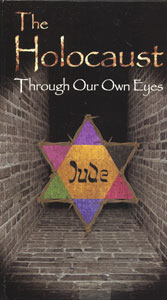
“The films in this series,” says Fran Sternberg, Ph.D., MCHE’s in-house historian and director of university programs and adult Education, “serve as a powerful reminder of the lessons and implications of the Holocaust and the significance of memory in the transmission of history as well as a fitting acknowledgment and validation of the individuals in our community whose lives were directly touched by the Holocaust.”

MCHE Executive Director Jean Zeldin, who served as coordinator of the original video project, said The Witnesses to the Holocaust Archive plays a critical role in preserving a precious historical resource.

“Our goal in presenting this film series is to highlight and share the treasure trove of memory that MCHE has collected and recorded over the past 18 years. We also hope it will encourage people to visit our Resource Center and avail themselves of the opportunity to view the individual testimonies, which are, after all, a community legacy,” Zeldin said.

Each film will be preceded by a topic-appropriate introduction and followed by a “question and answer” session, facilitated by Sternberg and members of the Holocaust Education Academic Roundtable (HEART), MCHE’s symposium for university educators. A light reception will follow each program and DVD copies of the evening’s featured film will be available for purchase after the each screening. There is no charge for admission; reservations are requested for planning purposes by calling (913) 327-8196 or e-mailing . The film series is partially funded by a grant from the White Theatre Grantor Fund of the Jewish Community Foundation of Greater Kansas City.

MCHE’s local history

Sternberg notes that since the 1930s, more than 200 Holocaust refugees and survivors have come to call the greater Kansas City area their home and “our community is the richer for it.”

Recognizing this, soon after its founding in 1993, MCHE undertook its first major project: the production of 48 videotaped interviews of local Holocaust survivors, refugees and witnesses. The project was conducted in cooperation with the Fortunoff Video Archive at Yale University, and supported by grants from the William T. Kemper Foundation, the David Woods Kemper Memorial Foundation, and the Oppenstein Brothers Foundation.

Since 2006, grants from the Jewish Heritage Foundation of Greater Kansas City, the Jewish Federation of Greater Kansas City, and the Conference on Jewish Material Claims against Germany have enabled MCHE to digitize the original full-length videotapes, to edit them into lengths suitable for classroom instruction, and to craft teaching tools to enhance their educational value. Outpost Worldwide provided technical and editorial expertise as well as special consideration to MCHE in the production of the videotapes and films.

The film project is supervised by Sternberg and Jessica Rockhold, MCHE director of school programs and teacher education, who also provided voice-over narration. Five of the films are organized around specific Holocaust-related themes: Kristallnacht, Ghettos, Auschwitz, In Hiding, and Liberation. The sixth film – The Holocaust: Through Our Own Eyes, which will be shown first — presents an overview of the Holocaust and the events leading up to it. All of the films make extensive use of excerpts from the 48 videotaped interviews.

While many Holocaust education centers in the United States have collected and recorded first-person testimonies, Sternberg said MCHE is one of very few centers to have combined those testimonies with maps and archival and personal photographs into films with significant educational and public appeal.

While the full-length interviews, the edited interviews and the topical films are the heart of the archive, they are supplemented by a variety of additional materials: 50 audio-taped interviews of local survivors and refugees conducted in 2000, as part of MCHE’s Portrait 2000 exhibit; 66 written and audio-taped reminiscences collected for the keepsake journal commemorating MCHE’s 10th anniversary; papers and memorabilia relating to the organization and activities of the New Americans Club, donated by the late Jack Igielnik, one of the club’s founders; and a 2006 survey of local survivors and refugees about their post-immigration experiences. Several interns from the University of Kansas, the University of Missouri-Kansas City and CAJE rendered invaluable assistance transcribing, indexing and cataloguing these materials. The archive is housed in a dedicated space in MCHE’s Resource Center. Edited interviews are available for free loan, and full-length testimonies may be viewed on site.

Film offers compelling overview of the Holocaust

“The Holocaust: Through Our Own Eyes,” created and produced in 1994 by the Midwest Center for Holocaust Education, was the first MCHE project to use excerpts from the personal interviews with 48 Kansas City area eyewitnesses — refugees, camp survivors, individuals in hiding, non-Jewish citizens of German-occupied Europe, and liberators — that it videotaped over the course of 16 months in cooperation with the Fortunoff Video Archive at Yale University.

Beginning with the turmoil in Europe in the wake of World War I and ending with the survivors’ bittersweet arrivals in America, the film traces the origins, implementation and aftermath of the Holocaust, punctuating the larger historical narrative with revealing looks at the personal tolls the Holocaust exacted. Although the film uses archival film footage and photographs as well as voice-over narration to provide coherence and context, it is the witness testimony that gives the film its real power. One survivor remembers how the Germans forced her parents to give away her pet bird because Jews were forbidden to have pets. Another survivor relives the night the Germans shot her father as she and her family looked on helplessly. Yet another survivor describes how his non-Jewish neighbors were fighting over their possessions as he and his family were about to be forced into a ghetto. And a former U.S. Army officer who helped liberate Buchenwald remembers his shock at the sight of the camp’s Jewish inmates.

Fittingly, MCHE will be featuring “The Holocaust: Through Our Own Eyes” as the first film in its free public film series commemorating its 18th anniversary. The screening will take place at 7:30 p.m. Thursday, Jan. 20, in the Lewis and Shirley White Theatre at the Jewish Community Campus, with partial funding provided by a grant from the White Theatre Grantor Fund of the Jewish Community Foundation of Greater Kansas City. Like the original videotaping project, the film was made possible by grants from the William T. Kemper Foundation, the David Woods Kemper Memorial Foundation, and the Oppenstein Brothers Foundation, with special consideration from Outpost Worldwide. It was also the recipient of two awards presented by the Kansas City chapter of the International Television Association (ITVA) in November 1996.

The film will be introduced by Fran Sternberg, Ph.D., MCHE’s in-house historian and director of university programs and adult Education, who will also facilitate a question-and-answer session afterwards. A light reception will follow and DVD copies of the film will be available for purchase. There is no charge for admission; reservations are requested for planning purposes. Call (913) 327-8196 or e-mail .


Film series schedule


The films will be shown at 7:30 p.m. at the Jewish Community Campus on on the following Thursday evenings:

Jan. 20, Lewis and Shirley White Theatre: “The Holocaust: Through Our Own Eyes”
Feb. 17, Social Hall: “Witnesses to the Holocaust: Kristallnacht”
March 10, Lewis and Shirley White Theatre: “Witnesses to the Holocaust: Ghettos”
April 14, Lewis and Shirley White Theatre: “Witnesses to the Holocaust: Auschwitz”
May 19, Lewis and Shirley White Theatre: “Witnesses to the Holocaust: In Hiding” 
June 23, Social Hall: “Witnesses to the Holocaust: Liberation and After”

There is no charge for admission; reservations are requested by calling (913) 327-8196 or e-mailing . A reception will follow each film. DVD copies of the evening’s featured film will be available for purchase.


Jerusalem — One of the things that best symbolizes the holiday known in the Talmud as Rosh Hashanah l’ilanot, the New Year of the Trees, is dates. (The New Year of the Trees, Tu b’shevat, begins the evening of Jan. 19.) In fact, the date is one of the seven species mentioned in the Torah along with wheat, barley, grapes, figs, pomegranates and olives.

Sarah Sallon, M.D., director of the Louis Borick Natural Medicine Research Center at the Hadassah Medical Center in Jerusalem, studies medicinal plants of Israel. The center, which is funded entirely by donations, researches natural medicines and, according to Dr.Sallon, “one of the most important natural medicines comes from plants.”

In recent years she has become interested in rejuvenating lost flora of Eretz Yisrael.

“One of the lost flora is the Judaean date,” Dr. Sallon said.

When she learned that scientists were trying to extract DNA from ancient seeds, she wondered, “if we have ancient seeds, why couldn’t we grow them?”

The ancient seeds that Dr. Sallon is referring to are three date palm seeds which were found, along with other discoveries, at Masada, the palace of King Herod overlooking the Dead Sea. The site was excavated in the 1960s by archaeologist Yigal Yadin. The seeds were in the custodianship of Professor E. Netzer, the man in charge of Yadin’s collection, and stored at Bar Ilan University in Tel Aviv with Professor Mordechai Kislev, who identified them.

In 2005, Dr. Sallon’s colleague, Elaine Solowey, Ph.D., botanist of the Arava Institute for Environmental Studies at Kibbutz Ketura, took the three 2,000-year-old seeds and planted them. After eight weeks, one seed successfully germinated and was named Methuselah.

The exact location of the seedling, which is now a 2-meter-high (6 1/2 feet) tree, is a secret. Dr. Sallon said it is in a “protected quarantined site,” and she visits Methuselah every few months.

“We use the ancient language of the healers and apply them to modern conditions,” says Dr. Sallon, who has held positions with Hadassah University Hospital since 1983 and has been director of the Natural Medicine Research Center since 1994. “Looking at the date (Methuselah) and other ancient medicines is part of searching for (sources). It’s so precious to us.”

The center staff, consisting of about 25 people, collect seeds, grow plants, harvest them and then test them.

The Dali Lama has visited the center several times because it has done a lot of work on Tibetan plants.

“We have an interest in the highest place (Tibet) and the lowest place (the Dead Sea),” she said. “We grow plants at Kibbutz Ketura and test them at Hadassah School of Medicine, using ancient and historical sources like Maimonides and Ibn Sana.”

The center also translates ancient manuscripts on medicinal plants from Latin, Greek, Aramaic, Arabic, Hebrew and the Romance languages.

“We use the information to pinpoint what we want to test. Some have never been translated before. We call it ‘data mining.’ ”

Currently, researchers at the center are screening for tumors, otherwise known as cancers, and Parkinson’s (which is not named in the ancient writings but whose symptoms are described) as well as Alzheimer’s (described as memory loss). The loss of memory was a sign of aging in the ancient writings, thus the center is looking at plants traditionally used to improve people’s memory. Melancholy is today’s depression; coughing up blood is today’s tuberculosis.

Recently, the center tested in its early stages and isolated an interesting plant that could be used as a treatment for Parkinson’s.

“It shows an interesting affect in the laboratory,” Dr. Sallon said.

For now, Dr. Sallon said the tree [Methuselah] “looks like a regular date palm.”

“But we have to look more at its DNA. When we compared it to the DNA of a regular cultivated species of dates, it closely resembled the Egyptian type,” the doctor said.

Right now Methuselah is simply growing and not showing its sexual characteristics. Its sex will not be known for a few years.

“If it’s female, we’ll call it Mrs. Methuselah,” says Dr. Sallon. Potentially, it could be fertilized by pollen of a male date and possibly produce dates.