

“Arab Spring or Islamist Winter?” is the title of this year’s Milton Firestone Lecture, to be held at noon Sunday, Jan. 13, at the Jewish Community Center. Zvika Krieger, senior vice president of the S. Daniel Abraham Center for Middle East Peace and Foreign Policy Correspondent for The Atlantic, coordinating Middle East coverage, will present an overview of the of the opportunities and challenges in the “new Middle East.”

With a bachelor’s degree in Middle East Studies from Yale, Krieger was born and raised in Los Angeles. He has studied Arabic at the American University in Cairo and participated in many fellowship programs where he studied issues such as the Muslim Brotherhood in Jordan, Kifaya Reform Movement in Egypt, religious identity in Kashmir and the role of religion in Lebanese politics.

Krieger’s program is part of the Jewish Community Center’s Authors Series. The Milton Firestone Lecture is held each year in memory of Firestone, who served as co-founder and editor of The Kansas City Jewish Chronicle.
In a recent interview, Krieger discussed several issues with The Chronicle including the following:

Q: Do you think that Hamas would ever agree to land swaps when they also declare that all of Israel belongs to them?

Krieger: “It is important to recognize that when different Hamas leaders make statements, they often contradict themselves and change positions. Hamas consistently said they would support any peace agreement if put before Palestinian people and if they agreed, Hamas would agree. Now 60 to 70 percent of Palestinians said that they are willing to accept a peace agreement based on 1967 lines with land swaps. But as more Palestinians get disenfranchised, it will be more difficult. However, a two-state solution still has majority support among Palestinians. The two-state solution has higher support in Israel with 70-80 percent agreeing with it.”

Q: The Arab Spring shows how tight the control of leaders in Arab countries is over the political process. How do you think things will play out in Egypt?

Krieger: “The liberal opposition did not want a vote and wanted to wait a year to get organized. But the Muslim Brotherhood wanted early elections because it had organization. They got what they wanted, and they won. There are lots of reasons to be concerned. The Muslim Brotherhood showed its dictatorial ways with its decrees. It concerns me and is disconcerting how Morsi has been leading Egypt. However, there are some signs for optimism. For example the referendum on the constitution: 56 percent were in support. For me that is stunning. I lived in Egypt during Mubarak, and referendums passed by 90 percent. This is a dramatic change for Egypt. Real democracy. You can have problems with the undemocratic way of writing a constitution, and that the Islamics got too much input in the process. But the fact that so many voted against in large numbers, and … the results were reported honestly, that shows progress.”

Q: Does the United Nations change in recognition of Fatah and the West Bank set back or bring forward peace talks?

Krieger: “Definitely this victory is only symbolic for Palestinians. And this symbolic victory is so much stronger because Israel was so against it. If Israel was not so much against it, it would have just come and gone. Israel’s number one concern about Palestinians as a non-voting observer is that they would bring Israel to trial in International Court. The question is, are the Palestinians eligible to join the court? Also they might be reluctant to do that, as then they also fall under the court’s jurisdiction for terrorism and targeting civilians. So what are implications of using the court? I don’t think this moved the peace process forward in any way. There is no tangible gain. And it made Israel more stubborn.”

Q: Do you think that Egypt and Jordan will keep their treaties with Israel?

Krieger: “I think Egypt will keep the peace treaty. The Muslim Brotherhood is hostile with Israel. There is lots of rhetoric, but at the same time, this is a government that was brought to power with demonstrations to fix the economy. It was not about Israel. Their main priority is rebuilding the economy and they will lose lots of aid if they end the treaty. … So I don’t see this as a problem.”

Q: How safe is King Abdullah in Jordan?

Krieger: “Difficult question. All around him dictators and monarchs are falling. However, there is an interesting split in Jordan (between) the middle class businessman (Hasmoneans) and the Jordanians of Palestinian descent, who have the majority. However, the businessmen do not want Abdullah to fall. They do not want Palestinians to take over the county. So until you get East Bank Jordanians to join with West bank Jordanians, Abdullah is safe.”

Q: How much of a player in the region is Turkey? Has the fact that they ended their relationship with Israel impacted the peace process?

Krieger: “I think that Turkey is becoming significantly more important. A vacuum formed (in the Middle East) with the fall of Mubarak and Assad, and Turkey is trying to fill that vacuum. It also is seen as a buffer with Iran. It is a grave tragedy that the relationship between Israel and Turkey has deteriorated. They have the most vested interests as to what is happening in Syria. … The Islamic party in control of Turkey has not been helpful, because it is sympathetic to Hamas, even though they are different. This relationship change has been detrimental to Israel. It’s still a possibility that it can recover at some point. Because, fundamentally their interests are aligned.”

Q: Should I even mention Syria…..What will be the outcome when Bashar Assad and Syria have a final settlement?

Krieger: “It is difficult to see how things will end in Syria. Hard to see Assad in power, but unclear as to what will happen. ... What will happen with all the Islamic groups coming in? Obama has been justifiably hesitant to give the rebels arms because we do not know who they are loyal to. He does not want post-Assad Syria to be home for Islamic radicals. A difficult situation, but the U.S. cannot continue to stand by as thousands are being slaughtered. The U.S. will have to help the rebels, while also making sure arms do not get into wrong hands.”

Q: Is there a solution?

Krieger: “I think that we are in a stalemate right now. I think Netanyahu and Abbas do not trust each other at all. ... There is no one in Fatah to replace Abbas, no one more moderate than him. And come January Netanyahu will probably be re-elected for four to six years. … But what I always say is just when you don’t expect it, something can happen. For example, if Sharon hadn’t fallen into a coma, it would have been totally different. ... However, Iran can change the status quo. America and Israel both want to have this issue resolved in the next year. … One reason Israel is reluctant to negotiate is because Iran is the number one issue. If this is off the plate, Israel might be willing to negotiate, Also, if Obama is able to take care of Iran, then Israel would trust him more and to deal with other issues.”

Congregation Beth Israel Abraham & Voliner is proud of its young members who have come from near and far and the contributions that they have made. That’s why it has chosen to honor this next generation of Kansas City’s Jewish leaders on Sunday, Jan. 27, at the annual Purim Gala. The event will be held at Oakwood Country Club, starting at 5 p.m. with cocktails, musical entertainment, with an elegant kosher dinner at 6 p.m. The speaker will be Dr. Rona Novick of Yeshiva University. Dr. Novick is a nationally recognized expert in the fields of psychology, parenting, education and family life. She is a much sought speaker because of her wit, warmth and engaging style.

The young leaders will be receiving the annual Mordechai Award for their essential contributions to the congregation and the community. According to verse 10:3 of the Scroll of Esther, Mordechai “sought the good of his people and was concerned for the welfare of all his posterity.”

Daniel Rosenthal and his wife Hilary are two of the congregation’s young leaders who will be honored that evening. Daniel serves as vice president–programming on BIAV’s board. He also serves as the gabbai, helping to run the services. He and his wife Hillary enjoy spending time with the local NCSY youth group.

In her free time, Hillary uses her talents styling sheitels (wigs for Orthodox women), enabling them to be stylish while keeping frum. The Rosenthals have actively recruited many friends and contacts from out of town to explore the possibility of moving here, telling them that “Kansas City has good jobs and cheap housing. You can live well and still lead a full traditional Jewish life.”

Daniel grew up here and is the son of BIAV members Howard and Brenda Rosenthal. He is the marketing coordinator at NetStandard, an outsourcer of technology solutions. Hillary is a speech pathologist and the daughter of Arlen and Holly Simon of Buffalo Grove, Ill. The Rosenthals have a 13-month-old daughter Brooke.

Another young member who serves on BIAV’s board as recording secretary is Joseph Megerman. He volunteers for the congregation because “the community has done so much for us, we want to give something back.” Megerman is the son of Charles and Esther Megerman and is a public defender in Jackson County. His wife, Alice, the daughter of Bob and Arthea Wasson, serves on Village Shalom’s auxiliary board. Joseph and Alice are the parents of Golda, who is 6 months old.

Adam and Alison Kaye are among the many young leaders at BIAV who moved to Kansas City. Adam is a trauma surgeon at Overland Park Regional Medical Center and Alison is a pediatric plastic surgeon at Children’s Mercy Hospital. The Kayes headed BIAV Pizza Night, are involved in many other BIAV activities, and also support the Kansas City Kollel. Originally from New York, they moved to Kansas City from Philadelphia in June 2009 and have two children, Abigail, 3, and Asa, 2.

“We created Pizza Night because we like to make good food, help people keep kosher, and benefit the shul,” Adam said.

Rabbi Daniel Rockoff, spiritual leader of the modern Orthodox congregation, noted that “The congregation and the community at large are proud to have such fine young leaders.”

“It says a lot for our youth, their parents, the congregation, and the vibrant Jewish community of Kansas City. My family and I were fortunate to move here a few years ago and we appreciate it more every year,” Rabbi Rockoff said.

The gala will also include a silent auction featuring Judaica, framed art, jewelry, sports memorabilia, tickets to local events and more. Tickets begin at $180 per person. To place a message of support in the tribute journal, add names and photos of children or grandchildren or purchase tickets, call Barry Rubin in the BIAV office, 913-341-2444, email , or visit www.biav.org/purimgala.

“On my honor, I will do my best to do my duty to God and my country, to obey the Scout law to help other people at all times, to keep myself physically strong, mentally awake and morally straight. A Scout is trustworthy, loyal, helpful, friendly, courteous, kind, obedient, cheerful, thrifty, brave, clean and reverent.”

This is the Scout oath and Scout law said every time a Boy Scout troop meets, and the code that Scouts are expected to live by. Hyman Brand Hebrew Academy senior Nathan Mendel took these words to heart when he worked toward his Eagle Scout award. On Oct. 27, at 8:30 a.m. sharp, Nathan’s Boy Scout troop met at his house for a day of hard physical labor, with an exciting reward. For his Eagle Scout project, Nathan and his troop drove to Three Trail Salvation Army Camp in Independence, Mo., to do renovations for the camp’s playground.

For a Boy Scout to get his Eagle Scout, he must work on a philanthropic project that helps the local community. After completing the task, the results of the project are assessed by the Scout master and three adult leaders of the Scout troop, usually parents of other troop members.

Nathan and his troop members spent a total of 10 hours at Three Trail Salvation Army Camp, doing renovations on the playground. Upon arriving, the Scouts removed the mulch that surrounded the playground and put it in a pile for later. Then, they sanded down the playground and put a border around it. After lunch, they installed the black edging and finished the playground and put the mulch back down and added swings.

“I think [the project] went really smoothly,” said Nathan. “I actually was worried it wouldn’t go well seeing as I set the date for my project before the write-up was done. Even when I finished [the write-up], there were still uncertainties, but it ended up really well.”

Nathan conceived the project about two years ago. Most of the Scouts in his troop also did their Eagle Scout project at Three Trail, so Nathan called the camp and asked if they needed anything to be fixed or rebuilt. They told him that the playground could use some touch-ups. The date of the project was picked before all of the preparations were even made to help Nathan avoid procrastination.

“It was really great to see a group of young people working their tails off [doing] seriously hard physical labor to benefit strangers,” said Nathan’s mother Doris Mendel. “The amount of time, effort, and perseverance that it takes to achieve the rank of Eagle is enormous. I am really proud of Nathan for sticking with it. His Hebrew name is Natan, which means ‘to give.’ It is our hope that he takes that to heart and focuses his life on being a giver.”

Starting as a young Cub Scout and moving his way up the six ranks in order to earn the status of Eagle, Nathan was required to earn many merit badges. He achieved these honorable badges by learning how to tie various types of knots, identifying types of flora and fauna, and completing many community service projects. Nathan worked for seven years to earn the coveted title of Eagle Scout.

Nathan said, “It has been a quick seven years and was definitely worth it [to] become an Eagle.”

This article first appeared in The Ram Page, the student newspaper produced by Hyman Brand Hebrew Academy. Rachel Kaseff is a staff writer for the e-newspaper.

It’s no secret that hunger among members of the Jewish community is on the rise. The newest program in the area set to help tackle this problem, and the first to provide already prepared kosher food to an individual’s home, is Kosher Meals on Wheels. It is being organized under the auspices of the Torah Learning Center and should be up and running sometime in January.

“There’s a serious problem of hunger among our seniors. Our target population is those who can’t get out to get the food. They are also unable to prepare their meals,” explained Susie Klinock, who is the overall chair of the new program.

This is the second major hunger program initiated in the last few months in the Jewish community. Jewish Family Services started the JFS Food Pantry in October. Kosher Meals on Wheels is partnering with JFS to help discover who is in need of this service and JFS is helping train volunteers. Kosher Meals on Wheels is, however, a separate program from any other Jewish food program in the area and should not be confused with the Simcha Box program that has provided food stuff to members of the Jewish community for several years.

The food delivery program is intended for people who are unable to purchase or prepare their own meals. Clients must live in Jackson, Wyandotte or Johnson counties.

Volunteer Esther Friedman said JFS has provided Kosher Meals on Wheels with an initial list of 10 people who are set to be the program’s first clients. Once the glitches are ironed out of the program, organizers hope to quickly expand the client list to 25.

“JFS has told us that they think they have about 35 people who will want this,” Friedman said. “We’ve also been getting calls from people wanting to know how the program works as the word has spread about this program.”

The program is for any Jewish person, whether they keep kosher or not. While most people who receive this service will remain steady clients, in the near future Friedman hopes to assist individuals who may need short-term help, such as those recently released from the hospital.

“Nationally they tell me that’s going to account for between 30 and 40 percent of our clientele,” Klinock said.

How it works

Klinock explained Kosher Meals on Wheels’ first goal is to start delivering four meals at a time to each client on a weekly basis. The plan is for one meant to be a Shabbat meal and consist of an entrée, such as baked chicken, a vegetable and another side like kugel. A nutritionist is helping to determine what the other three meals are and make sure they are healthy and well-balanced.

The meals will be frozen.

“That’s a trend happening all over the country because it’s a lot less complicated. There are very strict rules we have to follow,” Klinock said.

All food will be cooked in the kosher kitchens at TLC, which currently has the capacity to provide meat and pareve meals. In the future they hope to add a small milk kitchen to the facility.

The delivery drives will also visit with the clients.

“A big part of our program that sets us apart is that there are so many people who are lonely. Some of them have virtually no contact with people outside the home, much less with the Jewish community. So we will provide a friendly chat,” Klinock said.

Friedman said she and her husband, TLC Rabbi Benzion Friedman, already visit many seniors who are homebound.

“They are not necessarily financially needy but lonely. We see a tremendous need for this, whether it be for those who are financially at need or just homebound. They are very lonely, can’t get out and having visitation once a week makes a world of difference,” Friedman said.

Klinock added, “It’s really pretty heartbreaking to see these people so isolated.”

Those who can afford to pay for the meals will be asked to make “voluntary” contributions based on a sliding scale.

“But we are very aware that many meals, if not most, will have to be subsidized,” said Klinock, who noted the program’s first 10 clients cannot afford to pay for the service.

Citywide effort

Klinock believes that for this program to be successful, it has to be a citywide program.

“Everybody, every synagogue, every Jewish organization in town has to be involved,” Klinock said.

Committee members are still reaching out to congregations and organizations, but so far all those contacted have reacted positively to the news. Those who have already agreed to support the project in some way, in addition to JFS, include the Vaad HaKashruth of Greater Kansas City, Mitzvah Garden, Hyman Brand Hebrew Academy and Congregations Beth Torah and Ohev Sholom.

“Rabbi Mark Levin has committed Congregation Beth Torah to sponsor the food for this program for the entire month of January,” Klinock said. “Rabbi Scott White of Congregation Ohev Sholom has proposed that volunteers from his congregation will cook one day a month as well as supply the food to be cooked that day.”

Klinock hopes other agencies and congregations will step forward and sponsor other months in a similar fashion.

No federal money is available for this program. All that money is directed to the Johnson County Meals on Wheels program. So volunteers have been searching for funding for the past several months.

“We just got word that we are getting the largest grant we applied for,” Klinock said. “Money has been coming in, but not fast enough.”

They are looking for funds from both within and outside of the Jewish community. In fact they have already received a grant from a Walmart foundation.

“We really need somebody who knows what they are doing as far as searching for grants,” Klinock said. “I feel so gratified when someone calls when they find something that may help us.”

As it gets up and running and continues to grow, Klinock said the program needs such things as stand mixers, commercial refrigerators and freezers. It also needs volunteers. People are needed to cook, clean, deliver meals and take on leadership roles.

“We have enough volunteers to take care of 10 people, but we really want to expand this very quickly and for that we will need more volunteers,” Friedman explained.

Klinock said that volunteer positions are very flexible.

“We’d love to have caterers come and bring in their whole crew. Or if someone wants to volunteer as often as once a week or can only swing it once a year, we welcome that also,” she said.

Ginsberg said the volunteers will be screened by Kosher Meals on Wheels and trained by JFS.

“Our volunteers will be trained to be companionable, to visit and give some comfort,” Klinock said.

The amount of time each volunteer spends with a client will vary, Friedman explained.

“Some people will want to talk and love having guests. Some just want you there for five or 10 minutes,” she explained.

Since the drivers will be 100 percent volunteer, Klinock said, “I’m telling most people to plan on 15 or 20 minutes per home on average.”

Their greatest fear so far is that they will have more clients than they can serve.

“We have a wait list already. We hope to serve 50 as soon as money allows,” Klinock said.

“Based on what we’ve heard from other kosher meals on wheels programs with populations that compare to ours, we are anticipating the need will be from 150 to 200 people. That’s a lot of meals, G-d willing,” Klinock said.

To volunteer call 913-735-3663 (food), or email .
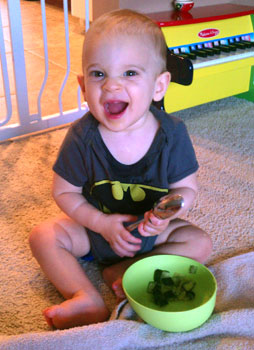
As we’ve done for more years than we can remember, The Chronicle will shower the first Jewish baby of 2013 with prizes. Information about our annual contest, and the 2013 prize package, appears on pages 18 and 19 of The Jewish Chronicle newspaper.

Last year’s first Jewish baby, Gabriel Yehudah Goodbinder, was born on Jan. 2. Coincidentally his mother, Darcy Kroll Goodbinder, was the community’s first Jewish baby in 1980.

Gabriel weighed 6 pounds, 3.4 ounces and was 18 inches long at birth. At 11 months old, Gabriel weighs 18 pounds and is 29 inches tall.

Gabriel’s mother said last year’s first Jewish baby is getting close to walking.

“He pushes his walker around and holds onto furniture,” she said.

“It’s been an amazing journey and he is a wonderful, wonderful child. He is so happy. He loves to be out in public and be around people and we’re very blessed with what he’s turned into,” said Goodbinder, who added that Gabriel will be a big brother in May.

The Goodbinders are hoping to spread some of their good fortune with others when they celebrate Gabriel’s first birthday. The party will be held at the JFS Food Pantry. Guests will be asked to bring items to donate to the pantry to the party.

The Chronicle’s First Jewish Baby contest is limited to residents of the five-county greater Kansas City area (Jackson, Clay and Platte in Missouri and Johnson and Wyandotte in Kansas), and the birth must take place in greater Kansas City.

Parents should call Chronicle Editor Barbara Bayer, 913-951-8425, or contact her via email at as soon as possible after th child is born. The parent or parents must agree to be interviewed and photographed along with the baby for a story in the newspaper to be eligible to be awarded prizes.

From the 1930s to the present, American filmmakers’ varied depictions of Adolf Hitler, the Nazis and the genocide of European Jewry have always involved a coming together of art, commerce, politics and history. In turn, these representations have exerted a profound influence on popular culture as well as public perception of and opinion about these events.
To mark its 20th anniversary year, The Midwest Center for Holocaust Education (MCHE) will offer a public film series one Tuesday evening each month from Jan. 15 through June 11. The six-film series will showcase full-length American-made narrative films related to the Holocaust that have been nominated for or have won an Academy Award. Collectively, the films illustrate how depiction of the Holocaust in American cinema has changed over five decades as America’s own relationship with this history has evolved.

The series will begin on Jan. 15, with the documentary film “Imaginary Witness: Hollywood and the Holocaust.” Released in 2007, directed by Daniel Anker and narrated by Gene Hackman, it examines the treatment of the Holocaust in Hollywood films over a period of 60 years. It looks at the impact of those films on public perception and thinking, as well as the impact of public perception and thinking on Hollywood filmmakers. It will provide both context and background for the five narrative films that follow it, dating from 1942 through 1989.

Each film will be preceded by an introduction at 7 p.m., facilitated by Fran Sternberg, Ph.D., MCHE’s director of university programs and adult education, and members of the Holocaust Education Academic Roundtable (HEART), MCHE’s consortium of university educators. The comments will provide insight into how to view these films for their artistic and historical value. All films in the series will be shown in the White Theatre on the Jewish Community Campus, except in February, when the film will be shown in the Campus Social Hall.

Funding for “Hollywood and the Holocaust” is generously provided, in part, by grants from the Earl J. and Leona K. Tranin Special Fund and the White Theatre Grantor Fund of the Jewish Community Foundation of Greater Kansas City.

Tickets are available at $10 per individual film or $50 for a series pass. Sponsorship opportunities are also available for individual films and for the entire series. For more information, visit www.mchekc.org/filmseries or call 913-327-8194.

Schedule of featured films

The films will be shown at 7 p.m. at the Jewish Community Campus on the following Tuesday evenings:

Jan. 15 — “Imaginary Witness: Hollywood and the Holocaust” (2007, 92 minutes, White Theatre): Directed by Daniel Anker and narrated by Gene Hackman, this documentary film examines the treatment of the Holocaust in Hollywood films over a period of 60 years. It looks at the impact of those films on public perception and thinking, as well as the impact of public perception and thinking on Hollywood filmmakers.

Feb. 12 — “To Be or Not to Be” (1942, 99 minutes, Social Hall): Directed by Ernst Lubitsch and starring Carole Lombard, Jack Benny and Robert Stack, this is a comedy about a troupe of actors in German-occupied Warsaw, who use their abilities at disguise and acting to fool the occupying troops. In 1983, Mel Brooks remade the film, featuring himself and Anne Bancroft in the Benny and Lombard roles.

March 12 — “Gentleman’s Agreement” (1947, 118 minutes, White Theatre): Directed by Elia Kazan and based on Laura Z. Hobson’s 1947 novel of the same name, it features Gregory Peck as Schuyler Green, a journalist who goes undercover as a Jew to expose anti-Semitism and John Garfield as Dave Goldman, his childhood friend, newly returned from fighting in World War II and trying to find a house for his family in New York. It also starred Celeste Holm and Dorothy McGuire.

April 23 — “The Pawnbroker” (1965, 116 minutes, White Theatre): Sol Nazerman (Rod Steiger) is a Holocaust survivor living in the Bronx who has lost all faith in his fellow man and who realizes the tragedy of his actions only when it is too late. Directed by Sidney Lumet and based on the novel by Edward Lewis Wallant, this is the first American film to deal with the Holocaust from the point of view of a survivor.

May 21 — “The Man in the Glass Booth” (1975, 117 minutes, White Theatre): Arthur Goldman (Maximillian Schell) is a rich Jewish industrialist living in luxury in Manhattan. He banters with his assistant Charlie (Lawrence Pressman), shocking him with his outrageous and irreverent views about Jewish life. Then, one day, Israeli secret agents burst in and arrest Goldman for being a Nazi war criminal. Taken to Israel for trial, he forces his accusers to face not only his own presumed guilt, but also their own. Directed by Arthur Hiller, the film is based on a screenplay adapted from Robert Shaw’s 1967 novel and the 1968 play of the same name. 

June 11 — “Enemies: A Love Story” (1989, 119 minutes, White Theatre): In 1949 New York, Herman Broder (Ron Silver), a Polish Jew who survived the Holocaust in hiding and who now works as a ghostwriter for a rabbi (Alan King), finds himself involved with three women: his current wife, the Polish non-Jew who hid him during the war; another survivor (Lena Olin), who is married; and his first wife from Poland (Anjelica Huston), who he thought was killed in the Holocaust along with their children, but who suddenly reappears. Directed by Paul Mazursky and based on the novel by Isaac Bashevis Singer, this film focuses on a group of Holocaust survivors, who question religion and a God who could let the Holocaust occur.

Tickets are available for purchase for individual films and for the entire series. Sponsorship opportunities are also available for individual films and for the entire series. For more information, visit www.mchekc.org/filmseries or call 913-327-8194.

PBS will air “Curtain Upon Broadway Musicals: A Jewish Legacy,” from “THIRTEEN’s Great Performances” on Jan. 1. Locally it will be shown on KCPT three times, at 8:30 p.m. Tuesday, Jan. 1, at 1:30 a.m. Wednesday, Jan. 2, and 2 a.m. Monday, Jan. 7. It will also air on KCPT 2 at 10:30 p.m. Saturday, Jan. 12; check with your cable company for channel availability.
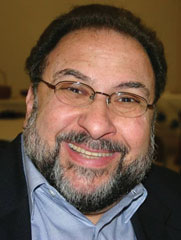
This new 90-minute documentary is by Michael Kantor, creator of the Emmy-winning series, “Broadway: The American Musical,” airs on “Great Performances.” “Great Performances” is a production of THIRTEEN for WNET, one of America’s most prolific and respected public media providers. For 50 years, THIRTEEN has been making the most of the rich resources and passionate people of New York and the world, reaching millions of people with on-air and online programming that celebrates arts and culture, offers insightful commentary on the news of the day, explores the worlds of science and nature, and invites students of all ages to have fun while learning.

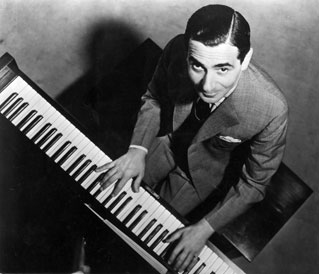
“Broadway Musicals: A Jewish Legacy” — narrated by Joel Grey —- explores the unique role of Jewish composers and lyricists in the creation of the modern American musical. Featuring interviews and conversations with some of the greatest composers and writers of the Broadway stage, “Broadway Musicals: A Jewish Legacy” showcases the work of some of the nation’s pre-eminent creators of musical theater including Irving Berlin, Jerome Kern, George and Ira Gershwin, Lorenz Hart, Richard Rodgers, Oscar Hammerstein II, Kurt Weill, Sheldon Harnick, Jerry Bock, Leonard Bernstein, Stephen Sondheim, Stephen Schwartz, Jule Styne and many others.

Though these remarkable songwriters were purveyors of what we think of today as the Broadway sound, the documentary demonstrates how there were echoes of Jewish strains in many of the works. From “Yiddishkeit” (all things Jewish) on the stages of the Lower East Side at the turn of the century to a wide range of shows including “Porgy and Bess,” “West Side Story” and “Cabaret,” the film explores how Jewish music and ethos informs many of America’s favorite musicals.

Dynamic footage includes performances by stars such as David Hyde Pierce (“Spamalot”), Matthew Broderick and Kelli O’Hara (“Nice Work if You Can Get It”), Zero Mostel (“Fiddler on the Roof”), Betty Comden and Adolph Green (“On the Town”), Nathan Lane (“The Producers”), Al Jolson (“Sinbad”), Fanny Brice (“The Great Ziegfeld”), Barbra Streisand (“Funny Girl”), Joel Grey (“Cabaret”), Dick Van Dyke (“Bye Bye Birdie”), Danny Kaye (“Lady in the Dark”), Ethel Merman (“Gypsy”), and Kristin Chenoweth and Idina Menzel (“Wicked”).

The film is the first of its kind to examine the phenomenon that, over the 50-year period of its development, the songs of the Broadway musical were created almost exclusively by Jewish Americans. These are the popular songs that our nation took to war, sang to their children at bedtime, and whistled while waiting for the bus; taken in total they comprise the vast majority of what is now commonly referred to as “The American Songbook.”

As historian Phil Furia cites as just one vivid example, Irving Berlin had so assimilated that he went on to “write the most popular Christmas song, ‘White Christmas’ ... and the most popular Easter song, ‘Easter Parade.’ ”

How do you transform a dreary January into a month of light and laughter? Find someone who’s very funny and put that person on stage. The Jewish Community Center is doing just that, presenting Moshe Waldoks, rabbi, standup comedian and co-editor of the “Big Book of Jewish Humor.” Waldoks will present “A Very Funny, Historically Comprehensive and Deeply Moving Overview of Jewish Humor” at 4 p.m. Sunday, Jan. 6, followed by a book signing and sale. The event, taking place in the White Theatre, is free and the community is invited. He will make a second presentation at noon on Monday, Jan. 7.

The child of Holocaust survivors, Waldoks approached comedy through the serious enterprise of studying Eastern European Jewish intellectual history in pursuit of a doctorate from Brandeis University.

“I chose to concentrate on where modern Jewish life came from,” he says. “I once wrote of a mystical Polish Jew who had no sense of humor. That made me look for the other side of the Polish Jewish personality, and I came to humor.”

Waldoks will provide a historical context to Jewish wit and what it reveals about Jews and Judaism. He will be attending the 2 p.m. matinee of the JCC production of “Laughter on the 23rd Floor” in the White Theatre and is expected to make references to the Neil Simon comedy in his presentation. It is not necessary to attend the performance to come to the rabbi’s presentation. (The play is showing at the White Theatre from Jan. 5–13. Call 913-327-8054 for more information.)

As a self described “advocate of joy,” Waldoks is also passionate about providing accessible gateways into Judaism and deepening the experience of Jewish prayer. In 2005, he founded Nishmat Hayyim, the Jewish Meditation Collaboration of New England. He will draw on his personal experiences and the wisdom of this organization to present a free presentation at noon Monday, Jan. 7, “Discovering the Divine Within Us: Redefining Prayer.” This presentation, taking place in the Multi-Activity Room of the Campus, is also free and open to the public. Those attending may bring lunch.

Waldoks combines intellectual rigor, an infectious happiness, and an experimental style to his role as the spiritual leader of Temple Beth Zion in Brookline, Mass. Known affectionately as “Reb Moshe,” he has grown the congregation from a few dozen adults into a diverse and vibrant community of more than 750 individuals and families.

In addition to meeting the needs of congregants, teaching and lecturing throughout the country, Waldoks has a long history of building bridges between faiths and cultures, what he calls “people-building relationships.” Highlights include a historic Jewish-Catholic Pilgrimage to Israel and Rome in the fall of 1999 during which he initiated a discussion about anti-Semitic teachings of the pre-Vatican II Polish church. In addition, he participated in the first Jewish-Tibetan Buddhist encounter with the Dalai Lama, a journey described by Rodger Kamenetz in his best-selling book, “The Jew in the Lotus: a Poet’s Rediscovery of Jewish Identity in Buddhist India.” Waldoks remains active in promoting Jewish-Muslim Relations in Boston and has initiated and supported Temple Beth Zion’s affiliation with the Greater Boston Interfaith Organization.

Both events are free and open to the community. For more information contact Jill Maidhof at or 913-327-8077.

The Jewish Community Center presents the Neil Simon comedy “Laughter on the 23rd Floor,” beginning Saturday, Jan. 5, in the White Theatre. Performances are Jan. 5, 10 and 12 at 7:30 p.m. and Jan. 6 and 13 at 2 p.m.
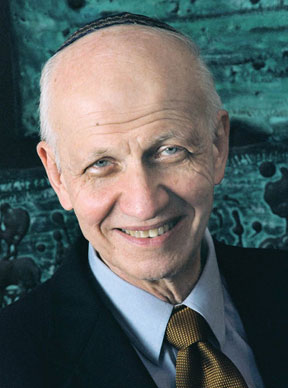
This production features the talents of seven local actors under the direction of Mark Swezey.

Krista Blackwood, the JCC’s director of cultural arts, said Simon got his first big break back in the early 1950s as a staff writer on Sid Caesar’s fabled television series, “Your Show of Shows.” “Laughter” is a fictionalized look at the backstage chaos that went into producing that show, one of the landmarks of television’s golden age.

The story surrounds the fictitious Max Prince, star of his own popular comedy-variety series. The show is a hit on the East Coast, but network executives insist that it’s too sophisticated for the Midwest. Prince is pushed to dumb down the show, and comedy ensues as he struggles to meet the demands of too many masters.

Prince uses his writing team as a line of defense, hurling humorous invectives at each other and anyone else within earshot while writing the show.

Blackwood said the show was created in historical context.

“It’s 1953, only eight years after the slaughter of World War II and right in the middle of the witch hunt that was Senator Joseph McCarthy’s Red Scare. The politics of the time presented both context and challenge to the writers, Simon’s surrogates for the ‘Your Show of Shows’ writing team; Lucas (Simon), Ira (Mel Brooks), Kenny (Larry Gelbart), Val (Mel Tolkin), Carol (Selma Diamond), Milt (Carl Reiner), and Brian (Michael Stewart),” Blackwood said.

“Meanwhile, the Sid Caesar-inspired Max Prince tries to stall network honchos who want to trim his budget, shorten his running time, and change his style of humor, deemed too urban and Jewish for suburban America. Angst burbles between the laughs, but the closest thing to a true joke about Senator McCarthy is Milt’s description of him as ‘a United States senator who giggles like Porky the Pig,’ ” she said.

The JCC is offering two special learning opportunities in connection with “Laughter on the 23rd Floor” through its Jewish Life and Learning programs. Rabbi Moshe Waldoks, a storyteller, community activist and stand-up comedian, will present an overview of Jewish humor following the Sunday, Jan. 6, matinee (about 4 p.m.).

On Monday, Jan. 7, the rabbi will give a free noon-hour presentation in the Multi-Activity Room at the Jewish Campus; his talk is entitled, “Discovery the Divine Within Us: Redefining Prayer.”

“Laughter on the 23rd Floor” is rated PG-13 for adult language and situations. Tickets for this production are $14 for members, $20 for (general public) and $10 for students (college and under). Tickets may be purchased by contacting the box office, open from 3-6 p.m. Monday through Friday at 913-327-8054; or you may purchase tickets online by visiting the JCC web site at www.jcckc.org/boxoffice.

Rabbi Irving “Yitz” Greenberg, one of the American Jewish community’s foremost thinkers and leaders, will be here the weekend of Jan. 4-6 as the featured speaker of the Caviar Family Jewish Scholar in Residence Series at Kehilath Israel Synagogue. The weekend’s events are being co-sponsored by the Jewish Community Center and the Jewish Federation of Greater Kansas City.
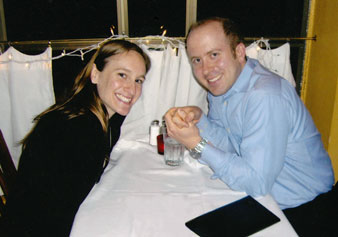
Rabbi Greenberg’s topics of discussion on Friday night and Saturday at K.I. will also pertain to the theme The Jewish Vision of a Perfect World. He will speak about the “The Challenges of a Changing Jewish World” at a Jewish Federation leadership seminar on Sunday. In a recent telephone interview, Rabbi Greenberg pointed out that both the Jewish vision of a perfect world and the challenges of a changing Jewish world are related.

He said the Jewish vision of a perfect world seems like a big topic, but the heart of it is fairly simple. As part of the explanation, he said most people think of Judaism’s impact on civilization as the recognition of one God. He would like to suggest Judaism has made another important impact.

“That’s the vision not just that there is a God who created the world, but the Jewish concept that it is God’s intention that this world be made perfect,” said the Orthodox ordained rabbi and scholar who earned a doctorate degree from Harvard.

Rabbi Greenberg explained that the image of a perfect world is often a Jewish messianic vision.

“What’s the definition of perfect? It really means a world filled with life, especially human life, which is the highest form of life. It’s God-like and according to the Bible, human beings are made in the image of God,” he said.

Rabbi Greenberg is currently the president of Jewish Life Network/Steinhardt Foundation. From 1974 through 1997, he served as founding President of CLAL — The National Jewish Center for Learning and Leadership, a pioneering institution in the development of adult and leadership education in the Jewish community and the leading organization in intra-Jewish dialogue and the work of Jewish unity. Before CLAL was founded, he served as rabbi of the Riverdale Jewish Center, as associate professor of history at Yeshiva University, and as founder, chairman and professor in the Department of Jewish Studies of City College of the City University of New York. He has also written several books.

To achieve a perfect world Rabbi Greenberg believes society should be structured so that the full dignity of human life should be upheld. Yet it hasn’t been that way for most people throughout much of history.

“You can’t fight city hall. You accept what’s out there as a given and for most people that is poverty and hunger and sickness, etcetera, etcetera,” he said.

But, he continued, that’s not really the Jewish vision.

“This God has made a covenant or a partnership with all humans. Jews are just one community but we would try to be role models or light unto nations. Therefore the Jewish vision is called tikkun olam, perfecting the world by a partnership between God and humanity and between the generations where each generation tries to improve the world both collectively and individually or at least tries to live your life that way,” Rabbi Greenberg said.

When he mentions tikkun olam, he stressed that the phrase, and that way of life, does not simply mean social justice.

“Half jokingly a lot of Conservative or traditional Jews complain that this is the left-wing of the Democratic party made into a sacred scripture, but it’s not,” he said.

Rabbi Greenberg explained that tikkun olam should be understood very broadly and it does involve social justice.

“It does involve taking care of the weak and the poor because they are also an image of God and they have the same dignity and equality as everyone else. But it also involves all acts that build the world to sustain life. So for example if someone creates a business or a factory that pays living wages that creates products … that upgrade the world … or develops medicines that cure people, that’s also tikkun olam,” he said.

“It shouldn’t be understood just as a left or a political position. I think it cuts across all these lines and that’s part of its greatness. It says whatever you want to do, whatever area of life you choose, you can live your life in a certain way that makes it part of tikkun olam.”

Todd Stettner, executive vice president and CEO of the Jewish Federation, noted that Rabbi Greenberg hasn’t made a presentation in Kansas City in more than a decade.

“Many of us who are now in leadership positions both lay and professional came into our positions listening to Yitz and hearing what he had to say about all sorts of issues impacting the Jewish community. He is certainly a major influence and I can’t say enough about his intellect. He’s an amazing man. He’s an Orthodox rabbi but he has flexibility and openness to all sides. He can really captivate an audience in a speech in a way not many people can,” Stettner said.

“You kind of hang on every word, he is just so smart,” he continued.

In Rabbi Greenberg’s association with the Jewish Life Network/Steinhardt Foundation, he has helped created many initiatives to enrich the inner life — religious, cultural and institutional — of American Jewry. He played a founder’s role in the creation of Birthright Israel, which gives the gift of a 10-day educational first trip to Israel to Jews ages 18 to 26 years old. When he discusses ways to draw young leaders into taking active roles in the Jewish community, he believes some of the things that attract young adults to Birthright and keep them connected to the Jewish community pertain here as well.

One of the things Jewish communities need to do, he said, is to make total Jewish environment experiences available, “so that you really experience what it means to live in a Jewish environment.” For adults it could be a simple retreat.

“It could be not just for a weekend. It could be a week. I think every Jewish family should be given a gift like we give for Birthright. You have a week or three days of living in a total Jewish community … so that from womb to tomb there is a set of experiences where Judaism is not just words or some obligation but it’s really living a very, very vital experience,” he said.

Now that Birthright has been in existence for 10 years, he said research shows that the trip doesn’t just give the participants a stronger connection to Israel, “which it does, but it gives them a stronger desire to be Jewish.” “They have lower intermarriage rates; they have higher participation rates in the community. Why is that? Because for the first time in their lives being Jewish is not something that their parents just talked about … it was a very exciting living experience,” he said.

For the Jewish community to succeed, and appeal to young Jews, Rabbi Greenberg said it must be open and friendly.

“Welcome people as they walk in the door at synagogue,” he suggested. “So you’ll know when you come to a Jewish activity you will be welcome, you will be noticed, you will be connected. There’s a lot going on that is exciting and enriching.”

Rabbi Irving Greenberg here Jan. 4-6

The theme of the Caviar Family Jewish Scholar in Residence Series at Kehilath Israel Synagogue featuring Rabbi Irving “Yitz” Greenberg is The Jewish Vision of a Perfect World.

The event Friday night begins at 5 p.m. with services at K.I. The rabbi will speak at 6 p.m., “Tikkun Olam & Tzelim Elokim: Repairing the World and Rediscovering the Divine Spark in Humanity.”

The rabbi will speak at approximately 10:30 a.m. Shabbat morning Jan. 6 (services begin at 9 a.m.). The topic will be “Covenant & Redemption.” Shabbat afternoon worship begins at 4:30 p.m., Rabbi Greenberg will discuss “The 12 Steps of Covenant for Healing the World” at approximately 5 p.m.

In honor of Rabbi Greenberg, all worship services will include a mechitzah.

On Sunday morning Jan. 6, Rabbi Greenberg will be the featured speaker at the Jewish Federation’s “Powering Our Future: The Challenges of a Changing Jewish World” leadership seminar from 10:30 a.m. to noon at the Jewish Community Campus. The community is welcome; however reservations are required. Call 913-327-8100 to RSVP.