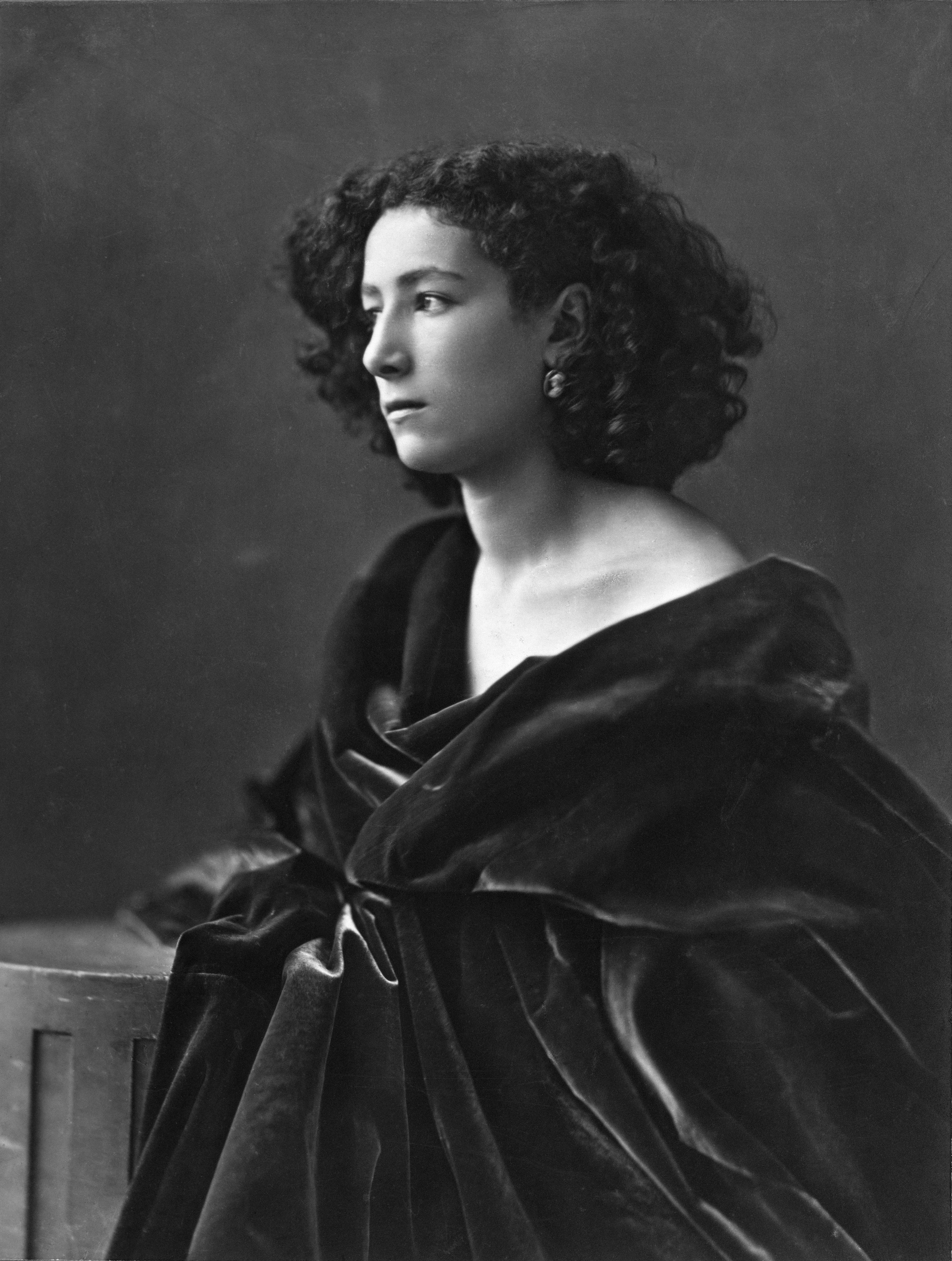
Artwork featuring legendary Jewish actress Sarah Bernhardt will be on display at the Nelson-Atkins Museum of Art in the exhibit “Mucha’s Muses: Sarah Bernhardt and the Spirit of Art Nouveau.” The pieces, all created by Czech artist Alphonse Mucha in the late 19th and early 20th century, often served as posters or advertisements for the French performer’s theatrical career.
Bernhardt, born Henriette-Rosine Bernard in 1844, played dozens of roles in more than 100 productions around the world. Before television and radio, her celebrity — launched and embellished by her acting skills and beauty — was enough to make her a household name in the late 1800s and early 1900s.
Sharon Marcus, the author of “The Drama of Celebrity,” called Bernhardt the “first modern celebrity” in a Vox article and said “Bernhardt became a superstar by flaunting her agency — her intelligence, her ambition, her artistic vision, her independence — and by using that agency to cow journalists and wow the public.”
Local Jews had opportunities to see Bernhardt perform on five tours that stopped in Kansas City. According to The Kansas City Times, when she performed in “Camille” on Feb. 28, 1906, at the Convention Hall, a world record had been broken when “more than 6,500 persons gathered to witness the ‘Divine Sarah’ and more than $10,000 went into the box office.”
The Times quoted Bernhardt’s manager as saying, “Kansas City has this night good reason to feel pride… Why, when Bernhardt played in Rio Janeiro to $5,400 I could hardly believe it, and here we come to what has been held a Western town and get $10,000.”
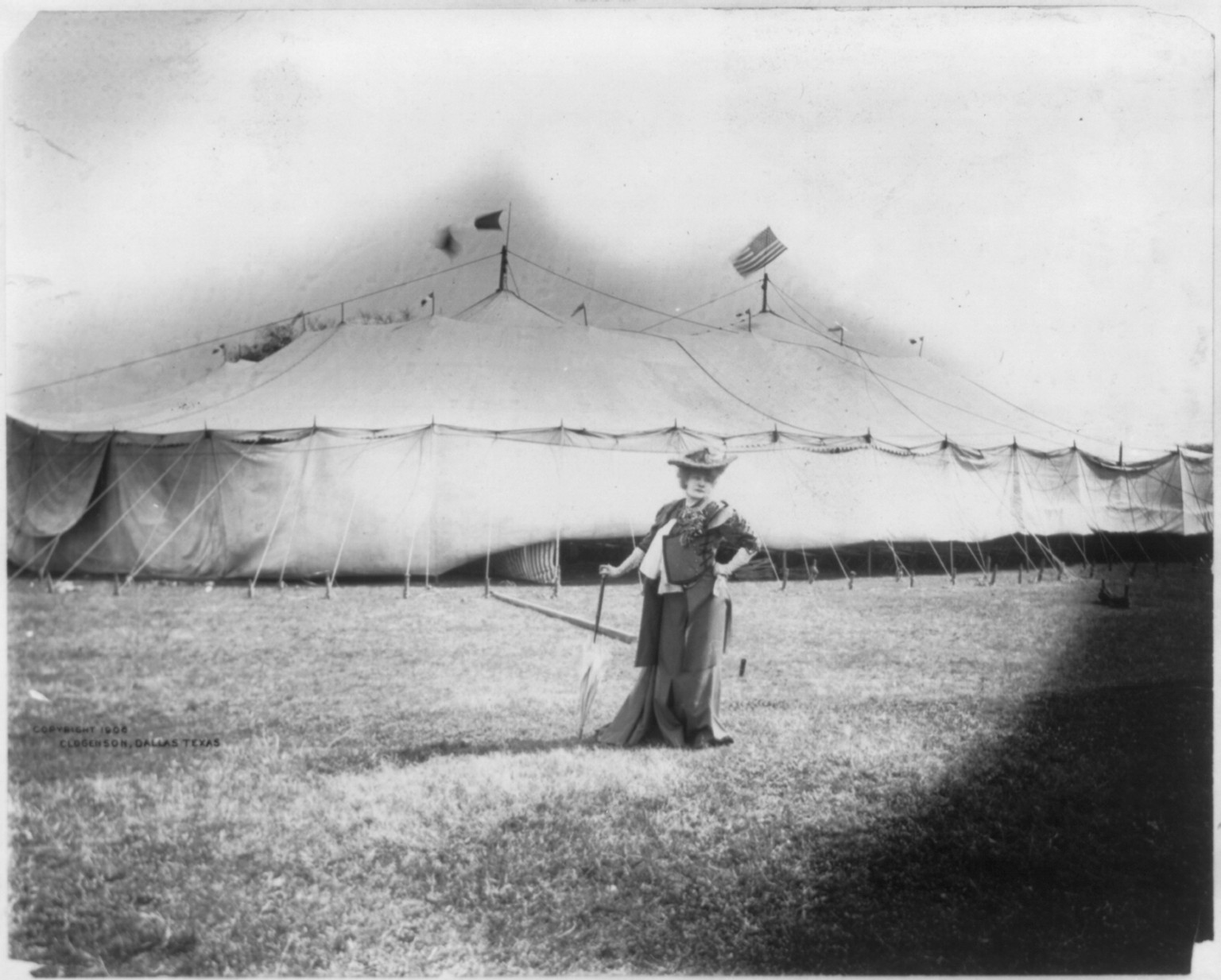
When Bernhardt and her troupe continued to their next tour stops in Texas, they performed in a massive tent, able to seat 5,000 people, that was made in Kansas City.
The exhibit at the Nelson-Atkins highlights the partnership between Bernhardt and artist Alphonse Mucha. One artwork, “Sarah Bernhardt as ‘La Samaritaine,’” from 1897, features a plethora of Stars of David surrounding Bernhardt, who stands in front of G-d’s name written in Hebrew. The text on the page, though written in French, is stylized to look like it is written with Hebrew letters. 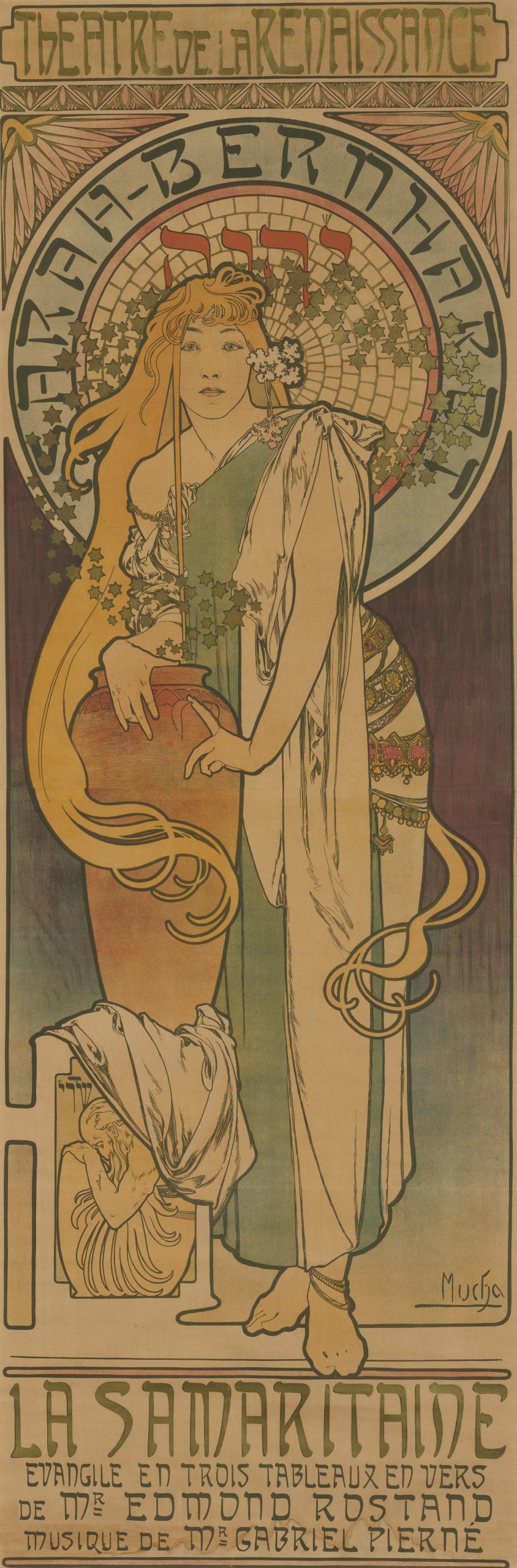
Right: “Sarah Bernhardt as ‘La Samaritiaine,’” made by Alphonse Mucha in 1897. (The Nelson-Atkins Museum of Art)
“Sarah Bernhardt wasn’t just Mucha’s muse — she was his first patron, a powerful cultural figure and a Jewish woman whose identity shaped how audiences saw her. This focused exhibition lets us see how that story is embedded directly in the art,” Aimee Marcereau DeGalan, senior curator of European Arts at the Nelson-Atkins, told The Chronicle.
Bernhardt’s relationship with Judaism was complex – she was born to a Dutch Jewish mother and was baptized as a Catholic, but nonetheless experienced public antisemitism directed at her. When accused by the French press of being German and Jewish, Bernhardt supposedly wrote a letter which stated, “If I have a foreign accent — which I much regret — it is cosmopolitan, but not Teutonic. I am a daughter of the great Jewish race, and my somewhat uncultivated language is the outcome of our enforced wanderings.”
When Bernhardt died in 1923, The Chronicle ran an editorial mourning her death.
“The genius of Sarah Bernhardt made her the acknowledged greatest actress of her generation,” it read. “...The golden quality of Sarah Bernhardt’s voice and the perfect art with which every gesture was given made her the admiration of her audiences and stirred them to enthusiastic appreciation of her performances… Sarah Bernhardt never stepped out of her roles to live an individual life partaking of the common experience of ordinary mortals.”
“Mucha’s Muses: Sarah Bernhardt and the Spirit of Art Nouveau” opened on Jan. 31 this year and will be on display until Jan. 17, 2027. Admission is included with general admission at the Nelson-Atkins. More information is available at nelson-atkins.org/art/exhibitions.