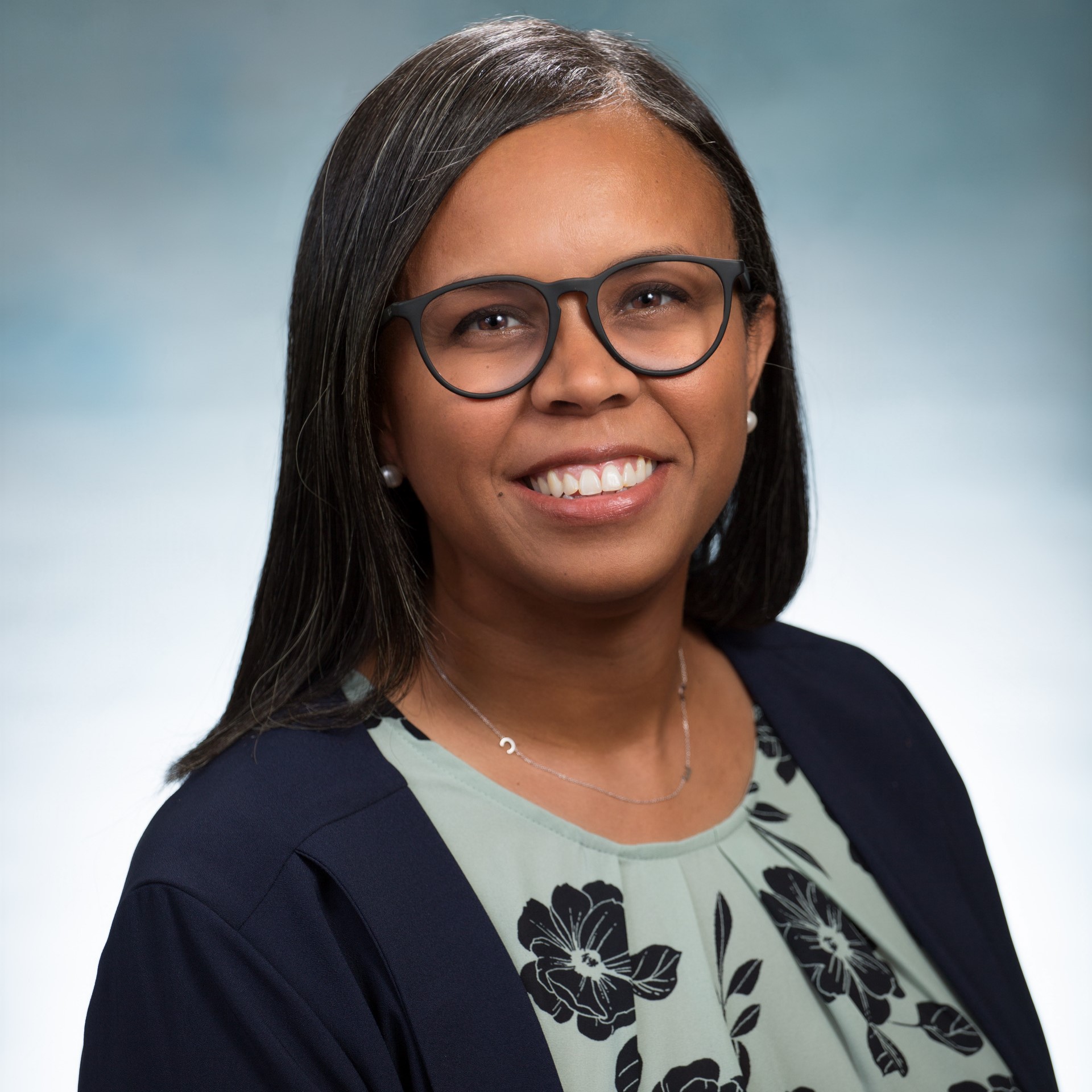
A mohel — one who is trained in the ritual circumcision, or brit milah, of a Jewish baby boy — is hard to come by in the Midwest.
With very few in Kansas City, getting a mohel after a boy is born can be difficult for Jewish families. Dr. Tiffany Simpson, Kansas City’s newest trained mohel, hopes to help.
Performing a brit milah requires more than just medical training. While many doctors are trained in circumcision and do so to non-Jewish boys, the ritual and spiritual aspects of a brit milah require additional education.
Before Dr. Simpson became certified, only two mohels were practicing locally — Dr. Daniel Gershon and Rabbi Schneur Perman. This short list of available mohels occasionally results in families bringing one in from another city. The addition of Dr. Simpson to the list helps mitigate this problem.
“I am thrilled that we now have another highly trained and skilled mohel to call upon within the Jewish community in Kansas City,” said Rabbi Stephanie Kramer, senior rabbi of The Temple, Congregation B’nai Jehudah, who encouraged Dr. Simpson to train as a mohel. “Having another doctor in town to assist with circumcisions is a tremendous asset to our community.”
Dr. Simpson, a member of B’nai Jehudah and Congregation Beth Torah, grew up in St. Louis and Kansas City. She graduated from the University of Missouri-Kansas City medical program in 2002 and has practiced neonatology for 16 years. Her experience in medical circumcision led to an emergency room doctor approaching her to train him on how to do the procedure.
Being asked to train a new doctor reminded her of how she’d heard that the Jewish community was looking for another mohel after Dr. Michael Blum retired.
“I started hearing rumblings that we needed [another mohel] in the community,” Dr. Simpson said. “I heard people talking about it, but it didn’t really occur to me to offer to do it until someone asked me to train them.”
Learning that some families fly mohels in from other cities was another impetus for Dr. Simpson to begin her training.
“I can’t say that I had an aspiration to be a mohel, but I felt badly that the community didn’t have what they needed… that we’re flying people in,” she said. “That just seems kind of silly to me, seeing as I know how to do circumcisions. So I thought that I should jump in, see if I could help.”
Dr. Simpson approached Rabbi Kramer to take the next steps in becoming a mohel. Because of her experience doing circumcisions, Dr. Simpson’s training focused on the religious and ritual aspects of a brit milah. Through the Brit Milah Program of Reform Judaism affiliated with the Hebrew Union College (HUC) and Union for Reform Judaism, she took a 12-week course for medical practitioners. Her training was funded by a grant from the Menorah Women’s Foundation at the Jewish Community Foundation.
Technically, Dr. Simpson is a mohelet, the female word for mohel. In Conservative and Reform Judaism, mohelets are becoming more common. Dr. Simpson is the first mohelet in Kansas City.
From a secular medical perspective, circumcision is not always necessary, but in Judaism, the brit milah is of utmost importance as a covenant between the Jewish people and G-d — a fact “hammered home” in Dr. Simpson’s training. In Bereshit 17:10-13, the covenant between G-d and Abraham and his descendents is that every male be circumcised, “Thus shall [G-d’s] covenant be marked in your flesh as an everlasting pact.”
In traditional circumstances, a brit milah has set prayers and rituals that are well defined — “traditional circumstances” meaning a brit milah for an eight-day-old healthy baby born to a Jewish mother. But Dr. Simpson learned there are many nuances and changes depending on the situation of the family, such as if the baby was adopted, born to an interfaith family or born to a non-Jewish surrogate mother.
“It makes the service a bit different. You still do [a brit milah], but it requires a different set of prayers,” she said. “[I want to] make sure that I do the service correctly… and also respect the complexity of what’s going on in the family.”
Dr. Simpson made clear that if she is approached as a mohel, she “needs to adhere to the Jewish rules and expectations around the ceremony.” She wouldn’t do a brit milah before the baby is eight days old, for example, or if the family is not Jewish.
She also said that if she were available, she would consider traveling to perform a brit milah, but her intent is to be of service to the Kansas City Jewish community.
Dr. Simpson is thankful for the encouragement of Rabbi Kramer and Rabbi Mark Cooper, who led the training course “and worked diligently to ensure my success,” she said.
Dr. Simpson can be contacted regarding her brit milah services at .