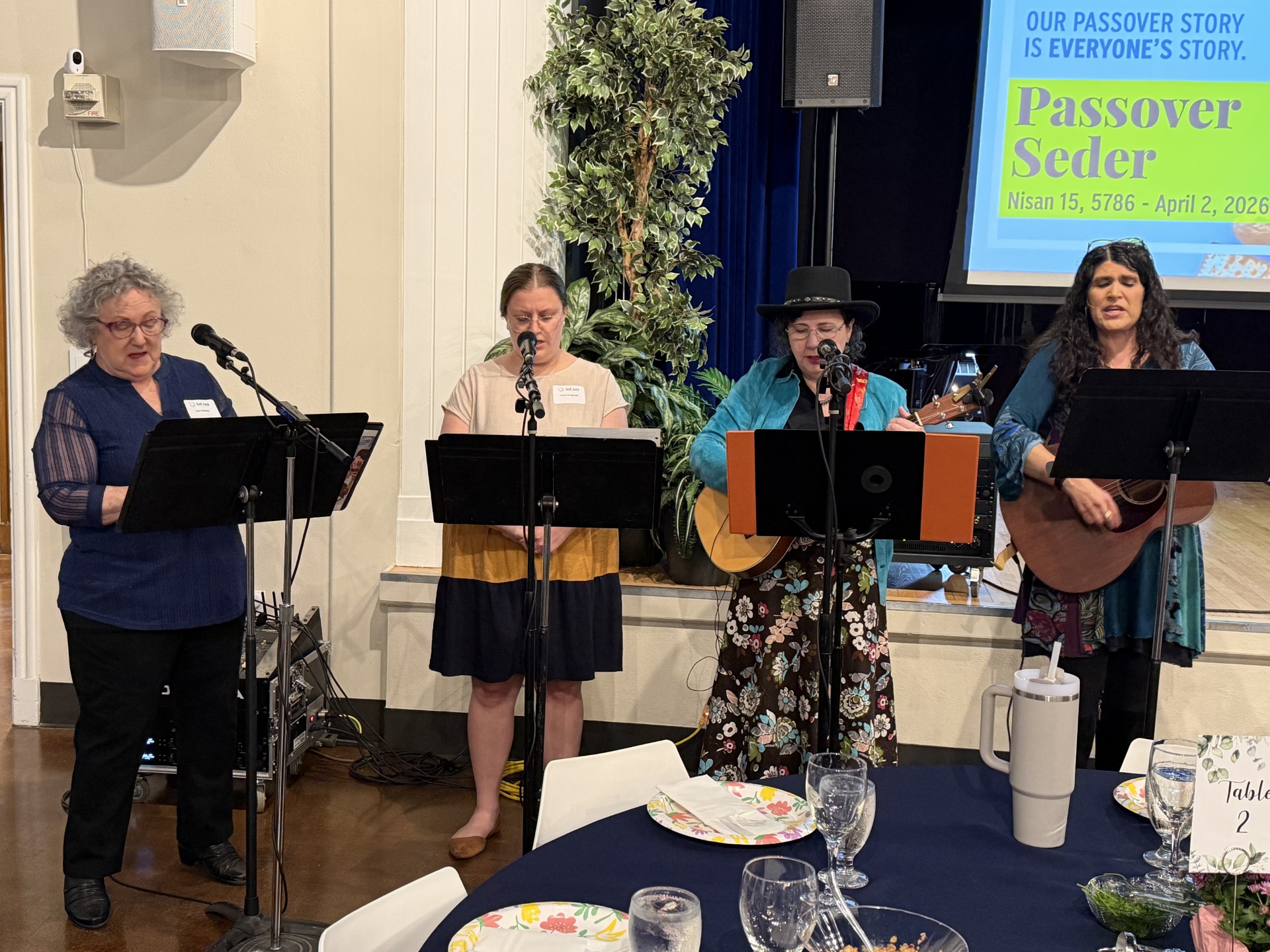
Congregation Kol Ami marked Passover this year with a community Seder rooted in a message that stretched well beyond the holiday itself: that the ancient story of liberation from bondage speaks directly to the struggles of immigrants and refugees navigating the present day.
“Our Passover story is everyone’s story,” said Rabbi Doug Alpert, who leads the congregation, restating a theme that shaped the evening’s readings, reflections and table conversations.
The April 2 Seder drew both longtime members and first-time guests who heard deliberate connections drawn between the Exodus narrative and the modern immigrant experience. The parallels were not treated as metaphor alone by Kol Ami. Leaders of the congregation spoke plainly about “the dignity owed to those who, like the Israelites in Egypt, find themselves strangers in a land that does not yet feel like home.”
Rabbi Alpert said the energy in the room reflected something central to Kol Ami's identity.
“The ruach — the spirit — was palpable,” he said. “Many people mentioned how much it meant to have a Seder to come home to.”
The theme of immigrant rights carries weight at Kol Ami, a congregation that describes itself as an “open tent” community that is welcoming to anyone on their Jewish journey, as well as to the family members and friends who stand alongside them. That welcomeness, leaders say, is inseparable from the synagogue’s broader social justice work.
Kol Ami, the name of which means “the voice of my people” in Hebrew, has worked to build a presence in the wider community through partnerships with organizations working toward what its members describe as a more just world. The Passover table, they say, is one expression of that commitment — a place where the question of who belongs is answered the same way it has been for thousands of years: everyone is invited to tell the story, and everyone’s voice matters.
Following the Seder, the congregation extended a standing invitation to newcomers to explore its worship services, music programs and community events. Rabbi Alpert is available to meet individually with anyone interested in learning more about the congregation.
Those who attended were encouraged to complete a brief survey shared by the synagogue to offer feedback on the evening and share what would make them feel most welcome at future events.