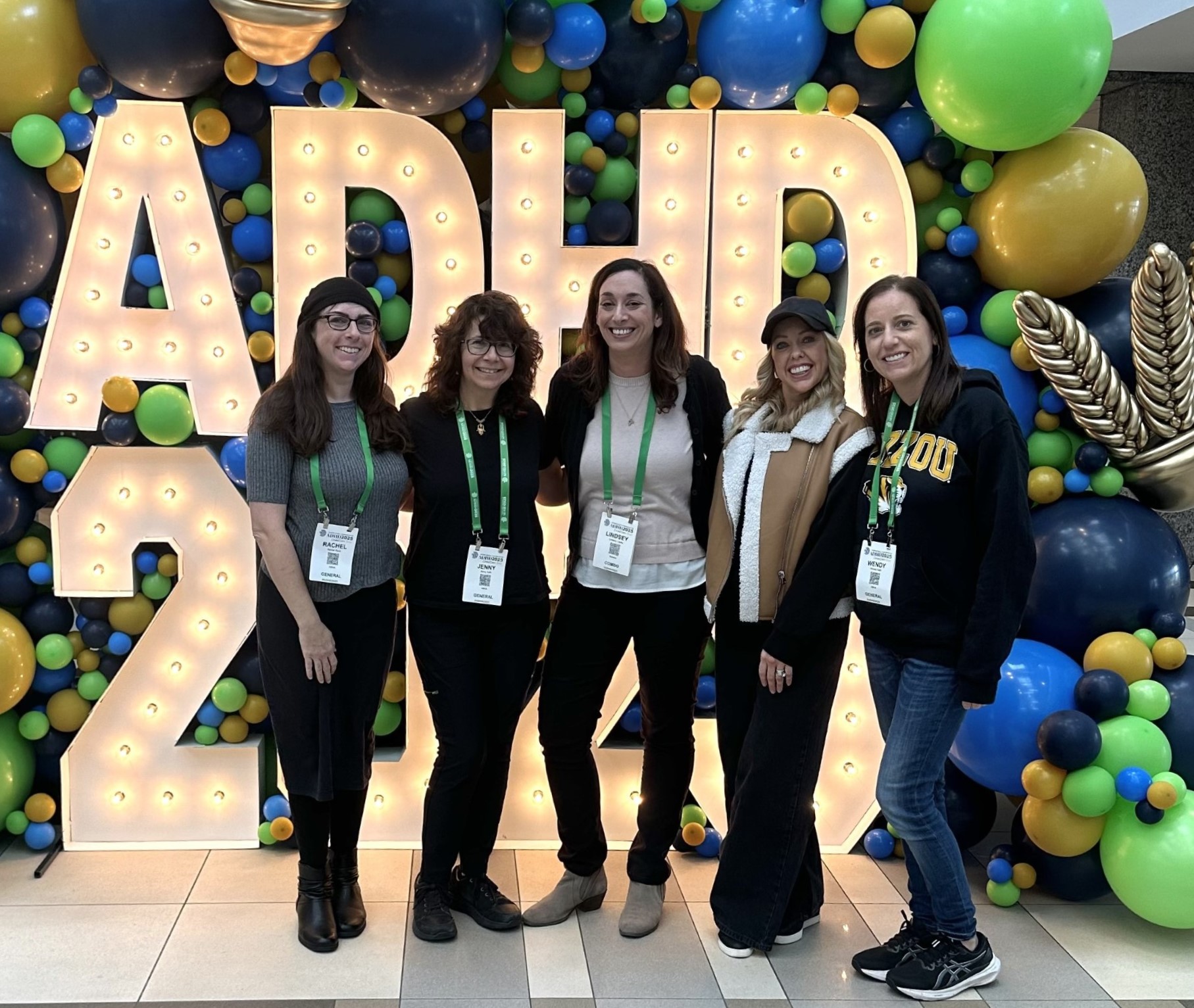
This fall, four Hyman Brand Hebrew Academy (HBHA) educators, Wendy Snitz, Rachel Ryan, Jenny Safir and Laura Severin, attended the International ADHD Conference for the first time in the school’s history.
Their participation was made possible through support from Sasone, a community program that supports Jewish life and learning for individuals with disabilities, and a special grant from the White Family Supporting Fund at the Jewish Community Foundation of Greater Kansas City.
The conference brought together leading researchers, clinicians and educators from around the world to share the latest findings on attention-deficit/hyperactivity disorder (ADHD), executive-function development and emotional regulation. For the HBHA faculty members who attended, it provided not only cutting-edge research but also an opportunity to be part of the national conversation about how schools can better meet the needs of students with diverse attention and learning profiles.
Over three days, HBHA’s team learned from experts about updated intervention models, trauma-informed strategies and practical tools that help students manage focus, motivation, transitions and frustration. They also participated in a Jewish-specific educator group — one of the only national spaces dedicated to exploring neurodiversity within Jewish day schools and supplementary learning programs.
“It truly was a great experience. The conference was well organized with plenty of session options that spoke to us as therapists, educators, mentors and more,” said Severin, who is HBHA’s middle and upper school director of student services.
HBHA staff returned with concrete strategies they’re already integrating into classrooms, including breathing techniques that support student regulation.
“Christopher Willard shared several approaches to help kids stay regulated, including breathing exercises we’ve used at school before. He’s also the author of ‘Alphabreaths,’” said Wendy Snitz, HBHA’s lower school director of student services.
The educators attended the conference because for many families, an ADHD diagnosis shapes not only academic life but also a child’s overall confidence and sense of belonging in Jewish spaces. If teachers grasp how attention differences affect learning, they can respond with empathy, structure and practical tools intended to help students thrive. The teachers now bring timely research back to their classrooms for students and families.
Sasone’s investment in this conference is part of a broader mission to strengthen disability inclusion across Jewish Kansas City.
“ADHD is extremely common, in our community and beyond. It has so many misconceptions which negatively affect our students and families. ADHD isn’t about willpower or behavior; it’s about how the brain processes, prioritizes and responds to the world. When educators understand that, students feel seen rather than judged. Training like this truly helps us change our learning ecosystems,” said Lindsey Lipsky, director of Sasone.
“Training like this makes a real difference for our students and families. With deeper understanding, our educators can apply strategies that build confidence, reduce frustration and strengthen a child’s connection to our school community,” said Annie Glickman, HBHA’s head of school. “This kind of investment directly improves how our students experience learning every day.”
Those wishing to support Sasone and HBHA’s disability inclusion partnership can donate to the Sasone 30th Anniversary campaign at sasone.org/donate.